Brake Booster Vacuum Hose: Function and Purpose
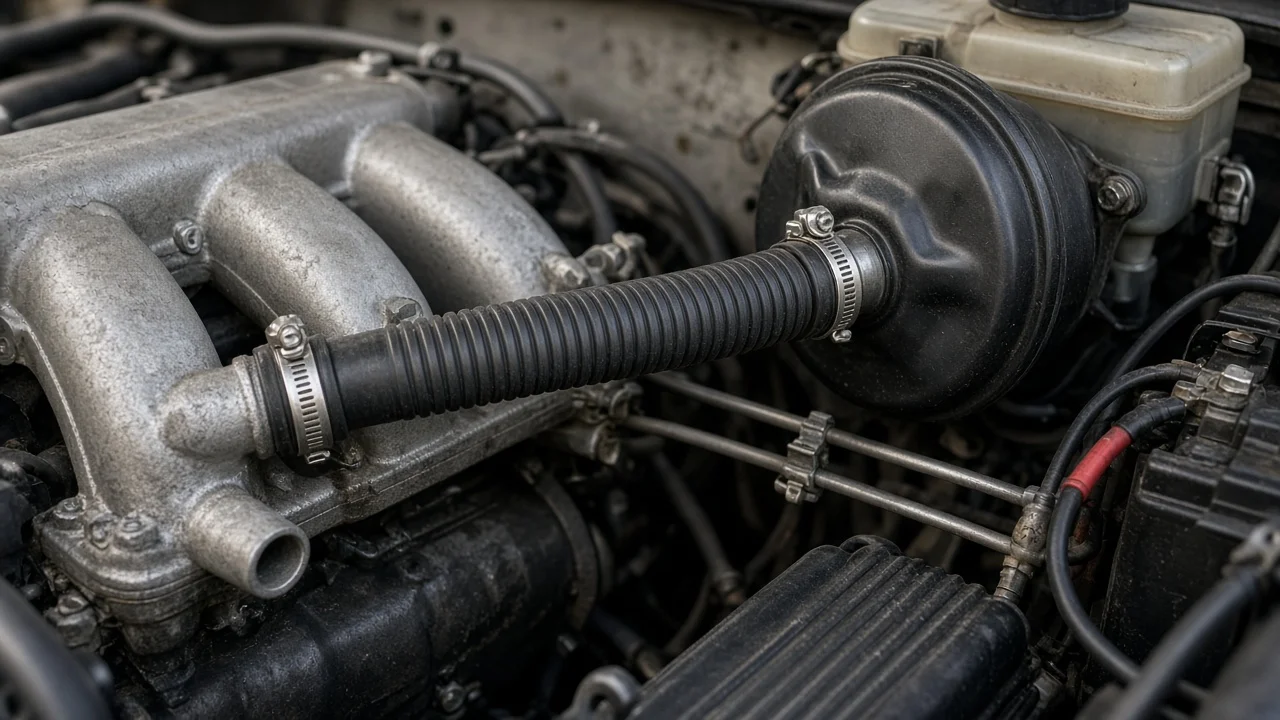
The vacuum hose for a brake booster looks like a minor piece of rubber, but it supplies the low pressure that makes power brakes feel light underfoot. When it cracks, collapses or loses its check valve, the pedal turns hard and stopping takes more effort. This guide explains what the brake booster vacuum hose does, how vacuum assist works, which vehicles are built differently and what an owner can safely check.
What the brake booster vacuum hose does
The hose carries vacuum from the engine's intake manifold, or from a separate vacuum pump, to the brake booster mounted between the pedal and the master cylinder. The booster uses that vacuum to multiply the force of your foot, so moderate pedal pressure produces strong hydraulic pressure at each caliper or wheel cylinder. Without vacuum the brakes still work, because the hydraulic system is mechanically linked to the pedal, but you must push much harder to get the same stopping power. In short, the power brake booster vacuum hose provides assist; it does not create braking on its own.
Most hoses also include, or connect to, a one-way check valve. That valve lets air flow out of the booster toward the vacuum source but blocks it from flowing back. It holds a reserve of vacuum in the booster when manifold vacuum drops, such as under heavy throttle or right after the engine stops, so you still get a few assisted pedal applications.
How vacuum assist works
Inside the booster is a large diaphragm that divides it into two chambers. With the pedal released, both chambers are held at vacuum, so the pressure is equal and the diaphragm stays in place. When you press the pedal, a control valve closes the passage between the chambers and lets outside air into the rear chamber. The front chamber remains connected to the vacuum hose, so atmospheric pressure on the rear side pushes the diaphragm forward and helps drive the master cylinder pushrod. When you release the pedal, the valve reconnects the chambers and the hose draws the air back out.
Because the system depends on a pressure difference, the hose has to stay sealed and keep its shape. Booster hoses are made to resist collapsing under vacuum and to tolerate engine bay heat and oil vapor. A hose that softens and flattens, or a fitting that leaks, reduces the vacuum reaching the booster and the assist it can provide. On a gasoline engine that draws vacuum from the manifold, a leak also lets unmetered air into the intake, which can cause a rough or unusually high idle and a lean-running condition.
What changes the answer for your vehicle
Not every vehicle uses manifold vacuum. Many diesel engines produce little intake vacuum, so they rely on a mechanical or electric vacuum pump, and the vacuum brake booster hose runs from that pump instead. Some turbocharged and direct-injection gasoline engines also use a pump or an aspirator because their manifold vacuum can be low or can turn into boost pressure; in those layouts the check valve also keeps boost out of the booster. Hybrids and electric vehicles may use an electric vacuum pump or an electric brake booster that needs no vacuum hose at all.
Some vehicles, often heavy-duty trucks, use hydraulic assist driven by power steering pressure rather than vacuum. Where a hose is used, its routing, diameter, check valve location and connector style vary between models and engines. The valve may sit inline in the hose, in the grommet at the booster or in a fitting at the vacuum source. That is why vehicle fitment matters: a hose meant for a different engine may not seal, may kink against nearby parts or may route too close to exhaust heat.
What the owner can check
Start with a visual inspection while the engine is off and cool. Follow the hose from the booster to its vacuum source and look for cracks, splits at the ends, a spongy or collapsed section, oil soaking, chafing, loose clamps and a hardened or torn grommet where the hose enters the booster. With the engine idling, a hissing sound near the booster or along the hose, especially one that changes when the pedal is pressed, points to a leak.
A simple function test helps confirm assist. With the engine off, pump the brake pedal several times to use up the stored vacuum, then hold moderate pressure on the pedal and start the engine. On a working system the pedal should move down slightly as vacuum builds. To check the reserve, run the engine for a minute, shut it off, wait briefly and press the pedal: it should feel assisted for at least the first application or two. A pedal that turns hard right away suggests a leaking check valve, hose or booster. On vehicles with an electric booster or an unusual vacuum supply, follow the manufacturer's procedure instead, since these tests may not apply.
If the hose is damaged, replace it with the part specified for your vehicle and keep the check valve oriented so flow goes from the booster toward the vacuum source. Many valves are marked to show direction. General-purpose hose is not a suitable substitute because it may collapse under vacuum or degrade from oil vapor.
Telling a hose problem from other brake faults
A hard pedal with normal pedal travel is the classic sign of lost vacuum assist, but the hose is only one possible cause. A torn booster diaphragm, a failed check valve, a weak vacuum pump or an engine fault that lowers intake vacuum can produce the same feel. A soft, spongy or sinking pedal is different: it usually points to the hydraulic side, such as air in the brake fluid, a fluid leak or a master cylinder problem, rather than the vacuum hose.
Noises and vibrations are usually unrelated as well. Grinding, squealing, pulsation or pulling to one side typically involve brake pads, brake rotors or a sticking caliper, including friction material worn past its wear limits. Replacing a vacuum hose will not fix those conditions, so match the symptom to the right part of the system before buying parts.
Limitations and when to get professional help
Owner checks can suggest a vacuum problem, but they cannot measure the vacuum reaching the booster or confirm its internal condition. A technician can test vacuum at the hose with a gauge, check vacuum pump output and compare the results with the service information for your vehicle. Hose routing, clamp type and check valve details should also come from that vehicle-specific information rather than a generic layout.
Treat a sudden hard pedal, a pedal that changes feel, or a lit brake warning light as a safety issue. Reduced assist means longer stopping distances, especially in an emergency stop. If braking feels compromised, stop using the vehicle and have it inspected or towed to a shop. Work on the booster, master cylinder or hydraulic lines is best left to a professional with the correct procedures and equipment.