Boat Alternator Not Charging: Likely Causes and How to Narrow Them Down
The short answer
When a boat's charging system stops putting power back into the battery, the alternator itself is often not the culprit. Common causes include a slipping or broken drive belt, loose or corroded connections, a blown fuse or fusible link, a battery switch or isolator problem, a failed voltage regulator, or a battery that can no longer hold a charge. The practical first step is to measure battery voltage with the engine off and again with it running. That comparison tells you whether the charging system is producing any output at all, and it points you toward the right part of the system to inspect next.
One qualification changes the answer considerably: the type of engine. Inboard and sterndrive engines usually drive a belt-driven alternator much like a car's. Many outboard motors instead generate charging current from a stator under the flywheel and convert it through a rectifier or a combined rectifier-regulator. The symptoms look similar, but the parts and test procedures differ, so check your engine maker's service information for your specific model and year.
Confirm the problem with a voltage check
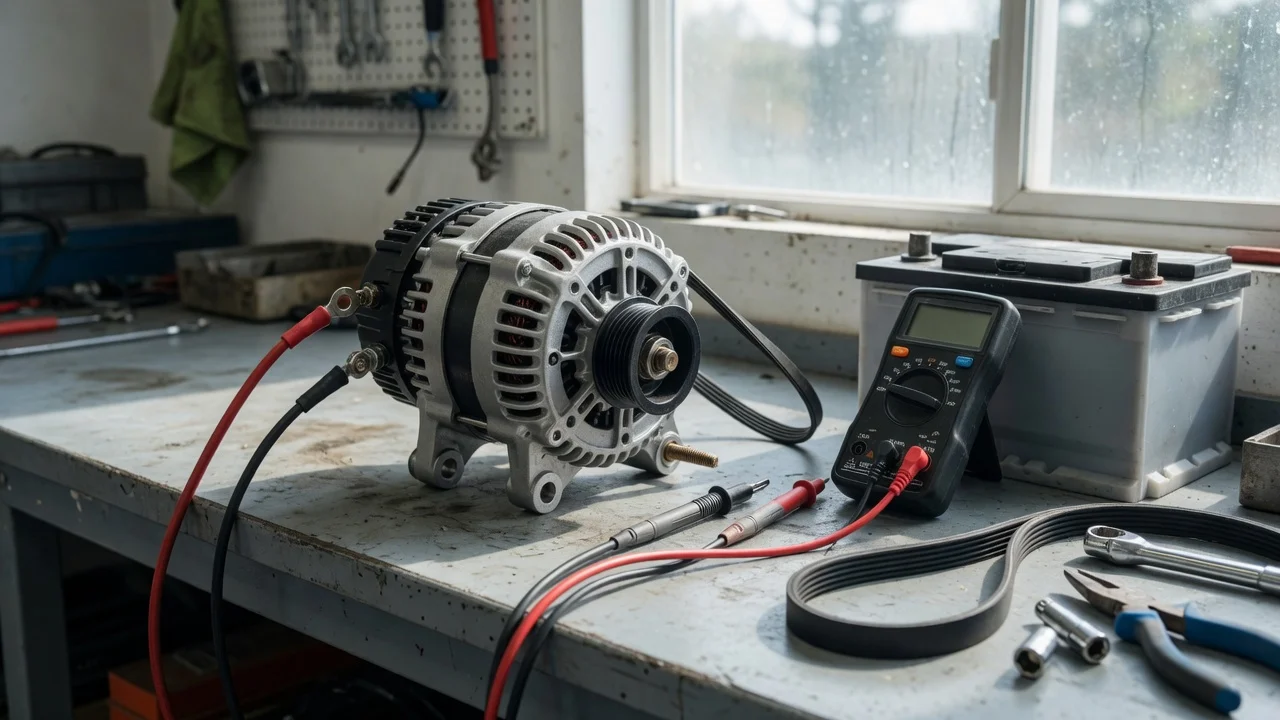
A digital multimeter across the battery terminals is the simplest diagnostic tool. Compare a reading taken with the engine off and one taken with the engine running above idle. On many 12-volt systems, a healthy charging circuit raises the voltage noticeably above the resting reading, often into roughly the high-13 to mid-14-volt range. Exact targets vary by alternator, regulator and battery chemistry, so treat these figures as a general guide rather than a specification for your boat.
Running voltage rises clearly above resting voltage: the charging system is producing output. Suspect the battery, the battery switch or isolator routing, or a high electrical load instead. Running voltage is the same as, or lower than, resting voltage: the charging system is not producing usable output. Work through the drive, wiring and regulator checks below. Running voltage is well above the normal charging range: the regulator may be overcharging. This can damage batteries and electronics and should be addressed promptly.
Most common causes, from easiest to check
Drive belt (belt-driven alternators): a loose, glazed, cracked or broken belt cannot turn the alternator fast enough. Squealing at startup or under load is a typical sign. Connections and grounds: the marine environment corrodes terminals quickly. A loose output cable, corroded ring terminal or poor engine ground can stop charging completely or cause it to cut in and out. Fuses and fusible links: many charging circuits include a fuse, breaker or fusible link between the alternator and the battery. If it has blown, no charge reaches the battery even though the alternator is working. Battery switch, isolator or combiner: on boats with more than one battery, the charging current passes through a selector switch, diode isolator or automatic charging relay. A wrong switch position or a failed isolator can leave the battery you are monitoring uncharged. Excitation or sense wire: some alternators need a small signal from the ignition circuit before they begin charging. If that wire is broken or disconnected, the alternator can stay inactive. Some designs are self-exciting and only start charging once engine speed rises above idle. Voltage regulator: the regulator controls output. When it fails, it may stop charging or overcharge. Many alternators have an internal regulator, while some marine setups use an external or aftermarket regulator. Alternator internals: worn brushes, failed diodes in the rectifier or damaged windings can end output. This is generally confirmed by bench testing or a specialist. The battery itself: a sulfated or internally shorted battery can appear to be a charging problem because it will not accept or hold charge.
If you have an outboard
On outboards that charge through a flywheel stator, the usual suspects are the rectifier or rectifier-regulator, the stator windings, and the wiring and connectors between them and the battery. Some smaller outboards have limited or no charging capability, depending on model and options. Before assuming a fault, confirm that your specific motor was fitted with a charging system and find its rated output in the owner's or service manual. Stator and rectifier tests normally use resistance and output values published by the engine manufacturer. Those values are model-specific and are not provided here.
Safety and replacement considerations
Disconnect the battery before working on charging wiring, and keep clear of belts and pulleys whenever the engine is running. On gasoline inboard and sterndrive boats, the engine compartment can contain fuel vapor. Marine alternators intended for these spaces are built to be ignition-protected, meaning they are designed not to ignite surrounding vapors. Automotive alternators are generally not built to that requirement. If you replace the alternator or regulator, use a part rated for marine use and suited to your engine.
When to stop and get help
Belt, terminal, fuse and switch checks are within reach for most owners. If those all check out, the remaining causes usually involve internal alternator or regulator faults, stator testing, or multi-battery charging systems. A marine electrical technician or engine dealer can test these with model-specific procedures. Seek help sooner if you see overcharging, battery swelling, a hot battery or a burning smell.
Limits of this guide
This guide describes general charging-system behavior and common failure points. It does not include manufacturer specifications, test values or wiring diagrams for any particular engine, model year or alternator. The voltage figures above are typical approximations for 12-volt systems and are not measured or verified values for your boat. For exact test procedures and acceptable readings, use the service documentation for your engine and charging equipment.