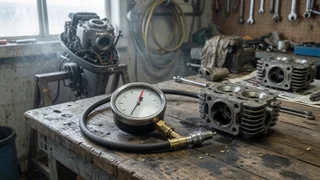
Boat Engine Compression Tester
A boat engine compression tester is a diagnostic gauge used to measure cylinder sealing pressure in gasoline inboard, outboard, and sterndrive powerheads. Choosing the right kit matters because low or uneven readings can point to worn rings, leaking valves, or a failing head gasket before you pull the engine apart. The tool must thread into the spark plug hole, hold peak pressure, and fit the engine configuration you service. Buyers should compare gauge accuracy, hose length, adapter coverage, and relief valve design rather than buying the cheapest automotive-style tester. This guide explains what to look for when choosing and buying a marine compression tester.
The direct answer
For most recreational boat owners, the best choice is a compression tester kit with a threaded hose, a quick-connect or screw-on adapter set, and a gauge scaled high enough for marine gasoline engines, typically including a range that reads at least 200 psi comfortably. A threaded connection is safer and more consistent than a rubber-tip gauge held by hand, especially when you are pulling the starter cord or cranking the starter alone. Outboard and sterndrive cylinder heads often position spark plugs deep inside cowlings, so a flexible hose and narrow adapters make the job practical without removing surrounding parts.
The exact adapter size depends on the spark plug thread used by your powerhead. Many small outboards and personal watercraft engines use a smaller-diameter thread than common automotive plugs, while larger sterndrive and inboard engines often share familiar 14 mm or 18 mm threads. Because no single guess is reliable, a kit that includes several common marine and small-engine adapters reduces the chance of a wasted purchase. Confirm your engine’s spark plug thread and reach from the service manual or the old plug before selecting a kit with fixed adapters.