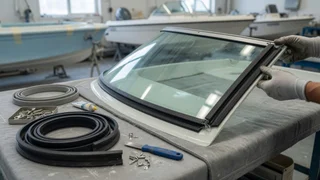
Boat windshield molding and seals
Boat windshields rely on flexible moldings and seals to keep spray, rain, and wind out of the helm area. These trim pieces do more than finish the edge of the glass; they create a water barrier, reduce vibration, and protect the acrylic or tempered panel from chipping. Over time, sun, flexing, and moisture can harden or crack the material. Recognizing how these glazing components work helps a boat owner spot water ingress early, judge seal condition, and choose an appropriate replacement for their vessel.
Essential answer
Boat windshield molding is the flexible trim or channel that frames the windscreen panel, while the seal is the compressible weatherstrip that closes the gap between the frame and the deck or console. Together they provide glass fitment that tolerates hull flex and thermal expansion. The molding often carries a locking spline that presses the windshield into a metal or fiberglass track, whereas the seal can be a bulb, lip, or adhesive-backed gasket. Their scope includes walk-around windshields, center consoles, and curved side panels that experience constant wiper contact and spray.
The practical distinction matters when a leak appears. A cracked outer molding does not always mean the inner rubber molding has failed, and a failed seal may simply be a flattened deck gasket rather than a broken frame. Because most marine glazing is not structural glass, the flexible interface permits movement without cracking the panel. When visibility is reduced by water streaking inside the glass, the first useful step is to inspect the molding-to-frame joint and the bottom seal for tears, shrinkage, or gaps, then compare what is present with the vehicle specification for that helm layout.