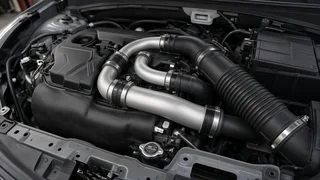
Best Intercooler for Hyundai Veloster Turbo

Choosing a better intercooler for a Hyundai Veloster Turbo starts with understanding why the stock unit becomes a restriction. As the turbocharger compresses intake air, it also raises charge-air temperature. Hotter air is less dense, so the engine receives less oxygen for combustion even when boost pressure looks unchanged. An upgraded heat exchanger lowers that temperature before the air reaches the throttle body. The goal is more consistent power, reduced heat soak during repeated pulls, and a safer margin against knock. This means evaluating core size, end tank design, and fitment rather than chasing the largest possible part.
Relevant entries
A meaningful intercooler selection for the Veloster Turbo should begin with front-mount replacement options that increase core volume and improve airflow over the factory side-mounted layout. A larger bar-and-plate core offers greater thermal mass, so it can remove more heat from the compressor outlet air during sustained boost. The end tank shape matters because smooth internal transitions reduce pressure loss. If the charged air has to navigate sharp corners or abrupt cross-section changes, the turbo must work harder just to overcome that restriction, which partly erases the benefit of denser intake air.
Direct-fit replacement intercoolers designed around the Veloster Turbo chassis also address hose connection placement and clearance with the bumper beam and radiator support. Owners commonly consider upgraded cold-side piping when replacing the core because reducing the number of restrictive bends and flexible sections helps preserve the pressure gained from lowering temperatures. While oil contamination inside the intake tract is a separate crankcase ventilation issue, a clean intercooler and piping route prevents that residue from masking the cooling benefit. For this car, the most useful choice is typically a well-supported front-mount kit that minimizes cutting and preserves daily driving reliability.