Best Car Speakerphones
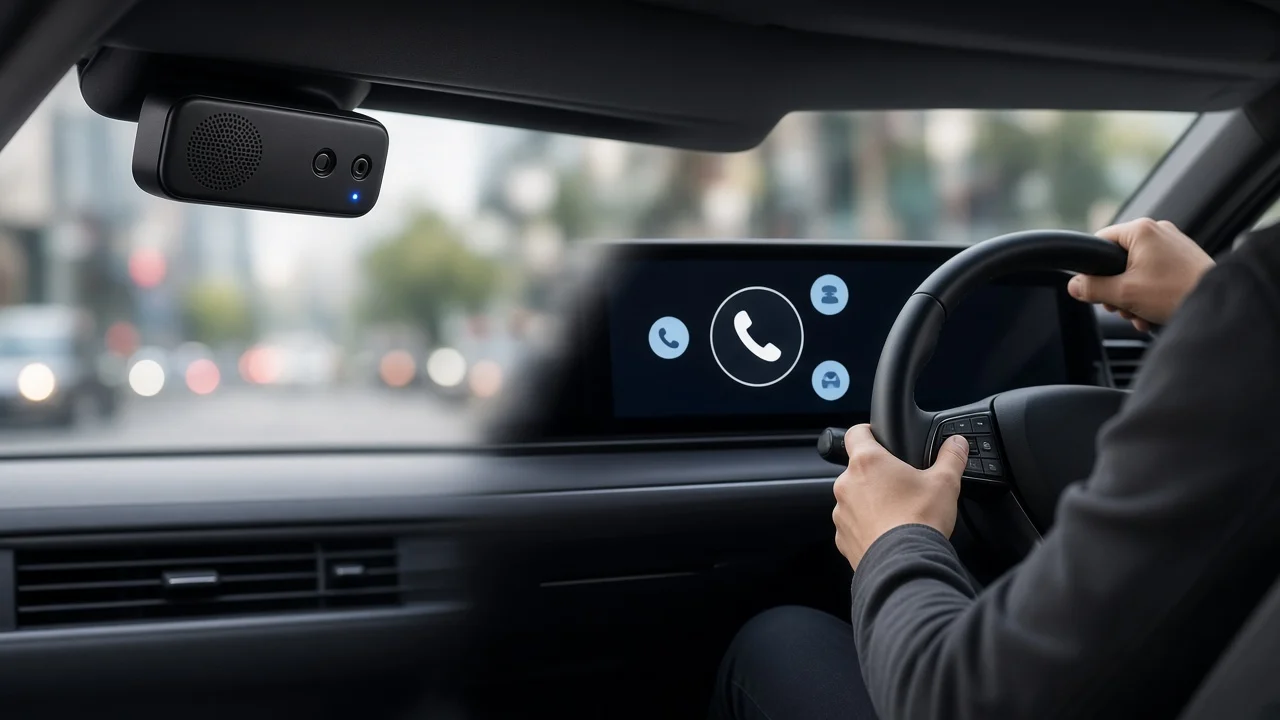
A car speakerphone lets you take and make phone calls while driving without holding the phone. The device pairs with your phone over Bluetooth, sends the caller's voice through a speaker, and picks up your voice with a microphone. Several kinds of hardware can do this job, and the right one depends on what your vehicle already has, where the microphone will sit, and how much installation you are willing to do.
What This List Covers and How It Is Ordered
This list includes any in-car setup whose main job, or one of its main jobs, is hands-free Bluetooth calling through a speaker rather than through an earpiece. It is a selection of the main device types a US buyer is likely to consider. It is not a complete inventory of every brand or model on the market.
The entries are ordered from least to most integrated with the vehicle: a self-contained unit first, then adapters that use the car's existing speakers, then systems built into the dashboard. This is not a quality ranking. No comparable test results, specifications or prices were available for this guide, so no device type is placed above another on performance.
The Selection
1) Visor-Clip Bluetooth Speakerphone
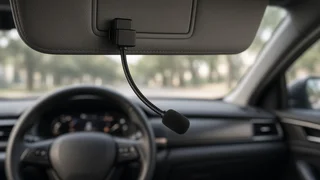
This is what most people mean by a car speakerphone. It is a battery-powered unit with its own speaker and microphone that clips to the sun visor. It works on its own, so it does not depend on the car's audio system, aux port or radio. That makes it a practical option for older vehicles without Bluetooth, for rental cars, and for drivers who move between vehicles. The trade-off is that a small built-in speaker is usually less full-sounding than the car's own speakers. The battery also needs regular recharging.
2) Bluetooth FM Transmitter with Built-In Microphone
An FM transmitter plugs into the 12-volt accessory socket, which is the former cigarette-lighter outlet. It broadcasts phone audio on a low-power FM frequency that you tune the car radio to. Call audio then plays through the vehicle's speakers, and a microphone on the transmitter picks up your voice. It suits cars that have an FM radio but no Bluetooth and no aux input. Two limits apply. Reception can suffer from interference where the FM band is crowded, and a microphone mounted low near the socket may sit farther from your mouth than a visor-mounted unit. Some models offer a separate microphone that you can place closer.
3) Bluetooth Aux Receiver with Microphone
This small adapter plugs into a 3.5 mm auxiliary audio jack and is usually powered over USB. It sends call audio into the car's stereo through a wired connection, which avoids FM interference. It only works if your vehicle has an aux input, which varies by make, model, model year and trim. Some setups pick up electrical hum, often called ground-loop noise, when the adapter and the stereo share power. Placing the microphone well matters here too.
4) Aftermarket Head Unit with Hands-Free Calling
Replacing the factory radio with an aftermarket stereo that has Bluetooth calling gives you integrated hands-free calls in a car that never had them. These units usually include an external microphone that is routed to the headliner, the A-pillar or the steering column. Many also support Apple CarPlay or Android Auto. This is the most involved option. Whether a head unit fits depends on the dashboard opening, the wiring and any steering-wheel control adapters your specific vehicle needs, so check fit for your exact make, model and year before buying.
5) Factory Hands-Free System
Many vehicles ship with Bluetooth hands-free calling built into the infotainment system, with microphones near the driver and controls on the steering wheel. If your car already has this, an add-on speakerphone may not be needed. Availability depends on the make, model, model year and trim, so two cars with the same model name can differ. Apple CarPlay and Android Auto are related but different: they are phone-projection interfaces that run on a compatible infotainment screen, and they use the car's existing microphones and speakers for calls rather than adding new calling hardware.
Related but Not Equivalent: Bluetooth Headsets
Single-ear Bluetooth headsets are often sold alongside car speakerphones, but they are a different category. The microphone sits near your mouth, which can help in a noisy cabin, but the audio goes to your ear instead of a speaker. Rules on wearing headsets or earbuds while driving vary by state, so check local law if you are considering one.
Side-by-Side Overview
Type | Uses car speakers | Vehicle requirement | Installation; Visor-clip speakerphone | No | None | Clip on, recharge battery; FM transmitter | Yes, through radio | FM radio and 12 V socket | Plug in, tune frequency; Aux receiver | Yes, wired | Aux input and USB or 12 V power | Plug in, place microphone; Aftermarket head unit | Yes | Compatible dash opening and wiring | Professional or skilled DIY; Factory hands-free | Yes | Equipped from the factory | Pair phone only
Features That Shape Call Quality
Hands-Free Profile (HFP): the Bluetooth profile used for two-way phone calls. A device needs it for calling, not just for music streaming, which uses a separate profile called A2DP. Noise reduction and echo cancellation: processing that suppresses road noise and stops the caller hearing their own voice back. This matters most at highway speeds. Microphone position: a microphone closer to the driver's mouth generally captures clearer speech than one near the floor or center console. Multipoint: lets the device stay connected to two phones at once, which helps if you carry a work phone and a personal phone. Controls and voice assistant access: physical buttons or a single press to reach Siri or Google Assistant reduce how often you need to touch the phone. Power source: a battery unit needs charging, while plug-in units depend on a working socket or USB port.
Choosing the Right Type for Your Vehicle
Start with what the car already offers. If it has built-in Bluetooth calling, try that first. If it has an aux jack but no Bluetooth, an aux receiver keeps audio wired and free from radio interference. If it has only an FM radio, a transmitter is the simplest plug-in route. If you want something independent of the car, or you switch vehicles often, a visor-clip unit is the most portable choice. If you plan to keep the vehicle for a long time and want integration close to factory level, an aftermarket head unit is the most complete upgrade.
Gaps in This Guide
No verified product test data, specifications, prices or model-specific reviews were available for this article. For that reason it groups options by type rather than recommending specific products or ranking them. Before you buy, compare current listings on Bluetooth version and profile support, battery life for portable units, and compatibility with your phone and vehicle.