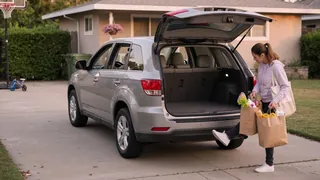
Hands-Free Liftgate Sensor: How It Works
A hands-free liftgate sensor turns an everyday inconvenience into a simple motion under the rear bumper. Instead of fumbling for a key fob or reaching for a handle while holding groceries, the driver makes a controlled kicking gesture. The system detects that movement and signals the power liftgate to open or close. Understanding this technology helps clarify why it sometimes responds instantly and other times seems to ignore the same motion.
Essential answer
A hands-free liftgate sensor is a proximity-based assist feature that opens or closes a power tailgate without physical contact. The core qualification is that it does not work alone. It requires a compatible power liftgate, an active key fob nearby, and the correct kicking motion within a defined detection zone. When those conditions align, the sensor sends an activation request to the body control module. That module then commands the liftgate motor.
The practical scope covers convenience rather than security. The sensor does not unlock the vehicle by itself. Its job is limited to sending a signal after recognizing a valid gesture. The system also differentiates between a human leg motion and other objects moving under the bumper. That distinction reduces unintended openings from road debris, animals, or a car wash brush.
How it works
The operating principle usually relies on one of two sensor types: capacitive or ultrasonic. A capacitive system creates an electrical field below the bumper and detects changes when a leg enters that field. An ultrasonic system emits high-frequency sound waves and measures the reflection pattern. Both approaches look for a quick insertion and removal of an object, not a static presence. The signal is then compared with stored gesture profiles in the module's software.
This method has a practical effect: the kick must mimic a natural forward and backward step. A slow wave or a lingering leg may be ignored because it does not match the expected pattern. The system also requires the fob to be within a short range of the rear of the vehicle. That prevents someone without the key from opening the liftgate. Vehicle integration through connection settings and software compatibility determines how toggles in the infotainment system affect sensitivity and enable the feature.
Strengths, limitations and suitability
The main strength is genuine convenience when loading cargo. For a driver carrying a child, bags, or tools, the foot gesture removes the need to free a hand. The system is also useful in wet or dirty conditions where touching a handle is undesirable. The approach is generally reliable when the environment is clear and the gesture is consistent. The benefit is most noticeable on taller vehicles where a raised liftgate button is out of reach.
The limitation is environmental and geometric sensitivity. Snow, heavy rain, or a dirty sensor can reduce detection. A trailer hitch, aftermarket bumper cover, or rear step can alter the field. Some systems may not suit users with limited balance or mobility, because the kick requires standing on one leg briefly. Drivers who frequently park on uneven ground may find that the sensor's detection zone shifts slightly. The feature suits those who prioritize cargo convenience over absolute speed of operation.
Procedure
To operate the liftgate, stand about an arm's length behind the vehicle with the key fob in a pocket or bag. Make a quick, straight kicking motion toward the center of the rear bumper. The foot should go under the bumper and come back immediately. Do not hold the foot in place or sweep it side to side. After the kick, step back slightly. A confirmation sound or hazard flash may occur before the liftgate begins to move.
If the opening does not occur, first verify that the hands-free feature is enabled in the vehicle settings. The power liftgate must also be on. Check that all doors are unlocked or that the fob is no more than a few feet away. Wait a moment and try again with a slightly faster motion. Avoid standing too close, because the system may be looking for motion farther under the bumper. For a closing command, repeat the same kick while the liftgate is open. Some vehicles allow a kick to stop a moving gate.
Diagnosing a problem
When the liftgate does not respond, separate the symptom from the cause. First, test the key fob range by using the button. If the button works but the kick does not, the sensor or its connection is suspect. Check the underside of the bumper for mud, ice, or physical damage. A cracked sensor housing or a loose wiring connector can interrupt the signal. Aftermarket accessories like a tow bar can block the detection field.
A diagnostic trouble code for a hands-free sensor is evidence to investigate, not proof that the module has failed. The same code can appear for a wiring issue, a software setting change, or a low-voltage condition in the battery. Use a scan tool that can access body control module data and watch the sensor's live status while making the gesture. If the status never changes, the issue is likely with the sensor input. If the status changes but the motor does not run, look next at the power liftgate drive and latch circuit.