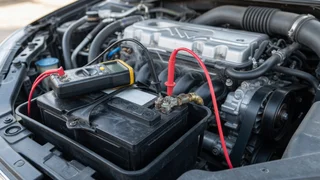
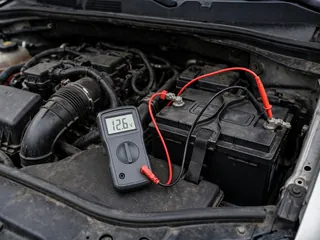
Battery voltage when the engine is running

A running engine should push charging voltage above the battery's rested level, but the exact reading depends on where you measure and what the charging system is doing at that moment. Knowing what to expect at the battery terminals helps separate normal alternator output from a regulation issue, a slipping belt, or a measurement taken before the system has stabilized.
Essential answer
With the engine running, a healthy charging system typically raises system voltage at the battery terminals above the roughly 12.4 to 12.6 volts you would see with the engine off and the battery fully settled. The alternator must produce enough charging output to replenish the energy used during starting while also supplying the ignition, fuel, lighting, and accessory loads. Because the voltage regulator continuously adjusts field current, the reading moves with engine speed, electrical demand, and temperature rather than holding one fixed value.
The measurement is most useful when the engine is at a fast idle and major loads are steady. A reading that stays near the rested battery level suggests little or no charging output, while a value far above the regulated range can point to overcharging or a reference-voltage problem. Before treating any number as a fault, confirm the meter connection at the battery terminals and account for voltage drop in cables, since corrosion or a poor ground can change what appears at the posts even when the alternator itself is working.