Bad Brake Fluid Level Sensor: Symptoms and Testing
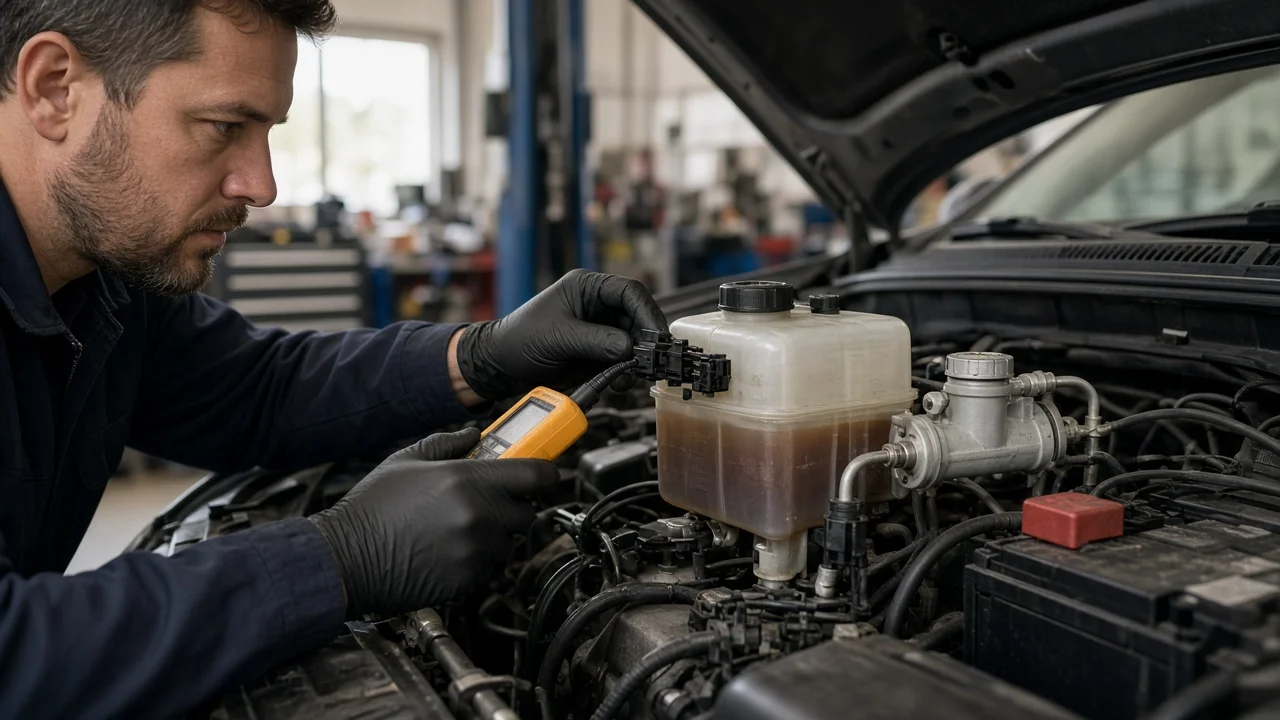
A brake fluid level sensor has one job: warn the driver when the reservoir level drops too low. When it fails, it can show a warning with a full reservoir, or it can stay silent when the fluid really is low. The second failure is the dangerous one. This guide covers the symptoms of a bad brake fluid level sensor, how to tell them apart from genuine fluid loss, and how to test the sensor in a sensible order using your vehicle's service information.
Establish the symptoms
Start by writing down exactly what the dashboard shows and when. On most vehicles the sensor feeds the red brake warning lamp, which is often the same lamp used for the parking brake. Other vehicles show a text message such as a low brake fluid alert. A faulty brake fluid level sensor usually produces one of these patterns. The warning stays on even though the fluid sits between the MIN and MAX marks. The warning flickers on and off with no change in level. The warning appears only over bumps, under hard braking or in turns. Or the warning never comes on, even when the level is plainly below MIN. On some vehicles a body or ABS control module monitors this circuit, so you may also see a stored diagnostic code or a related message.
Note the conditions around each event. Was it a cold start or after driving? Was the car on level ground or a slope? Was it wet weather or right after a car wash? Recent work matters too. Brake pad replacement, a fluid flush, a new reservoir cap or bodywork near the master cylinder all change the picture. Also note how the brake pedal feels. A firm, consistent pedal with an erratic light points one way. A low or soft pedal with a lit warning points to something far more serious.
Distinguish plausible causes
The most common reason for a low fluid warning is low fluid. As brake pads and their friction material wear, the caliper pistons move outward. The fluid that fills the extra space comes from the reservoir, so the level falls gradually over the life of the pads. A slow drop that matches worn pads points to normal wear, not a sensor fault. Leaks show up differently: a faster drop, damp residue near a wheel, the master cylinder or a brake line, or a pedal that feels different than before. In both cases the sensor is doing its job.
A light that flickers only when braking or cornering is ambiguous. If the level sits right at the MIN line, the fluid sloshes and trips the switch intermittently, and that is correct behavior. If the same flicker happens with the level well above MIN, sloshing is unlikely to explain it. The more likely causes are a sticking float, a damaged switch inside the sensor or a loose connection. Other possibilities include corrosion or fluid inside the connector, chafed wiring that grounds the signal circuit, or a float that has absorbed fluid or stuck to sludge in a contaminated reservoir.
Because the lamp is often shared, a parking brake that is not fully released can mimic a bad brake fluid level sensor. So can a parking brake switch that stays closed. Less often, the fault is in the instrument cluster or in the module that reads the circuit. Many vehicles light the brake warning briefly at key-on as a bulb check. If yours does and the light never comes on, even at key-on, suspect the lamp or display circuit rather than the sensor.
Checks in a useful order
Begin with checks any owner can make safely. Park on level ground with the engine off and release the parking brake fully. Wipe the reservoir clean so you can read the level against the MIN and MAX marks. Look at the brake fluid itself: very dark fluid or debris in the reservoir makes a sticking float more likely. Check the inner side of each wheel, the area below the master cylinder and the ground under the car for wet spots. Make sure the electrical connector on the reservoir or cap is fully seated and free of fluid and corrosion. Do not top up past MAX just to clear a light. If the pads are worn, the extra fluid will overflow when new pads push the pistons back. Brake fluid damages paint, so cover nearby surfaces before you open anything.
If the level is correct and the light stays on, you can try two simple checks. First, if the sensor or cap lifts out without opening the hydraulic system, move the float gently and watch whether the warning changes. Second, unplug the sensor connector with the ignition on and see what the warning does. How to read that result depends on whether your vehicle's circuit closes or opens at low level, so check the wiring diagram in the service information first. On vehicles where a module monitors the circuit, unplugging the connector may set a code of its own.
The bench test uses a multimeter across the sensor terminals. Take one reading with the float in the full position and another in the low position. The reading should switch clearly between the two states specified for your vehicle. Some sensors act as a simple open or closed switch. Others include a resistor so the module can detect a broken wire, which means resistance values vary by vehicle and there is no universal number to test against. Some jobs are better left to a qualified technician: tracing the wiring back to the module, reading codes with a scan tool, and any work that requires draining the reservoir or involves a sensor built into the reservoir body.
Interpret the findings
Each result narrows the problem, but no single result justifies buying parts. If the level is at or below MIN, the warning is valid. The next question is whether pad wear or a leak explains the drop. Answering it means measuring pad thickness and checking the brake rotors against the wear limits, and inspecting the system for leaks. A strong case for a faulty sensor or float needs three things together: a correct level, a sensor that does not change state when the float moves, and a clean connector. If the sensor switches correctly on the meter but the light stays on, suspect the wiring, the parking brake switch or the module that reads the signal.
Confirm the diagnosis before replacing anything. Check that the replacement part matches your vehicle fitment, because sensors and reservoir caps vary by model, year and sometimes brake system option. After the repair, clear any codes and cycle the ignition. Confirm the warning stays off at the normal level and, where the design allows a safe check, comes on with the float in the low position. If the light comes back unchanged, the original diagnosis was incomplete.
Urgency and next action
Treat any brake warning as real until it is proven otherwise. Stop driving and arrange service if any of these apply: the pedal feels soft, sinks or travels farther than usual; fluid is visibly leaking; the level is below MIN or keeps dropping after a top-up; the red brake light comes on together with the ABS warning; or the vehicle pulls to one side or takes longer to stop. In those cases, towing is the safer choice. Neither a sensor fault nor a low fluid level tells you how far the car can safely be driven, so do not rely on a remaining distance.
If the pedal feels normal and the level is correct, the problem may be electrical. Even so, a sensor that fails silently removes your warning of real fluid loss. Arrange the repair promptly and check the reservoir often until it is fixed. Give the shop the vehicle year, make, model and VIN, a description of when the light appears, the fluid level you observed, any recent brake work, any scan tool codes and the results of your meter tests. That information shortens diagnosis and helps the technician confirm whether the sensor, the wiring or the hydraulic system needs attention.