Applying for Australian Vehicle Import Approval: How the Process Works

Anyone planning to bring a car into Australia needs a vehicle import approval from the federal Department of Infrastructure before the vehicle is shipped. Australian car import approval is not a customs formality. It is the regulator's decision that a particular vehicle is eligible to enter the country under a recognised import pathway. Whether you can get one depends mainly on the vehicle's age, its market specification, and whether it can be shown to meet Australian safety and emissions requirements.
The short answer
You apply to the federal regulator for an import approval for a specific vehicle, and you must hold that approval before the vehicle leaves its origin country. Approval is granted only when the vehicle fits an eligible pathway under the Road Vehicle Standards framework. Eligible pathways include vehicles old enough to qualify under the older-vehicle provisions, vehicles listed as eligible specialist or enthusiast models, and vehicles that are already type-approved for the Australian market.
Two qualifications change the picture for most people. First, an import approval only allows the vehicle into the country. It does not register the car or make it road-legal in any state or territory. Second, a newer vehicle built for another market is often not eligible at all, however desirable it is, unless it appears on the relevant eligibility list or can enter through a narrow concession.
What import approval actually is
Australia regulates vehicles entering the country for road use through the Road Vehicle Standards Act 2018, which replaced the older Motor Vehicle Standards Act regime. The import scheme run by the Department of Infrastructure under this law sets out who can import road vehicles and on what terms. Applications are made online through the department's road vehicle regulatory system, which is commonly called ROVER.
The approval is tied to one vehicle, usually identified by its VIN or chassis number. It is tied to one pathway and is subject to conditions. Those conditions can include having the vehicle modified and inspected before it is supplied or registered.
How it differs from customs clearance and registration
People often confuse three separate steps. Each is handled by a different authority and answers a different question.
Step | Handled by | What it decides; Vehicle import approval | Federal Department of Infrastructure | Whether this vehicle is eligible to be imported, and under what conditions; Customs clearance | Australian Border Force, plus biosecurity authorities | Whether duties and taxes are paid, the import documentation is in order, and the vehicle is clean and free of prohibited items; Registration | State or territory road authority | Whether the vehicle can be driven on public roads, including roadworthiness and local rules
Because these steps are separate, passing one does not guarantee the next. A vehicle can hold a valid import approval and still face problems at customs, for example over contamination or undeclared components. It can also clear customs and then need further work before a state will register it.
The main eligibility pathways
Vehicle eligibility is the core of any application. The pathway you choose determines the evidence you must supply and what has to happen after the vehicle arrives. The broad options are:
Older vehicles: vehicles manufactured more than 25 years before the import date can generally be imported without showing compliance with current standards. This is a rolling threshold, so the eligible cohort moves forward each year. Specialist and Enthusiast Vehicles (SEV): certain lower-volume or significant models not sold new in Australia can be added to an eligibility list. Once a model is listed, eligible examples can be imported. They usually must then be modified and checked by a Registered Automotive Workshop and entered on the Register of Approved Vehicles before being supplied or registered. Type-approved vehicles: vehicles already approved for the Australian market, typically through the manufacturer, have a defined route onto the Register of Approved Vehicles. Other concessions: narrower pathways exist for purposes such as temporary visits, motorsport or testing. These carry their own conditions and usually do not lead to normal road registration.
Eligibility depends heavily on the exact variant. Two cars that share a model name can be treated differently because of model year, engine, body style or the market they were built for. Check against the precise build, not the badge.
Safety standards and emissions compliance
Newer vehicles are generally expected to meet the Australian Design Rules. These are national standards that cover areas such as occupant protection, lighting, braking and emissions. A vehicle built to another market's specification may differ in ways that affect compliance, including seatbelts, child-restraint anchorages, lighting patterns, speedometer units, emissions equipment and fuel requirements.
Under the SEV route, closing these gaps is the job of the Registered Automotive Workshop, which works to an approved model report for that vehicle type. Under the older-vehicle route, current design rules generally do not apply at import. However, the state or territory will still assess the vehicle before registration, and some jurisdictions have their own rules on matters such as left-hand-drive vehicles.
Import documentation you should expect to provide
Exact requirements vary by pathway, but applications commonly ask for evidence that identifies the vehicle and supports its eligibility. Typical items are:
Proof of the vehicle's identity, such as the VIN or chassis number and clear photographs of identification plates; Evidence of the manufacture date, especially for the older-vehicle pathway; Ownership or purchase documents, such as a title, registration certificate or bill of sale; Details of the importer; For SEV imports, confirmation that the specific variant matches an eligible listed model
Inconsistent or unclear documents are a common cause of delay. If a manufacture date or VIN cannot be clearly established, the application may stall until better evidence is supplied.
Customs clearance issues to plan for
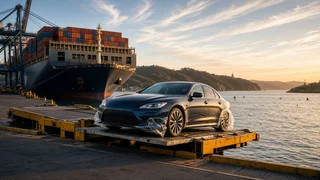
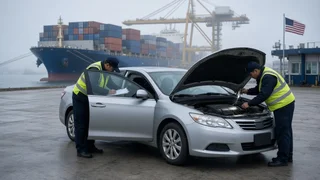
Once approval is granted and the vehicle is shipped, customs clearance becomes the next hurdle. Importers should expect the following:
Taxes and charges: depending on the vehicle and its origin, these can include customs duty, GST and, for higher-value cars, luxury car tax. Biosecurity: vehicles must arrive free of soil, plant material, insects and other contamination. Dirty vehicles can be held for cleaning at the importer's cost. Asbestos: Australia prohibits importing goods that contain asbestos. Some vehicles, particularly older ones, may have asbestos in gaskets, brakes or clutches. Importers may be asked for evidence that the vehicle is free of it, or may have to remove affected parts before release.
A practical order of steps
Identify the exact vehicle, including model year, variant and market specification. Work out which pathway it fits, if any, before you buy it. Gather the import documentation that pathway requires. Apply for vehicle import approval and wait until it is granted. Arrange shipping only after approval is in hand. Complete customs and biosecurity clearance when the vehicle arrives. Meet any post-import conditions, such as workshop modification or Register of Approved Vehicles entry. Apply for registration with the relevant state or territory road authority.
Common mistakes
The most costly mistake is shipping a vehicle before approval is granted. A vehicle that arrives without a valid import approval may be refused entry, may face penalties, or may have to be exported again. Another frequent problem is buying a car on the assumption that it qualifies, then finding that its particular variant is not eligible or that the 25-year threshold has not yet been reached. It is also easy to underestimate what happens after landing, including compliance work, inspection, cleaning and state registration requirements.
Bottom line
Australian vehicle import approval is a pre-shipment permission from the Department of Infrastructure, and it depends on fitting the vehicle into an eligible pathway. Confirm eligibility for the exact vehicle first, secure approval before anything is shipped, and treat customs clearance and state registration as separate steps with their own requirements. Fees, processing times and eligibility lists change over time, so check the department's current guidance and the relevant state road authority before you commit to a purchase.