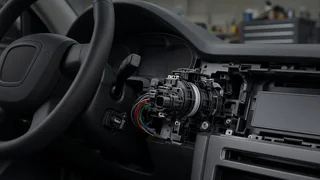
Audi steering angle sensor calibration (basic setting)
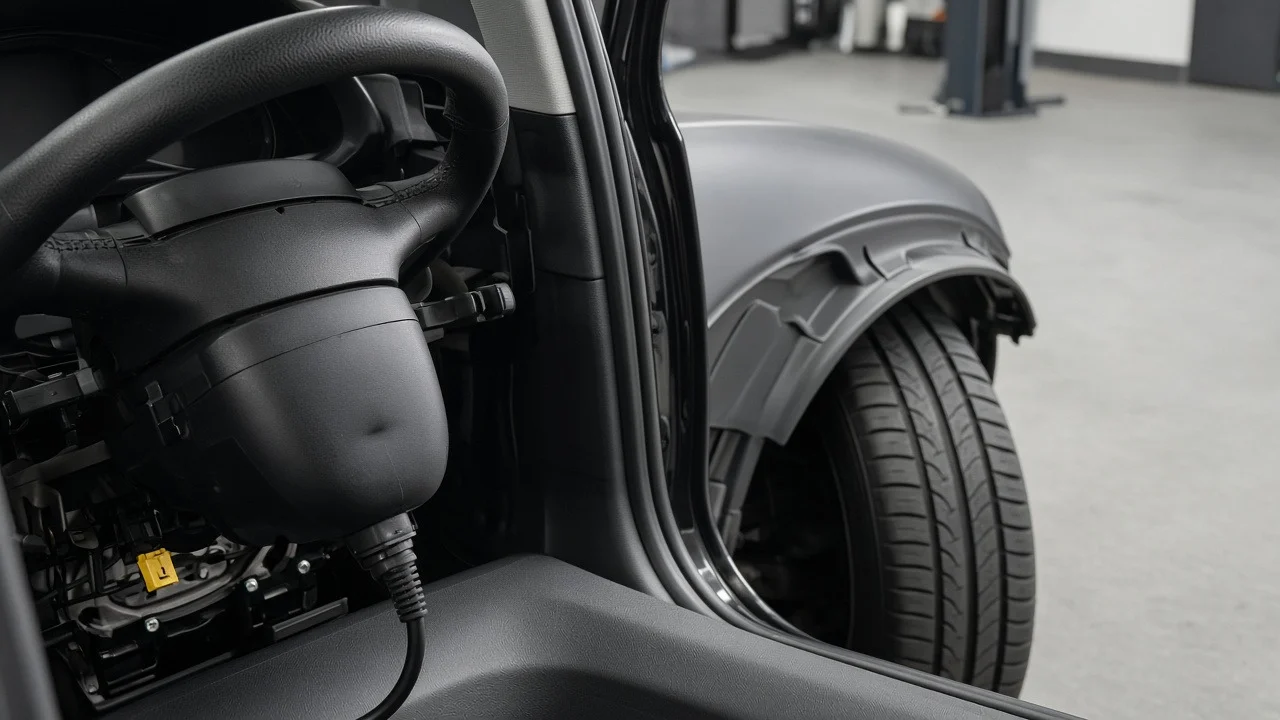
When a steering angle sensor loses its center reference, the stability and traction systems can misinterpret the driver's intent. For an Audi A1, the phrase “steering angle sensor basic setting” usually describes the process of teaching that sensor where straight ahead is. Similar tasks appear across the A3 8P, A4 B6/B7/B8, A5, and A6 C6, but the procedure is not a mechanical repair. It is an electronic calibration that aligns the sensor signal with the vehicle’s actual wheel position so that electronic stability control can intervene correctly.
Essential answer
The essential answer is that the Audi steering angle sensor basic setting is a zero-point calibration, not a parts replacement or a replacement for wheel alignment. The sensor measures the steering wheel’s rotation, but the control module must know which voltage or angle value corresponds to the front wheels pointing straight. A calibration routine stores that reference value. If the basic setting is missing or incorrect, the vehicle may log a steering angle fault and disable related assistance, even when the sensor itself is still electrically active.
In many Audi models, such as the A1, A3 8P, A4 B6/B7/B8, A5, and A6 C6, the calibration is performed after the steering angle sensor, steering column, suspension work, or a wheel alignment changes the relationship between the steering wheel and road wheels. The routine typically requires the wheels to be pointed straight ahead and the steering wheel centered. The exact menu path is manufacturer-dependent and may differ between generations, so a fault code showing a steering angle plausibility error is an instruction to verify the basic setting rather than proof that the sensor has failed.