Audi Q5 2.0 engine oil capacity
What oil capacity applies to a Q5 2.0
There is no single oil fill volume for every Audi Q5 with a 2.0-liter engine. Capacity changes with generation, whether the engine is a gasoline 2.0 TFSI or a diesel 2.0 TDI, the specific engine code, and whether the oil filter is replaced at the same time as the oil. The figure that matters is the one published for that engine in the owner’s manual or on the under-hood service label, then confirmed on the dipstick or the electronic oil-level display after filling.
TFSI is Audi’s turbocharged gasoline engine family; TDI is the turbocharged diesel family. Both have appeared as 2.0-liter units in the Q5, so a listing that only says “Q5 2.0” is incomplete until gasoline or diesel, model year, and engine code are known.
What changes the number
The first-generation Q5 (internal code 8R, broadly 2009–2017 in most markets) and the second-generation Q5 (FY, from 2017) use different 2.0-liter engines, sump designs, and filter arrangements. Later mild-hybrid and plug-in hybrid Q5 models that still use a 2.0-liter gasoline engine can differ again from a non-hybrid 2.0 TFSI of the same generation. Market and emissions specification can also change the engine code even when the badge still reads 2.0.
Service fill (oil plus a new filter) is the quantity used at a normal oil change. Dry fill, used only after an engine rebuild or a fully drained system, is higher and is not the figure for routine service. Using a dry-fill number on a running engine will overfill the sump.
Generation and model year (8R versus FY, plus facelift years within each generation); Fuel type: 2.0 TFSI gasoline or 2.0 TDI diesel; Engine code on the vehicle data sticker or in the service booklet (examples of families include EA888 gasoline and EA288 diesel; the exact code on the car is what the fill chart uses); Whether the oil filter is changed with the oil; Service fill versus dry fill
How to get the figure for one vehicle
Identify the engine from the VIN, the vehicle data sticker (often in the spare-wheel well, on a door jamb, or in the service wallet), or the engine-code stamp on the block. Match that code and model year to the capacities table in the owner’s manual or the workshop oil-capacity chart for that market. If the manual lists a range, treat the lower end as a starting fill and finish to the marks on the dipstick or the in-dash oil-level menu.
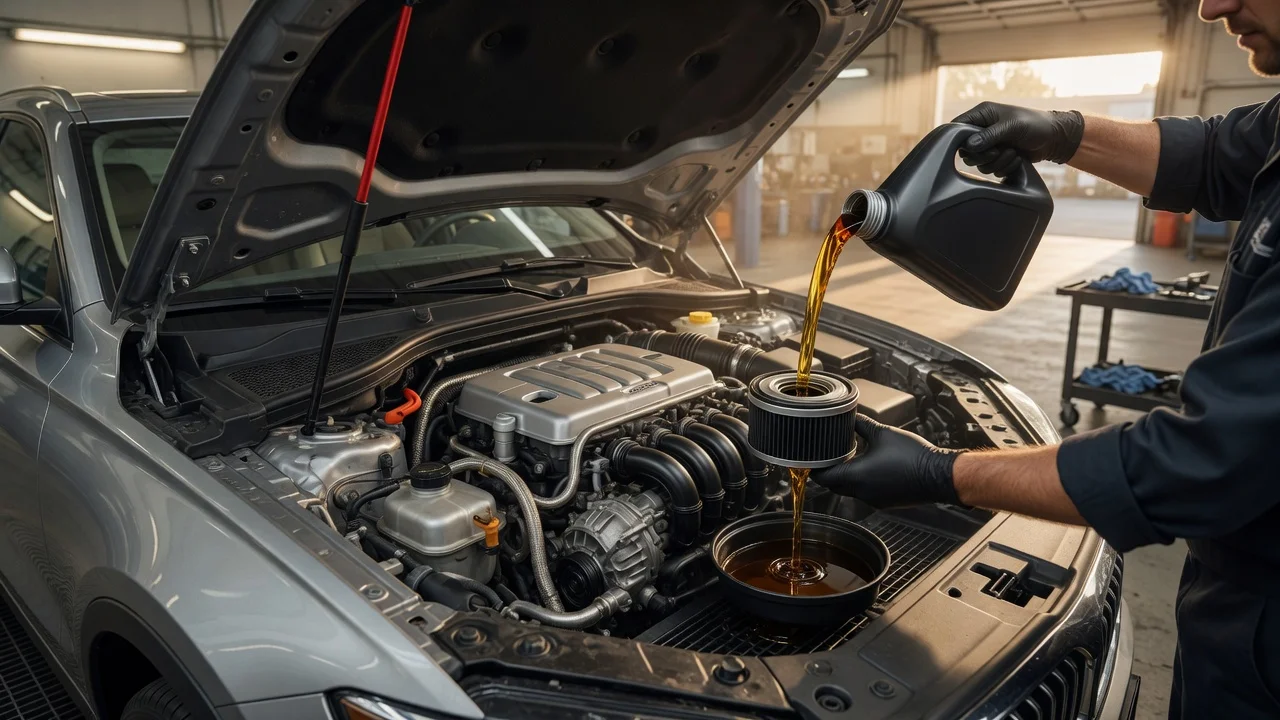
After a drain-and-filter change, add oil in stages, run the engine briefly, wait for the oil to settle, then read the level on a level surface with the engine at the temperature the manual specifies. Electronic oil-level systems on later Q5 models need a short wait and a correct ignition or running state before they report a valid reading. Stop at the upper mark; overfill can aerate the oil, raise crankcase pressure, and damage the catalytic converter or diesel particulate filter if oil is drawn into the intake.
Oil grade is separate from capacity
Capacity is how much oil the sump and filter hold. Grade is the viscosity and approval the engine is specified to use, typically an Audi/VW oil standard such as a 502 00, 504 00, 507 00, or later equivalent, plus a viscosity such as 0W-30 or 5W-30. The correct volume of the wrong specification is still the wrong oil. Use the approval printed for that engine and climate; long-life versus fixed-interval service can change both the oil spec and the change interval, not the sump capacity itself.
What this article cannot pin down
No single litre or quart figure is given here because the source material does not include a model-year-by-engine capacity table, and publishing one number would be wrong for a large share of Q5 2.0 engines. Workshop charts commonly place these four-cylinder Q5 engines in a band of roughly four to six litres for a service fill with filter, but that range is only a planning hint. The supported next step is to read the capacity for the exact engine code from the owner’s manual or dealer service data, fill short of the full listed amount, and finish on the dipstick or electronic level display.