Aluminum Hitch Mounted Cargo Carrier
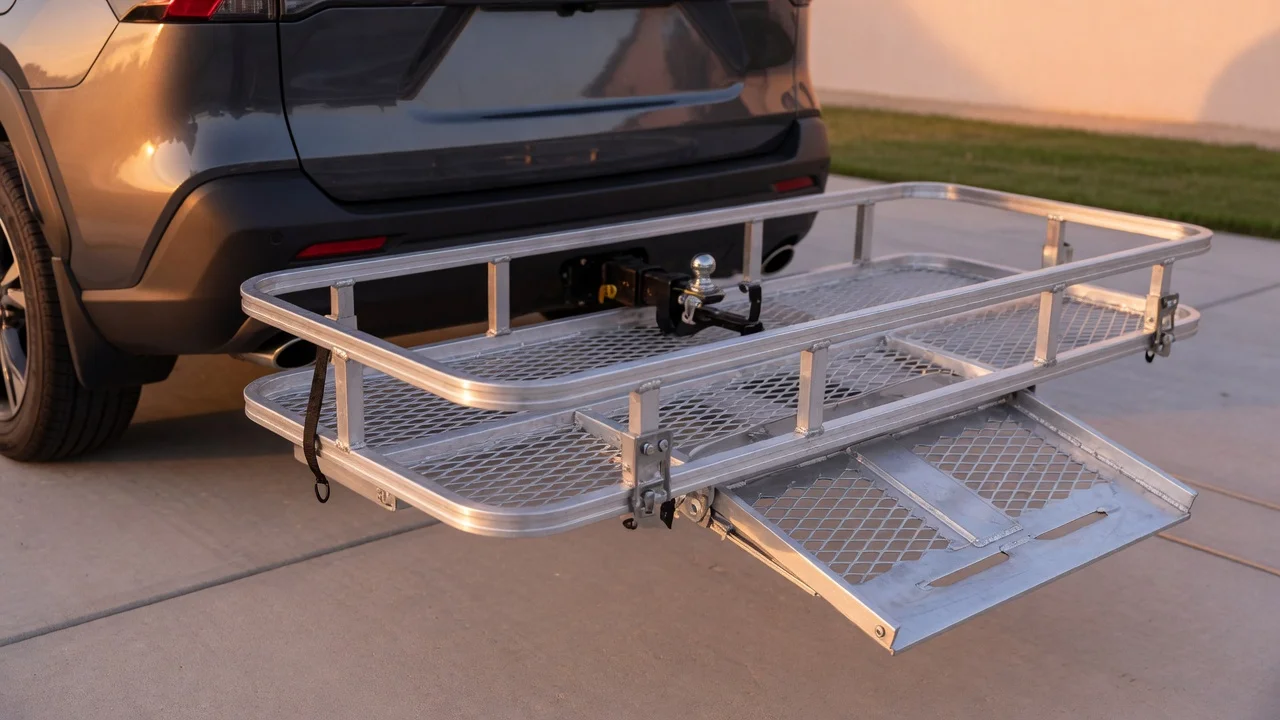
What an aluminum hitch mounted cargo carrier is and when it fits
An aluminum hitch mounted cargo carrier is a platform that slides into a vehicle's receiver hitch to carry gear outside the cabin or bed. Aluminum versions are chosen mainly to reduce corrosion risk and keep the empty carrier easier to lift and install than a comparable steel unit. The trade-off is that aluminum platforms often have a lower rated cargo capacity for the same footprint, so they fit best when the load is bulky rather than extremely heavy.
The immediate decision point
If the main question is whether an aluminum hitch mounted cargo carrier can work for a planned trip, the answer depends first on the vehicle's hitch rating and the total weight of the cargo plus the carrier itself. Aluminum construction does not change the hitch limit. A carrier that is light enough to handle easily may still overload a Class I or Class II hitch once loaded, even if the platform itself is rated for more.
Common platform sizes and what they actually mean
Many hitch cargo carriers are marketed with dimensions near 60 by 30 inches, although exact measurements vary by brand and model. A 60 x 30 hitch mounted cargo carrier generally refers to a platform about five feet long and two and a half feet wide. That size can hold several large storage totes or camping gear, but it may extend far enough behind the vehicle to affect departure angle on steep driveways, trails or ferry ramps.
Aluminum versus steel and the ramp-style carriers
Steel carriers such as the Apex UCC500 are typically built around a ramp design and are intended for heavier items that can be rolled or walked onto the platform rather than lifted. The ramp adds weight and increases the empty carrier's load on the hitch, which matters when the vehicle has a lower tongue weight limit. An aluminum hitch mounted cargo carrier is usually a flat open platform without an integrated ramp and is better matched to boxes, coolers and medium-weight cargo.
What to verify before buying
Check the receiver size first. Most full-size platforms use a two-inch receiver, while smaller or lighter carriers may fit a one-and-a-quarter-inch receiver with an adapter. The adapter can introduce movement and may reduce the usable tongue weight, so the carrier's shank size should match the vehicle when possible. Also confirm whether the platform can be folded upright when not in use, because some vehicles will block the hatch or tailgate if the carrier is left horizontal.
Load distribution and driving behavior
Keep the heaviest items centered over the hitch and as low as possible. Weight placed at the rear edge of a long platform exerts more leverage on the hitch than the same weight placed near the vehicle. A hitch mounted cargo carrier also changes rear clearance and overall vehicle length. Check straps or tiedowns after the first few miles, and avoid relying on a cargo net alone if the load has loose or shifting pieces.
Potential gaps in the available information
Published compatibility details can be incomplete. Some aluminum carrier listings do not clearly state whether the rated capacity is measured at the platform center or at the hitch pin, and that distinction affects safe loading. Brand-specific products mentioned in general searches, such as Adventuridge, may have limited model-year or fitment documentation. Without the exact part number and the vehicle's receiver specifications, capacity and compatibility should be confirmed directly against the manufacturer's current product information before purchase.