AISIN Locking Hubs Rebuild Kit: How to Choose the Right One
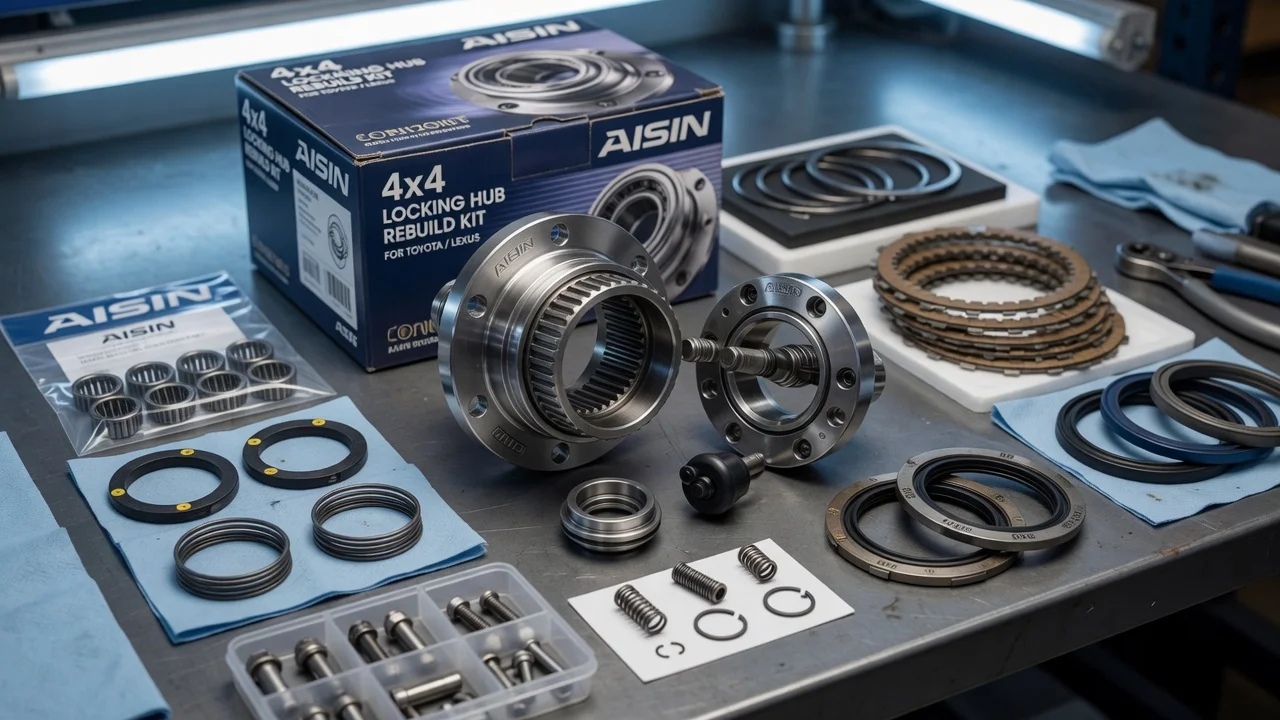
An AISIN locking hub rebuild kit can bring a tired manual hub back to reliable service for less than a complete replacement. That only works if the kit matches the hub on your axle and addresses the actual fault. This guide covers how to define the repair, confirm fitment against your vehicle configuration, judge kit contents, recognize what a rebuild cannot cure, and narrow your options to a short list before you order parts.
Define the job the product must do
Start with the symptom, not the part. Typical complaints with manual locking hubs include a dial that is stiff or will not turn, a hub that will not engage or will not release, grinding or slipping under load in four-wheel drive, and grease that comes out milky or gritty. Each points to a different cause. Water in the grease usually means a failed seal or O-ring. A hub that slips under load suggests worn internal engagement parts, while a dial that turns but does nothing may indicate a broken spring or snap ring. Knowing which of these you have tells you whether a seal-only kit is enough or whether you need internal hardware as well.
Then consider how the vehicle is used. A truck that engages four-wheel drive a few times each winter places different demands on the hubs than one that regularly fords streams, crawls through mud or drives on salted roads. Harsh operating conditions favor a kit with complete sealing and fresh springs, plus more frequent inspection afterward. Also be realistic about your constraints: available tools, time, workspace and budget. Many owners service the wheel bearings while the hub is apart, so decide in advance whether this is a hub-only job or part of a larger front-end service.
Check compatibility
Manual locking hubs vary in body diameter, mounting stud or bolt count, axle spline count and internal layout, even among vehicles from the same manufacturer. A kit made for one hub design will not necessarily fit another, so begin with the exact vehicle: make, model, model year, drivetrain and front axle type. Use that information to find the hub listing from the vehicle maker or kit supplier, and do not assume that a similar-looking truck uses the same parts.
Confirm the identity of the hub itself as well. Hubs are sometimes replaced over the years with aftermarket units, so the vehicle data alone may not reflect what is actually installed. Look for the manufacturer name and any part number cast or stamped on the hub body or cover, and check the service history if it is available. An AISIN kit is intended for AISIN hubs. If your vehicle now carries a different brand, choose a kit made for that hub instead.
When the kit arrives, or before ordering if dimensions are published, compare the new parts with the originals during inspection. O-ring diameter and thickness, snap ring size and spring dimensions should match closely. Also check whether the gasket between the hub body and the wheel hub is included, because it is easy to overlook and is required for reassembly.
Features that affect the choice
The biggest difference between kits is scope. A seal kit usually contains O-rings and gaskets only and suits hubs that work mechanically but leak or let in water. A fuller rebuild kit may add springs, snap rings, detent balls and sometimes engagement parts such as a clutch ring. Read the parts list closely and match it against the fault you identified earlier. Paying for a complete kit makes sense when the internals are worn, while a seal kit is enough when only the sealing has failed.
Treat labels such as heavy duty, OEM quality or premium as marketing until they are backed by something verifiable. Useful evidence includes a part number cross-reference to the original hub, published dimensions, a clear statement of seal material, and an exploded diagram or written instructions showing where each piece goes. Genuine kits from the hub or vehicle manufacturer are made to the original dimensions. Aftermarket kits can work well, but you must confirm fit yourself. Also check whether grease is included; most kits do not include it, and the correct type should follow the manufacturer specifications for your vehicle.
Limitations and ownership costs
A rebuild kit replaces wear items. It does not restore major components. Worn or twisted splines on the inner hub or axle shaft, a cracked or corroded hub body, a damaged dial or cover, a pitted spindle and worn wheel bearings are all outside what a kit can fix. If disassembly reveals any of these, a replacement hub or additional parts will be needed, and the cost comparison with a complete new hub changes. It is worth inspecting the hub before committing to a kit if you suspect heavy wear.
Budget for everything the job consumes, not just the kit. Expect to need cleaning solvent, the correct grease, and possibly new mounting hardware such as washers, cone washers or nuts if the originals are damaged. Tools usually include snap ring pliers, a torque wrench and the vehicle service manual. Torque values and wheel bearing preload must come from the manufacturer specifications for your vehicle; guessing can lead to bearing failure or hubs that loosen in use.
After the rebuild, ongoing care is simple but matters. Inspect the hubs as part of your regular maintenance schedule, and check for water after deep crossings or pressure washing. Many owners also engage the hubs occasionally to keep internal parts moving. There is no universal service interval for locking hubs, so base your inspection frequency on the vehicle maker's guidance and your actual operating conditions.
Build a practical shortlist
Narrow your options with a short set of checks rather than a ranking. First, confirm the hub identity from the vehicle data and the markings on the hub itself. Second, write down which parts have failed and make sure each kit you consider replaces them. Third, compare published dimensions or part number cross-references with the original parts. Fourth, note whether the kit is genuine or aftermarket and what evidence of fit the seller provides. Fifth, check whether instructions or a diagram are included. Sixth, total the full job cost, including grease, gaskets, hardware and any tools you lack. Finally, confirm the return policy in case the parts do not match.
Any kit that passes all of these checks is a reasonable candidate, and the final choice often comes down to completeness and availability. If the inspection shows worn splines, body damage or several failed internal parts beyond what the kit covers, set the rebuild aside and price a complete replacement hub instead. That decision is part of a sound repair, not a failure of the rebuild plan.