Dualmatic Locking Hubs: Identification and Fitment Guide
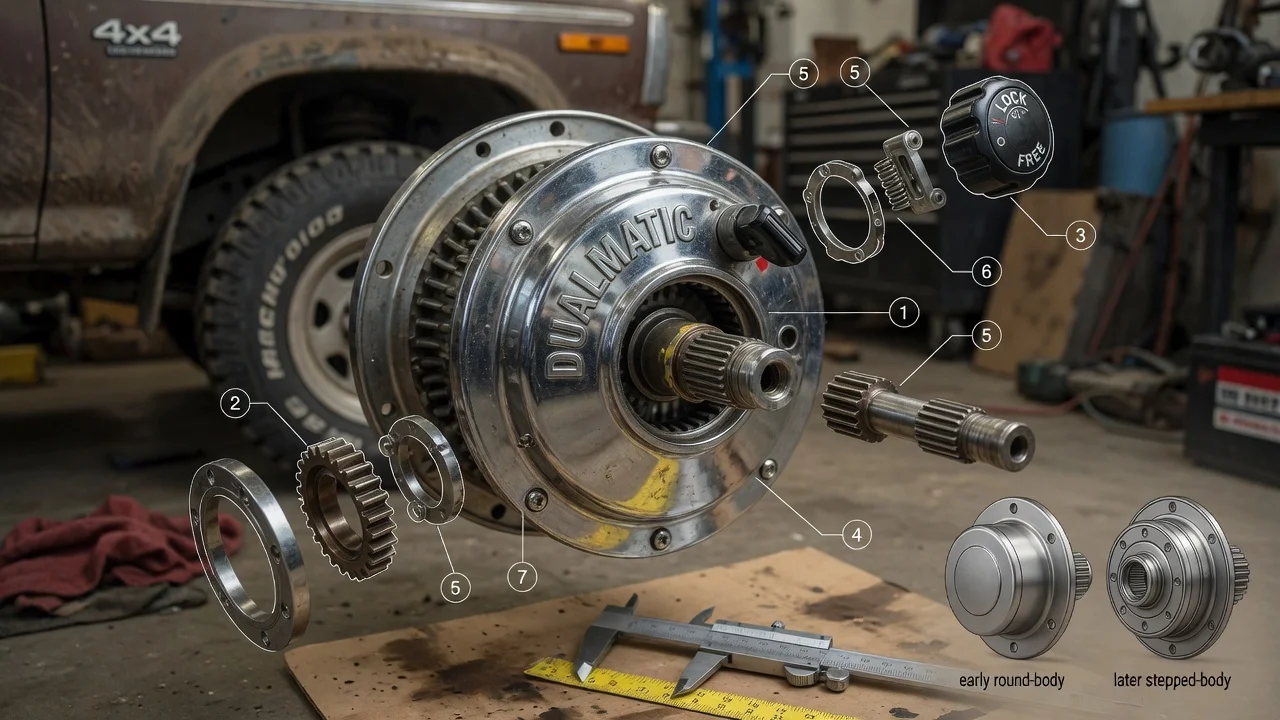
Dualmatic locking hubs are manual hubs found on many older four-wheel-drive trucks and utility vehicles, either as original equipment or as replacements. Before you buy or install a set, confirm it matches your axle. The brand name on the dial is not enough, because a hub that looks right can still have the wrong spline count, bolt pattern or wheel clearance. This guide explains how to tell what you have and what to check first.
The short answer on identification and fitment
A Dualmatic hub fits your vehicle only when it matches the front axle, not just the make and model year. To identify the hub, read its markings and any part number, count the mounting bolts or studs, and count the splines on its inner clutch gear. Then check those details against the axle actually installed on the vehicle: its model, the axle shaft spline count, the internal splines of the wheel hub and the space inside the wheel. If any of these differ, the hub may not bolt up. It may also fail to engage, or it may engage poorly and wear quickly.
How a manual locking hub works
A manual locking hub connects the front wheel to the front axle shaft or disconnects it. The hub body bolts to the outer end of the wheel hub. It has a gear that meshes with splines inside the wheel hub, so it always turns with the wheel. In the center, a sliding clutch ring rides on the splined end of the axle shaft. Turning the dial to lock moves that clutch so it joins the axle shaft to the hub body. Turning it back lets a spring pull the clutch away, so the wheel spins freely while the axle shaft stays still.
Locking the hubs does not put the vehicle in four-wheel drive by itself. The transfer case must also be shifted into a four-wheel-drive range before the front axle receives power. Owners fit these hubs mainly so they can run unlocked in two-wheel drive. That way the wheels do not spin the front axle shafts, differential and driveshaft, which reduces drag and wear on those parts. Because the hub carries driving torque, its splines, clutch, springs and retaining hardware must all match the axle precisely.
What changes the answer
The biggest variable is the front axle. Vehicles from the same manufacturer, and even the same model line, used different axles across years and option packages. Those axles can differ in axle shaft spline count, wheel hub design and stud pattern. A hub built for one axle will not fit another just because both carry the Dualmatic name. Brake configuration can also matter. The wheel hub and spindle hardware may change between drum and disc brake setups, which affects how the locking hub mounts.
Service history is the next factor. Many older four-wheel-drive vehicles have had axle swaps, wheel hub replacements, brake conversions or parts mixed from several donor vehicles. In that case the model year tells you little, and only measuring and inspecting the parts on the truck gives a reliable answer. Wheels matter too. An aftermarket wheel with a smaller center opening or a different offset may not clear a hub body that fit the original wheels. Used hubs are also sometimes rebuilt from mismatched internals, so a hub that looks complete may contain a clutch or gear from a different version.
What the owner can do before buying or installing
Start with the axle. Look for an identification tag or casting marks on the housing and note the axle model if you can read it. Remove one existing hub cap or hub assembly and count the fasteners that hold it, noting their spacing. Also note whether they are bolts threaded into the wheel hub or studs with nuts. Count the splines on the end of the axle shaft and inside the wheel hub. Photograph everything, including any numbers stamped or cast on the old hub. Then compare those observations with the hub you plan to buy. A seller should be able to give you the same counts and markings and show photos of the inside, not just the dial.
Inspect any used Dualmatic hub before trusting it. The dial should move firmly between positions with a clear detent, and the clutch should slide freely. The gear splines should show even wear, with no chipped or rounded teeth. Look for rust, dried grease, broken springs, cracked housings and missing snap rings or gaskets. When installing, follow the manufacturer specifications or a factory service manual for bolt torque, bearing adjustment, lubrication and sealing. After installation, lift the front wheel, set the hub to free and confirm the wheel spins without turning the axle shaft. Then lock the hub and confirm the shaft now turns with the wheel. Always set both sides to the same position.
Add the hubs to your regular maintenance schedule. How often they need inspection and fresh grease depends on operating conditions such as water crossings, mud and road salt. Use the interval for your vehicle rather than a generic figure, and check the hubs sooner after deep water or heavy off-road use.
Limitations and when to get help
A general guide cannot confirm that a specific part number fits your vehicle configuration. Catalog listings, interchange charts and seller descriptions can contain errors, and older references may not cover later axle revisions. The measurements and inspection described above are what settle fitment. A factory service manual for your exact vehicle is still the best reference for torque values and assembly procedure.
Have a mechanic who knows older four-wheel-drive systems inspect the front axle if you see any of these signs: the hub does not seat fully, the dial binds or cannot be turned by hand, or the hub slips, grinds or pops out of engagement under load. These symptoms can point to worn axle splines, incorrect bearing adjustment or wrong parts. Continuing to drive can damage the wheel hub, spindle or axle shaft. The same applies if the axle has been swapped and you cannot identify it confidently.