AISIN Locking Hub Fitment Guide: How to Find the Right Match
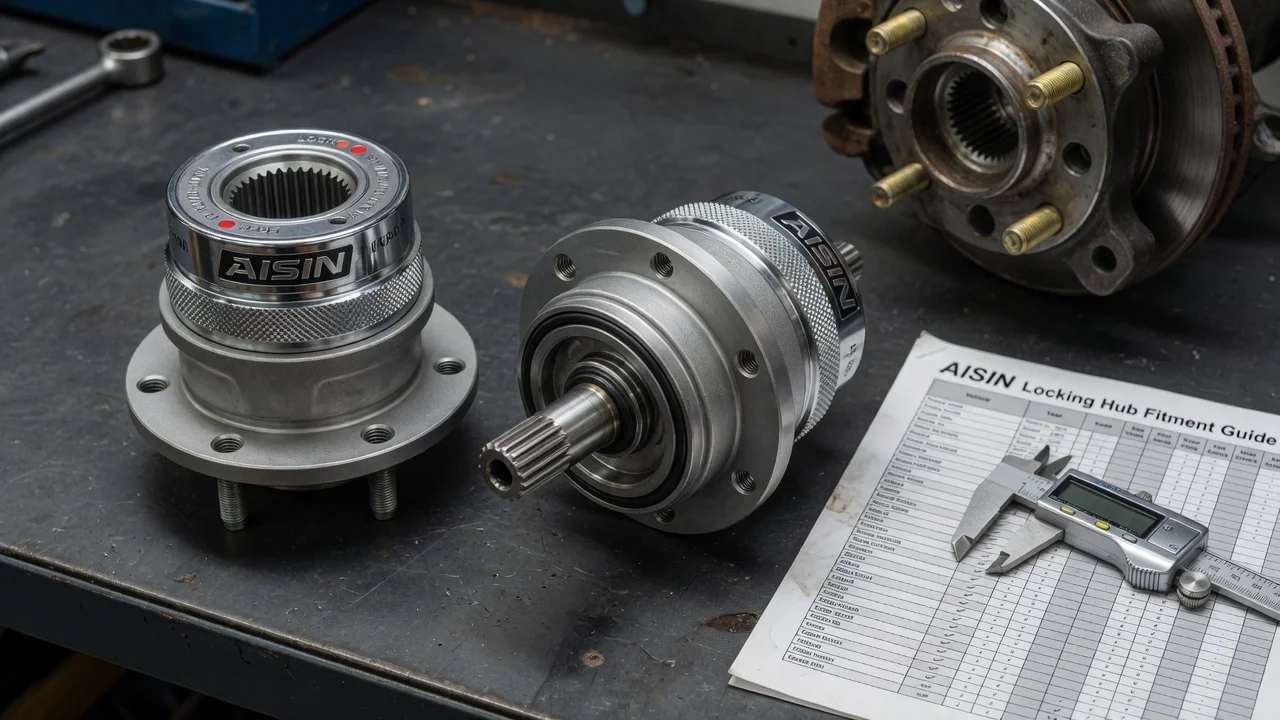
AISIN locking hubs are replacement front hubs for part-time four-wheel-drive trucks and SUVs. Whether a particular hub fits your vehicle depends on a few physical details, not on the brand name or a broad model listing. This guide explains what determines fitment, how locking hubs work, which configurations change the answer, and how to confirm a match before you order or install a replacement.
The Short Answer on AISIN Hub Fitment
An AISIN locking hub fits only the vehicles its part number was engineered for. AISIN builds hubs for several part-time 4WD platforms, and a hub that suits one truck can be wrong for a nearly identical model from another year, trim or market. Fitment depends on the vehicle configuration (make, model, model year and drivetrain), the spline count of the front axle shaft or drive gear, the number and layout of the mounting studs or bolts, and whether the vehicle uses manual or automatic hubs.
The most reliable approach is to check the AISIN part number against the vehicle, ideally by VIN, rather than relying on a general listing that says a hub fits a model range. If the truck has been modified or its hubs were swapped in the past, the installed parts may not match what left the factory. In that case you need to check the current hardware as well.
How Locking Hubs Work
On many part-time four-wheel-drive vehicles, each front wheel turns on bearings around a spindle, and the front axle shaft passes through the middle. The locking hub sits at the outer end and controls whether the wheel hub and the axle shaft are joined. When the hub is unlocked, the front wheels spin freely in two-wheel drive. The axle shafts, front differential and front driveshaft can then stay largely at rest, which reduces wear and drag. When the hub is locked, a sliding clutch or gear connects the splined axle to the wheel hub, so torque from the transfer case reaches the front tires.
Manual hubs have a dial with lock and free positions, and the driver turns it by hand at each wheel. Automatic hubs engage on their own when four-wheel drive is selected and the front axle starts to drive. They typically release after the vehicle is shifted back to two-wheel drive and driven a short distance in reverse. The exact engagement and release procedure differs by design, so follow the owner's manual for your vehicle.
Configurations That Change the Answer
Start with the drivetrain type. Locking hubs belong to part-time 4WD systems. Full-time four-wheel-drive and all-wheel-drive vehicles keep the front axle connected through a center differential and generally do not use selectable hubs. Some part-time designs also disconnect the front axle with an actuator inside the axle housing instead of at the wheels. If your vehicle has no hub dial or hub body at the wheel center, a locking hub may not apply at all.
Front suspension and axle design also change the parts. On the same nameplate, solid front axles and independent front suspension often use different hubs, spindles and axle splines. Production changes partway through a generation can alter spline counts or stud patterns, so model year alone is not always enough. Market matters as well, because some models were built to different specifications for different regions.
Manual and automatic hubs are not always interchangeable as complete units. On some vehicles, converting from automatic to manual hubs requires extra components, such as different inner hub bodies, retaining hardware or spacers. This is because the automatic design relies on parts at the spindle that a manual hub does not use. Check whether a hub is listed as a direct replacement or as part of a conversion kit.
How to Confirm Fitment Before You Buy
Begin with the paperwork. Note the VIN, model year, engine and drivetrain, and whether the truck currently has manual dials or automatic hubs. The service history can show whether hubs, axle shafts or spindles were replaced, which tells you whether the current hardware is original. If the old hub has a stamped or printed part number, write it down. It is often the fastest way to find the correct AISIN replacement or confirm a superseded number.
Next, inspect the existing hub. Count the mounting studs or bolts and note their spacing. Look at the outer diameter of the hub body and how it sits in the wheel center, and check that the wheel clears the hub cap. With the hub removed, count the splines on the end of the axle shaft or drive gear and compare that count with the specification for the replacement. Laying the old and new hubs side by side before installation is a simple safeguard against an incorrect listing.
Installation and Inspection Points
Take fastener torque, gasket or seal placement and lubrication from the manufacturer specifications in the service manual for your vehicle. These values vary between vehicles, so do not apply a general rule. Clean the mating surfaces, replace gaskets where the design calls for them, and confirm the retaining snap ring or bolts are fully seated. After installation, check that a manual hub turns smoothly between lock and free, and that the front wheels rotate freely when the hubs are unlocked.
Removing a hub is also a good chance to inspect the wheel bearings, spindle, seals and axle splines. Worn splines, rust inside the hub body or contaminated grease can cause poor engagement even with a new hub. How often these parts need attention depends on your maintenance schedule and operating conditions. Trucks that ford water, run in mud or sit unused for long periods generally need closer checks than vehicles driven mostly on dry pavement. Some owner's manuals recommend engaging four-wheel drive periodically to keep front driveline parts lubricated, so follow the guidance for your vehicle.
Limitations and the Next Step
This guide explains the factors that decide fitment; it does not confirm a match for any specific vehicle. Parts catalogs, supersessions and production changes mean the definitive answer is the AISIN part number listing checked against your VIN and current hardware. If the vehicle has a lift kit, aftermarket axles, a conversion from another model or an unclear history, treat any listing as a starting point and physically verify the spline count and mounting pattern.
See a mechanic if the hub will not seat, engages inconsistently or grinds in four-wheel drive. The same applies if removal reveals bearing play, spindle damage or worn axle splines. These symptoms can point to problems beyond the hub itself. A mechanic with the correct service information can inspect the front axle and confirm whether the replacement is right for your truck.