7.3 Glow Plug Relay Upgrade: How to Choose the Right Replacement
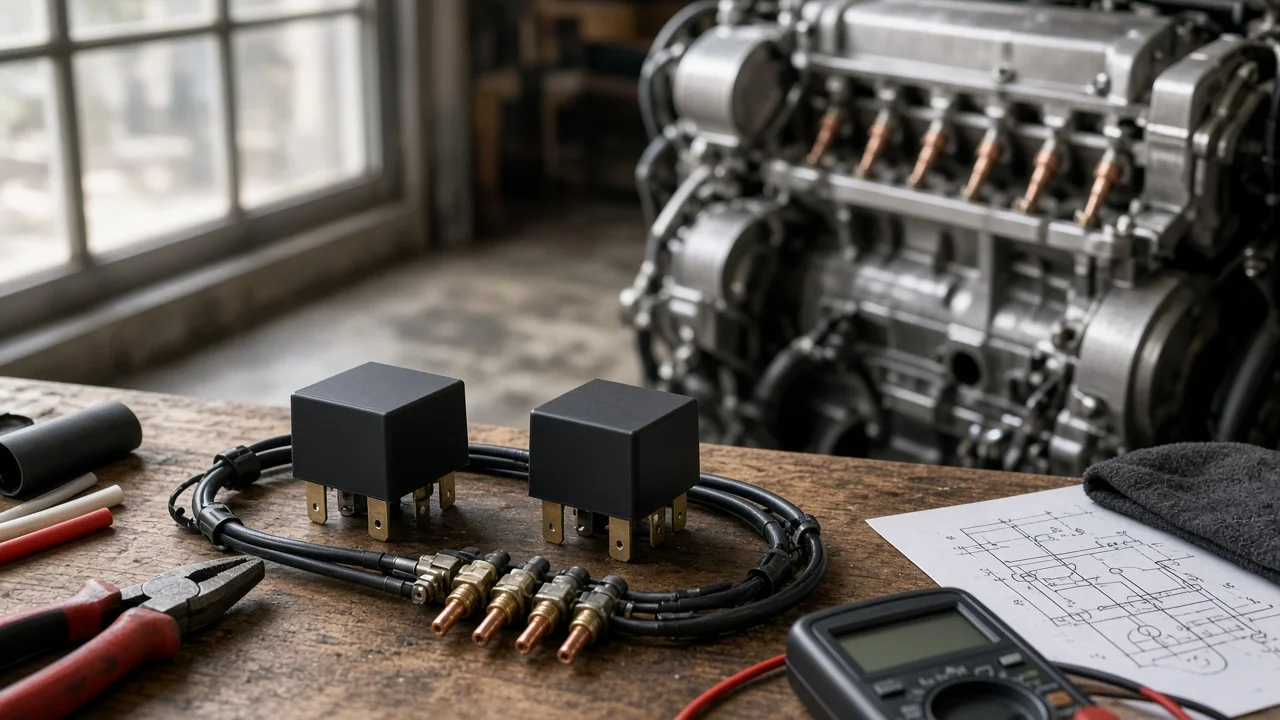
The glow plug relay on a 7.3L Power Stroke takes a small control signal from the engine computer and switches the heavy current that heats all eight glow plugs. When it sticks, clicks without powering the plugs, or burns its terminals, cold starts suffer. An upgraded relay can be a sensible repair, but only if it fits your model year, works with the factory control strategy and fixes the actual fault rather than a harness, battery or fuel delivery problem.
Define the job the product must do
Start with how the truck is used. A daily driver that sits outside through northern winters depends on the glow system every morning. A truck in a mild climate may rarely need much glow time. Plow trucks, work rigs and tow vehicles that start cold several times a day put the most cycles on the relay contacts. The relay itself does not decide anything: the PCM sets glow time from engine oil temperature and barometric pressure, and a warm engine may not energize the relay at all. Your replacement has to survive that switching load in a hot, vibrating, sometimes wet location on top of the engine for years.
Confirm the relay is really the weak link before buying anything. With a cold engine and the key on, you should hear the relay engage. A meter or test light on the output stud should show battery voltage for the commanded glow period, and a voltage-drop check across the main terminals reveals burned contacts that still click. Read any glow plug circuit codes from the self-test, and measure each glow plug's resistance at the harness. If the relay delivers full voltage but the engine still starts hard, look at the under-valve-cover harness connectors, the glow plugs and battery condition, then at fuel delivery: a restricted fuel filter or weak fuel pump lowers fuel pressure, and the HEUI injectors also need enough high-pressure oil to fire. Fuel additives are not a proven fix for any of these faults.
Check compatibility
The 7.3 Power Stroke ran from mid-1994 through 2003 in F-Series pickups, Super Duty trucks, the Excursion and E-Series vans. Relay style, mounting bracket and wiring can differ between the earlier trucks, the Super Duty generation and the vans, so shop by exact model year and body rather than by engine size alone. Listings that cover the whole production run without noting differences deserve a closer look, and the most reliable reference is the original part number and the wiring diagram for your truck.
Compare interfaces against the relay you are removing. The large studs carry battery feed and the output to the glow plug harness, so stud diameter, spacing and nut size must match your cable eyelets. The small control terminals must accept the factory connector or leads without modification. Check how the coil is grounded, because some designs depend on a clean mounting surface. Finally, confirm the replacement fits the bracket and clears the valve cover, wiring and nearby hoses without straining cables.
Features that affect the choice
The engine configuration matters here: eight glow plugs on a V8 draw a large combined current, with a higher inrush when they are cold. That load is what wears contacts and heats terminals. Look for a published current rating and duty cycle suitable for intermittent high-current switching, weather sealing around the case and terminals, and solid stud construction. Equally important is coil draw. The PCM drives the relay coil, so a replacement with a much heavier coil than the original could stress that driver circuit. Relays sold specifically for the 7.3 application avoid that question.
Some upgrades change the control method. Timer or manual-switch kits let the driver override or replace PCM glow logic. That can help in extreme cold, but it removes temperature-based control, risks overheating glow plugs if left on, can drain batteries and may set diagnostic codes. Swapping in a generic starter-type solenoid is a known shortcut with robust contacts, yet it may not match the factory coil characteristics, mounting or diagnostics, and it needs correct fusing and secure wiring. Treat labels like heavy duty, upgraded or lifetime as marketing until a seller backs them with specific ratings, an application list and clear warranty terms.
Limitations and ownership costs
A relay only switches power. It cannot revive failed glow plugs, repair corroded harness connectors under the valve covers, compensate for tired batteries or fix low injection control pressure. It also cannot cure gelled diesel in winter or a clogged fuel filter. Budget realistically: a relay replacement often reveals other worn parts, and owners frequently end up replacing glow plugs, terminal boots or the harness during the same job.
Installation is mostly electrical, but the 7.3 uses two batteries, so disconnect both before touching the main studs. Clean cable eyelets, tighten nuts firmly without twisting the studs, and refit protective boots so the hot battery stud cannot short against the engine. Afterwards, check periodically for heat discoloration, corrosion or loose hardware. A relay job does not require opening the fuel system. If your diagnosis moves into fuel delivery, follow the service procedure, never loosen fittings on a running engine, and perform a leak check after any work on the fuel lines or filter housing.
Build a practical shortlist
Use a factory-style replacement as your baseline, then compare any upgraded relay against it point by point. Confirm the listing names your exact model year and body, that stud sizes and terminal layout match your cables and connector, and that the mounting suits your bracket. Look for a stated current rating and duty cycle rather than vague durability claims, plus evidence of weather sealing and boots for the high-current studs.
Next, decide on control strategy. A PCM-controlled relay preserves factory glow timing and diagnostics. A timer or manual kit makes sense only if you accept the extra responsibility and risk. Check what hardware is included, the warranty length and how returns are handled. Finally, plan the complete repair: if testing showed weak glow plugs or harness faults, address those at the same time, because the best relay on your list will not start the engine on its own.