6.4 Powerstroke Glow Plug Control Module: How to Choose the Right Replacement
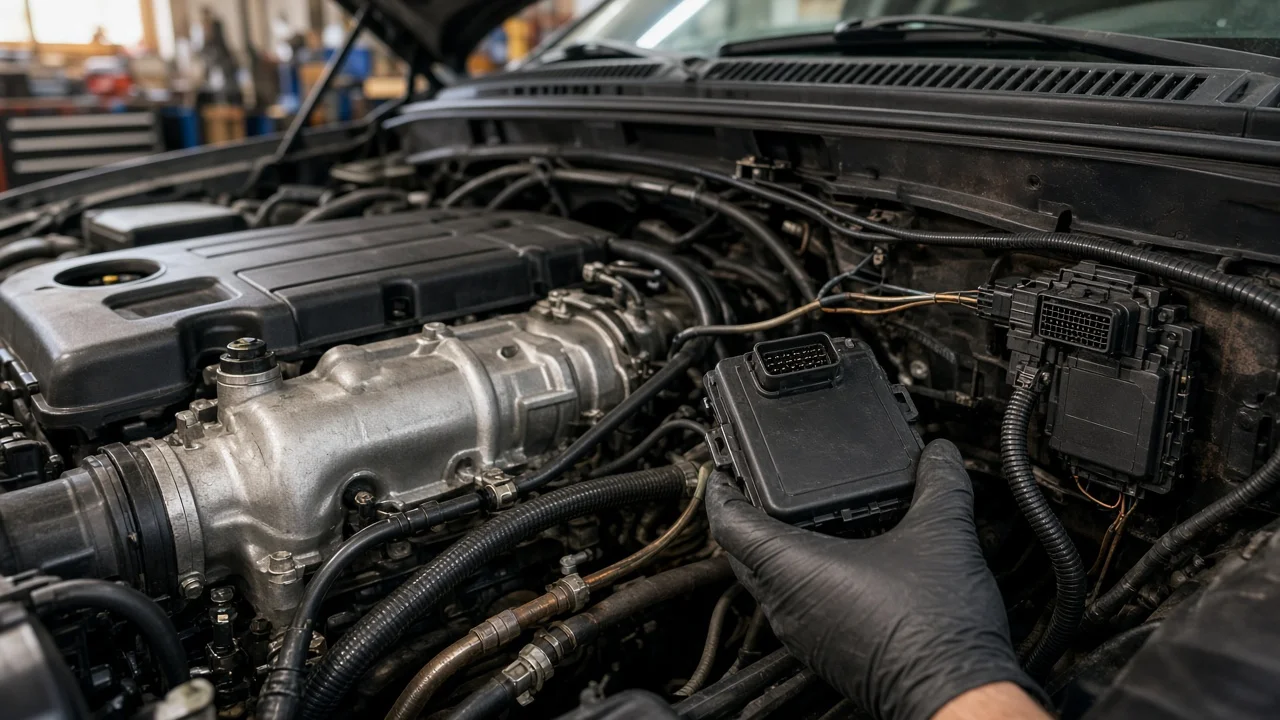
The glow plug control module on the 6.4L Power Stroke, used in 2008 to 2010 Ford Super Duty trucks, switches battery current to the eight glow plugs and reports circuit faults to the engine computer. When it fails, cold starts become slow, smoky or impossible in winter. This guide explains how to confirm you need a new module, check fitment, weigh the options and compare replacements without relying on marketing claims.
Define the job the product must do
On the 6.4L Power Stroke, the glow plug control module is a switching and monitoring unit. The powertrain control module decides when glow is needed based on temperature inputs, and the GPCM delivers battery current to the eight glow plugs before cranking and during after-glow, which reduces white smoke and rough running while the engine warms. It also watches current in each plug circuit and reports faults. That is why a failing plug, a damaged harness or the module itself can set codes in the P0670 to P0678 range, along with P0683 for a communication fault between the module and the PCM.
Before shopping, note how and where the truck is used. A pickup that sees sub-freezing mornings, a plow truck that must start on the first try or a fleet unit parked outdoors without a block heater depends on glow assist far more than a truck kept in a mild climate. Decide also whether you will install the part yourself, because that affects how much documentation and support you need from the seller. Finally, separate electrical symptoms from fuel symptoms. Long cranking can also come from a restricted fuel filter, weak supply from the fuel pump, low rail fuel pressure or an injector returning too much fuel. The 6.4 uses a high-pressure common rail system, so compare desired and actual fuel pressure with a scan tool rather than loosening fittings, and do not expect a fuel additive to cure a hard start of either kind.
Check compatibility
The 6.4L engine was offered in 2008 to 2010 Ford Super Duty trucks, so the module you choose should be listed specifically for that engine and those years. Do not assume a module from the 6.0L or 6.7L Power Stroke will interchange; connectors, mounting and control details can differ between generations. The most reliable cross-check is the part number printed on your original module. Compare it with the listing, then confirm the connector shape and pin count, the mounting tab layout, the battery feed terminal and the ground arrangement using clear photos of the replacement.
Fitment also includes the parts the module plugs into. The GPCM is mounted on the chassis, where water, road salt and heat attack its connectors. Green or pushed-back pins, a chafed harness to the plugs or a loose battery feed cable can produce the same codes as a failed module and will shorten the life of a new one. If the connector is damaged, plan for a repair pigtail or harness section from the same source so the parts are known to mate.
Features that affect the choice
Replacement options generally fall into three groups: new original-equipment modules, new aftermarket units and remanufactured cores. The original part gives the most predictable fit and diagnostic behavior. Aftermarket and remanufactured units can cost less, but quality depends on the manufacturer or rebuilder, so judge them on what can be verified rather than on labels such as heavy duty, upgraded or OE quality. Ask what was actually changed and whether the claim is documented.
Features worth confirming are per-cylinder circuit monitoring that reports to the PCM the same way as the original, a sealed housing and weather-sealed connector, any included mounting hardware or terminal nut, and whether the unit is truly plug-in or needs configuration with a scan tool. A module that does not report individual circuits correctly can leave you chasing codes that never clear or, worse, hide a dead plug. Useful evidence includes a matching or cross-referenced part number, a written warranty with clear claim conditions and a return policy that covers incorrect fitment.
Limitations and ownership costs
A new module cannot repair burned-out glow plugs, damaged wiring, weak batteries or fuel system faults. Test each plug circuit against service specifications before buying, because replacing the glow plugs on this engine is a separate, more involved job with its own parts cost and risk of seized plugs. Installing the module itself is usually manageable, but its power feed comes directly from the batteries. Disconnect both batteries on these dual-battery trucks before removing the feed nut, tighten it to the specified torque on reassembly, then clear codes and run a glow plug system test with a scan tool that supports Ford diesel functions.
Ongoing costs are modest but real: a core charge on remanufactured units, a possible connector pigtail, terminal corrosion protection where service information allows it, and occasional inspection of the mounting and wiring. If cold starts remain slow after the electrical side checks out, shift to the fuel system. Service the fuel filters on schedule, review rail pressure data and perform a visual leak check with the engine off. Never feel for a leak by hand on a running diesel; high-pressure fuel can penetrate skin.
Build a practical shortlist
Narrow your options by asking the same questions of every candidate rather than relying on star ratings or ranking lists. Confirm that diagnosis points to the module, with plug resistance and harness checks recorded. Match the part number or a documented cross-reference for the 6.4L engine and your model year. Compare connector, mounting and battery terminal photos against your original. Verify per-cylinder fault reporting and whether any programming is required. Check sealing, included hardware, warranty length, who handles claims, return terms and any core charge.
Then total the real cost of each option, including a pigtail, glow plugs if testing showed weak circuits, and scan tool access if you do not own one. The strongest choice is the module that fits without modification, keeps the original diagnostic behavior and comes with support you can actually use, even if it is not the cheapest listing. For a truck that must start reliably in winter, that predictability is worth more than a small price difference.