2017 Silverado Trailer Sway Control
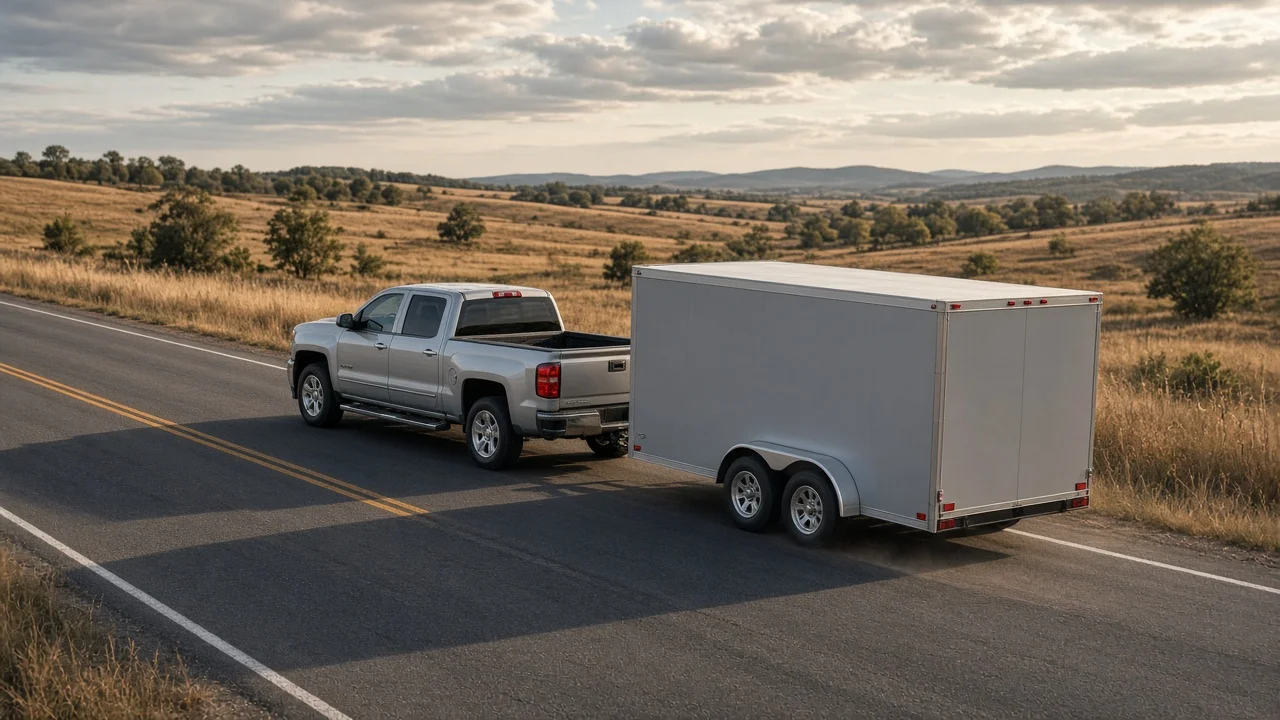
Trailer sway on a 2017 Silverado is a rapid side-to-side yaw motion that can escalate quickly if the truck, trailer, and load interact poorly. The Silverado’s integrated Trailer Sway Control uses selective braking and torque reduction to help the driver regain stability. Understanding when the system intervenes, what triggers it, and how vehicle configuration, payload, tongue weight, axle ratings, gross vehicle weight rating, and combined weight rating affect behavior gives owners a clearer picture of what the feature can and cannot correct.
Essential answer
The essential answer is that the 2017 Silverado Trailer Sway Control is a stability assist feature designed to detect developing trailer yaw and respond by reducing engine torque and applying individual truck brakes. It is not a substitute for a properly loaded trailer, correct hitch setup, or appropriate speed. The system may also be listed as part of the truck’s broader StabiliTrak or integrated trailer brake controller behavior, so a dashboard message or indicator can appear when the intervention is active. Owners should treat that warning as a signal to slow down and reassess the trailer configuration rather than as confirmation of a failed component.
A sway event begins when road inputs, passing vehicles, crosswinds, or abrupt steering expose instability in the truck-and-trailer combination. The module watches yaw and wheel-speed patterns to distinguish normal cornering from the rhythmic side forces that produce growing trailer oscillation. Because the truck cannot measure trailer tire slip directly, it infers the motion from how the Silverado responds. If the sway signature is strong enough, torque is cut and brake pressure is pulsed to help straighten the combination. The feature reduces the chance of a driver overcorrecting, but it cannot overcome severely unbalanced loading or a trailer that exceeds the truck’s combined weight rating for its configuration.
The intervention feels like a brief engine power reduction and a tugging or pulse through the brake pedal, sometimes accompanied by a traction-control-style indicator. This is normal during an event and should not be mistaken for a transmission slip. After the truck settles, the system returns control smoothly. The driver’s best immediate action is to lift off the accelerator gently, hold the steering wheel firmly, avoid a hard brake stab, and let engine braking help pull the combination straight. Once stopped in a safe place, the load distribution and hitch setup deserve a closer inspection.
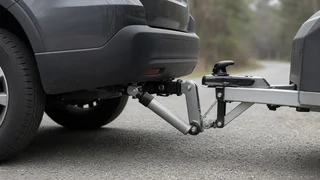
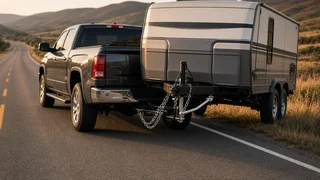
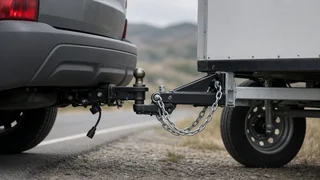
Configuration makes a meaningful difference in how easily sway develops. A trailer loaded too far rearward reduces tongue weight and lets the trailer pivot more freely behind the hitch, while excessive tongue weight can unload the front axle and reduce steering authority. Staying within the Silverado’s payload, gross vehicle weight rating, and rear axle rating helps keep the stability system’s assumptions valid. The trailer’s own weight and placement, along with proper tire pressures and a suitable weight-distributing hitch when required, keep the combination closer to a balanced state so the electronic assist has less correction work to do.