Replacing Brake Pads on a 2014 Chevrolet Silverado
The Short Answer
Replacing the brake pads on a 2014 Chevrolet Silverado is a routine disc brake service. Most owners with basic tools and mechanical experience can do it. The main qualification is that 2014 Silverados do not all share the same brake hardware. The correct pads depend on whether the truck is a light-duty 1500 or a heavy-duty 2500HD or 3500HD, and on the brake equipment it was built with. Confirm your exact configuration before buying parts.
Which 2014 Silverado You Have Matters
Model year 2014 was a transition year for the Silverado. The light-duty 1500 moved to a redesigned generation that year. The heavy-duty 2500HD and 3500HD models carried over on the previous generation's platform. Because of this, brake components for a 2014 1500 and a 2014 HD truck are generally not interchangeable. Pads listed for one may not fit the other.
Front and rear pads are also different parts, so they are sold separately. Within a single model line, the right pad can still vary with factory brake options, drivetrain, or payload and towing equipment.
How to Confirm the Correct Pads
Use the VIN when you look up parts. It identifies the model, cab, and drivetrain more reliably than a year-and-model search. Check the Service Parts Identification label. GM trucks typically have one, often in the glovebox. It lists the factory option codes, including brake equipment. When in doubt, compare the old pads with the new ones before installing. Check the shape, size, and wear-sensor or clip arrangement. Buy front and rear pads as separate axle sets. Replace pads on both sides of an axle at the same time.
What the Job Involves
The steps below are the general sequence for a disc brake pad replacement. They are not a substitute for the factory service procedure for your specific truck.
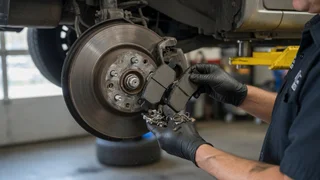
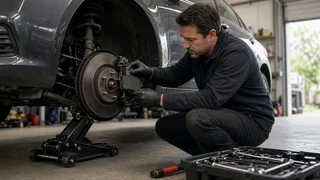
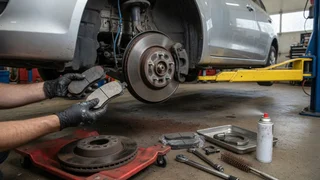
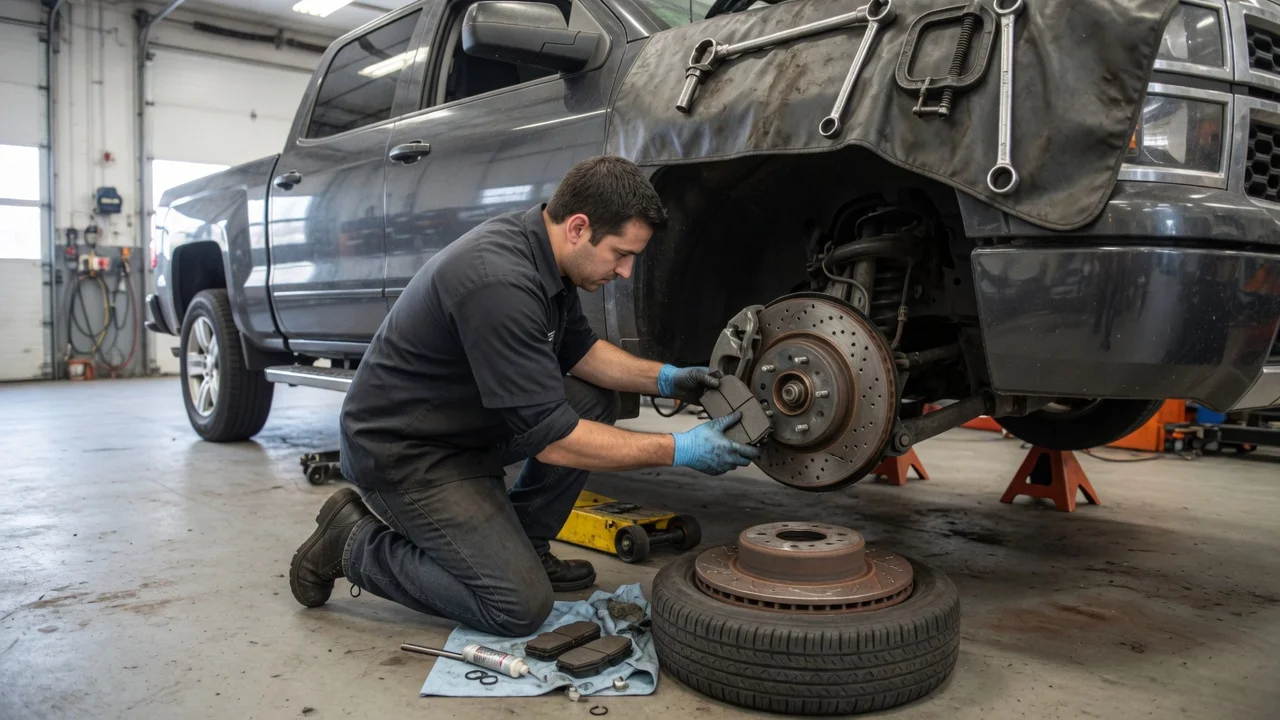
Loosen the lug nuts, raise the truck safely, and support it on rated jack stands. Never rely on the jack alone. Remove the wheel and inspect the caliper, rotor, brake hose, and pad wear. Remove the caliper bolts or slide-pin bolts. Hang the caliper so it does not stretch or kink the brake hose. Remove the old pads and their hardware. Compress the caliper piston to make room for the thicker new pads. Watch the brake fluid level in the master cylinder reservoir while you do this. Clean the caliper bracket and slide pins, and lubricate them with a suitable brake lubricant. Install new hardware if it was supplied with the pads. Install the new pads, refit the caliper, and tighten all fasteners to the factory torque specifications. Refit the wheel and tighten the lug nuts to specification. Pump the brake pedal until it feels firm before moving the truck. Then check the brake fluid level. Bed in the new pads following the pad manufacturer's instructions.
When the Pads Alone Are Not Enough
A pad-only replacement assumes the rotors and calipers are still serviceable. Inspect the rotors for deep scoring, heat damage, or vibration through the pedal. Measure them against the minimum thickness specification. A rotor below specification should be replaced rather than reused. A caliper that sticks, leaks, or wears pads unevenly also needs attention, because new pads will not correct those faults.
Information Not Covered Here
No verified data was available for this article on several points: part numbers, pad dimensions, minimum pad or rotor thickness, fastener torque values, or the exact brake configurations offered on each 2014 Silverado variant. Get these from the factory service information for your truck, a reputable repair manual, or a parts supplier using your VIN. Do not rely on generic figures, because the specifications differ between the 1500 and HD models.
Bottom Line
Brake pad replacement on a 2014 Silverado is a manageable job for a careful owner. The most important step is identifying the truck correctly, since the 1500 and the HD models use different brake hardware. Match the pads to your VIN or option codes, inspect the rotors and calipers while the wheels are off, and follow the factory torque specifications. If you are not confident working on brakes, have a qualified technician do the work.