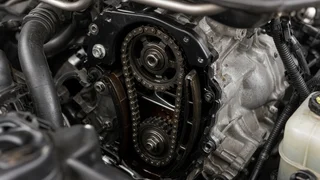
2.4 Ecotec Timing Chain Replacement
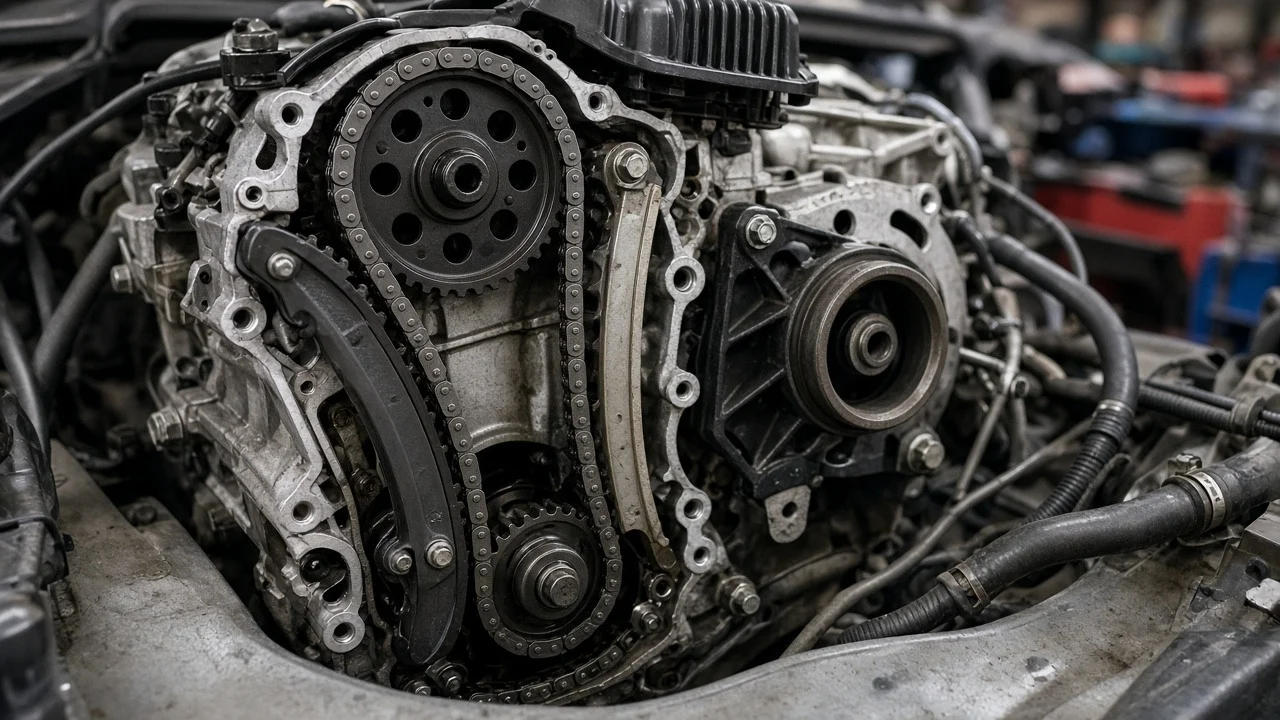
When a 2.4 Ecotec develops timing-chain noise, rough running, or correlation fault codes, owners often need to separate the engine's operating principle from what a replacement actually involves. This direct-injection four-cylinder uses a chain instead of a belt, so it is not subject to a simple mileage-based belt interval. The repair question usually turns on observed symptoms, oil condition, service history, and whether the chain, tensioner, guides, or sprockets have worn. An accurate diagnosis matters because the labor path reaches the front cover and requires matching chain timing to the manufacturer's marks before any component is condemned.
Essential answer
A 2.4 Ecotec timing chain replacement generally means removing the front engine cover and renewing the chain, tensioner, guides, and frequently the crank and cam sprockets because wear develops as a system rather than in one isolated link row. The engine uses a chain-driven valvetrain, so there is no routine belt replacement interval, but stretched chains or weak tensioners can still produce driveability concerns. The direct answer to the question depends on the symptom: a confirmed correlation code or audible chain slap points toward timing-component service, while an oil-pressure or solenoid fault may create similar signs without requiring a full chain job.
For a vehicle such as the 2011 Buick Regal or 2011 Chevy Equinox equipped with the 2.4 engine, a replacement kit is often the practical service approach because it addresses parts that wear together. Before buying components, however, the engine configuration and service history matter. Clean oil changes help the hydraulic tensioner and guide surfaces last, while neglected intervals can accelerate wear. Diagnostic codes provide evidence for interpretation, not proof that the chain itself has failed. A proper inspection should confirm chain slack, guide condition, and timing alignment before repair parts are selected.