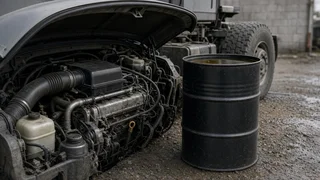
15W-40 engine oil drum
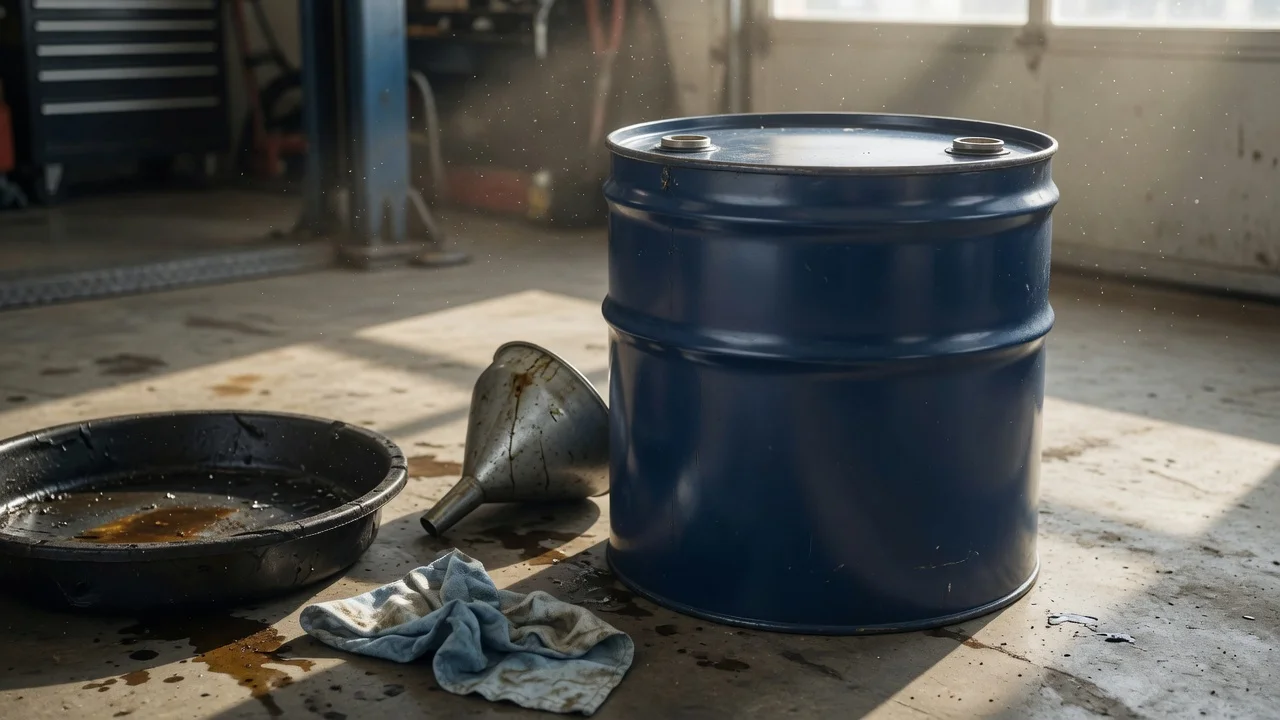
What a 15W-40 oil drum is
A 15W-40 engine oil drum is bulk multi-grade oil sold for workshops, fleets, farms, and other high-use engines. The grade itself is the important part: 15W describes cold-start thickness, and 40 describes thickness at normal operating temperature. A drum is simply the large container. Whether that oil is right for a given vehicle still depends on the engine maker’s specification for that model year, market, trim, and powertrain.
When 15W-40 is the right grade
15W-40 is widely specified for many heavy-duty diesel engines and for some older petrol engines, commercial vehicles, agricultural machinery, and industrial or marine engines that call for a 40-weight oil at operating temperature. It is thicker when hot than common light passenger-car grades such as 5W-30 or 0W-20, so it is a poor default for modern petrol engines that list only those thinner oils.
The “W” number matters in cold weather. 15W oil thickens more than 5W or 0W oil as temperature falls, which can slow cranking and delay oil reaching bearings and turbochargers in a hard frost. If the owner’s manual lists 15W-40 only above a stated ambient range, follow that range rather than the drum label alone.
Match the specification, not only the viscosity
Viscosity is necessary and not sufficient. Diesel and petrol engines also require a performance category and, often, a maker approval. Typical examples include API service categories, ACEA sequences, and manufacturer specs such as those used by heavy-duty diesel makers. A drum labelled 15W-40 can still be the wrong oil if it lacks the required category, low-ash (low SAPS) chemistry, or OEM approval.
Confirm these details on the drum and in the vehicle or engine manual before filling: • Viscosity grade: 15W-40, including any temperature limits in the manual; • Industry category (for example the API or ACEA rating the engine requires); • Any named manufacturer approval or internal spec number; • Diesel versus petrol formulation, and whether a low-ash oil is required for a diesel particulate filter or similar aftertreatment; • Model year, market, and engine code, because the same nameplate can change oil requirements across years and regions
If the manual lists more than one grade, use the grade tied to your climate and duty cycle. If it lists 15W-40 for one engine and a different grade for another in the same vehicle line, treat those as separate decisions.
Why people buy drums instead of bottles
Drums suit sites that service several engines, change oil often, or keep a known spec on hand. The usual trade-off is storage, handling, and contamination control. A sealed drum stays usable longer than an opened one, but once air, water, or dirty transfer equipment enter the oil, the whole volume is at risk. Bottles remain the practical choice for a single passenger car with infrequent oil changes.
Common commercial drums are large enough that you need a proper stand, pump or tap, and a way to measure fill quantity. Exact pack size, pump fitment, and remaining volume vary by supplier, so check the container markings rather than assuming a standard fill.
Storage and handling that protect the oil
Keep bulk 15W-40 in a condition the engine can actually use: • Store upright, under cover, off wet ground, and away from extreme heat; • Keep bungs closed except when dispensing; • Use a dedicated, clean pump and hoses; do not share equipment with other fluids; • Label the drum with grade, spec, and date opened; • Do not pour leftover oil of a different grade or spec back into the drum; • Dispose of empty drums and waste oil through the local used-oil route required in your area
Choosing a suitable next step
Start with the engine’s published oil chart for that exact vehicle or machine. If it calls for 15W-40 plus a named spec, a drum of oil that meets both is a reasonable bulk buy for matching engines. If the chart calls for a different viscosity, a low-SAPS diesel oil, or a petrol-specific grade, do not substitute 15W-40 on viscosity alone.
Unresolved differences still need checking: market-specific manuals, later software or aftertreatment updates, and mixed fleets that do not all share one spec. When those details are missing, identify the engine code and model year first, then match a labelled drum to that requirement rather than buying bulk oil on grade name only.