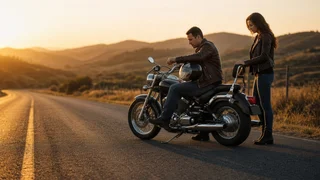
Yamaha Star Venture: Rider and Passenger Accommodation
The Yamaha Star Venture is a full-dress luxury touring motorcycle built around long-distance, two-up riding. Its design gives the passenger nearly as much attention as the rider: a large stepped seat, a passenger backrest within a trunk-mounted setup, generous floorboard space and comfort features that, depending on version, extend to the passenger as well as the rider. The short answer for most readers is that the Star Venture is among the more passenger-focused machines in its class. Whether it fits you depends on your height, inseam and comfort managing a very heavy motorcycle at low speed, and on which version and model year you are looking at.
Model identification and scope
The Star Venture was introduced by Yamaha for the US market for the 2018 model year. The "Star" name is a holdover from Star Motorcycles, the label Yamaha previously used for its cruisers and touring bikes before bringing those models back under the Yamaha brand. When researching a used example, confirm the exact model year and whether the bike is the base version or the higher-equipped Transcontinental package, because comfort, convenience and electronics content can differ between them. Market availability and equipment also varied over the model's production run, so treat any feature list as model-year and trim dependent.
Engine configuration and drive system, as they affect comfort
The Star Venture uses a large-displacement, air-cooled V-twin engine with a belt final drive. For rider and passenger accommodation, this matters in two practical ways. First, a big twin delivers strong low-speed pulling power, which helps when the bike is fully loaded with two people and luggage, reducing the need for frequent downshifts. Second, a belt drive is generally quiet and clean compared with a chain, and it avoids the lubrication mess that can reach a passenger's boots or luggage. Heat from an air-cooled V-twin is a common consideration on large touring bikes in hot weather, and how noticeable it is depends on conditions, clothing and individual sensitivity.
Rider fit
The rider sits in a scooped, low-mounted saddle typical of American-style touring motorcycles, with feet forward on floorboards rather than on pegs. This posture spreads weight across the seat and back, which most riders find relaxing over long distances. The trade-off is that floorboards limit how much you can shift your weight through your feet, and the riding position is upright and relaxed rather than sporty.
Key fit points for the rider include:
Seat height and width: a low seat helps flat-footing at stops, but a wide seat and wide bodywork can still make it harder for shorter riders to reach the ground firmly. Handlebar reach: the bars sweep back toward the rider; reach is the distance you will feel most on long rides, especially if you are shorter or have limited shoulder mobility. Floorboard position: check whether your knees sit at a comfortable angle and whether you can operate the brake pedal and shifter without lifting your foot awkwardly. Wind protection: the large fairing and electrically adjustable windscreen allow the rider to tune airflow; taller riders should check for helmet buffeting at the highest screen setting. Low-speed handling: this is a very heavy motorcycle. Yamaha equipped the Star Venture with a low-speed assist that provides slow forward and reverse movement, which significantly helps with parking and maneuvering, but you should still be confident supporting the bike at a stop with a passenger aboard.
Riding controls
The Star Venture concentrates many functions on the handlebar switch gear and a central infotainment display, so the rider can adjust audio, information screens and comfort features without removing a hand from the bars for long. Cruise control is part of the touring package, which reduces right-hand fatigue on highways. Because the switch layout is dense, new owners usually need some time to learn it, and riders with large gloves should try the controls while wearing their usual riding gear before buying.
Passenger accommodation
Passenger comfort is where the Star Venture distinguishes itself. The passenger seat is raised above the rider's, giving the passenger a view over the rider's shoulders, and it is backed by a padded backrest integrated with the top case. Armrests on each side help the passenger feel secure, particularly during braking and in corners.
Seating: a broad, well-padded passenger section designed for long stints rather than short trips. Backrest and armrests: support the passenger's back and sides, reducing the need to hold onto the rider. Floorboards: passenger floorboards allow the passenger to vary leg position on long rides, which helps reduce stiffness. Heating: depending on version, heated seating and other heating features may be available for both rider and passenger; confirm the exact equipment on the specific bike. Audio: the infotainment system supports audio for both occupants, and on suitably equipped versions the passenger may have some control over their own listening; check the specific trim. Wind management: the passenger sits behind the rider and fairing, so wind exposure is usually moderate, though taller passengers may feel more airflow at helmet level.
Carrying two people: load, suspension and tires
Riding two-up with luggage puts the Star Venture close to the upper end of its intended operating range. Three areas deserve attention before a long trip.
Load capacity: every motorcycle has a maximum payload covering rider, passenger, luggage and accessories. Find the figure on the bike's label or in the owner's manual for your model year and stay within it. Rear suspension preload: increasing preload when carrying a passenger restores ride height and cornering clearance. The Star Venture provides a means of adjusting rear preload; the owner's manual explains the procedure and suggested settings for solo and two-up use. Tire pressure: manufacturers typically specify different pressures for solo and fully loaded riding. Use the service specification for your exact model year and tire size, and check pressures cold before setting off.
Equipment compatibility
Many owners tailor the Star Venture with accessories, and compatibility depends heavily on model year and trim. Common changes include alternative seats for rider or passenger fit, different backrest padding, revised windscreens, extra lighting and helmet communication systems. Before buying any accessory, confirm that it is listed for your specific model year and version, particularly anything that connects to the electrical or infotainment systems. Electrical add-ons also draw on the charging system, so consider total accessory load if you plan several powered upgrades.
How it differs from similar touring motorcycles
Compared with other full-dress tourers, the Star Venture combines a classic American-style V-twin cruiser feel with an unusually comprehensive comfort and electronics package for both occupants. Rivals take different approaches: some favor a smoother multi-cylinder engine and lighter low-speed handling, others lean on heritage styling and a vast accessory market. The Star Venture's strengths are its passenger-oriented seating, integrated touring equipment and low-speed maneuvering aid. Its main drawbacks for some buyers are its considerable weight and the learning curve of its control layout. These are editorial judgments based on the design, not test measurements.
Quick fit checklist
Check | What to look for; Flat-footing at a stop | Both feet planted securely with the bike upright and a passenger aboard; Handlebar reach | Elbows slightly bent, no forward lean needed to reach the grips; Knee angle on floorboards | Comfortable after several minutes, no hip strain; Windscreen range | Clean airflow at helmet level for both rider and passenger; Passenger seat and backrest | Passenger's back supported and feet comfortable on floorboards; Low-speed control | Confident using the forward and reverse assist and handling the bike at walking pace; Equipment by model year | Heating, audio and convenience features match what you expect for that version
Bottom line
If your priority is long-distance touring with a passenger, the Yamaha Star Venture is designed with that use in mind, offering a supportive passenger seat, backrest, armrests, floorboards and shared comfort features that vary by version. The best next step is a test sit, and ideally a test ride, with your usual passenger and riding gear, paying particular attention to ground reach, handlebar reach and how comfortable you feel managing the bike's weight at low speed. Then confirm load capacity, tire pressures and feature content against the owner's manual for the exact model year you are considering.