Winter Tires for Ice and Black Ice: What Helps Them Grip
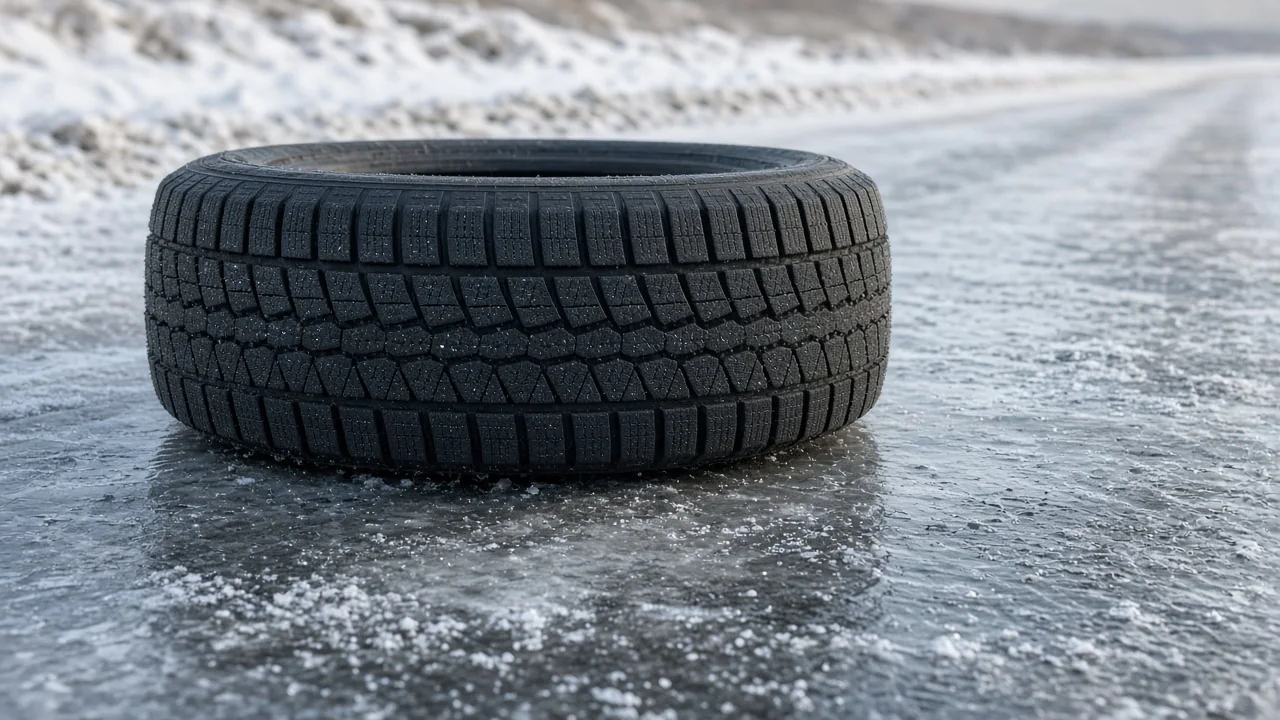
Winter ice tires are built for the thin, slick films that form on pavement when temperatures drop, not only for deep powder. When icy roads are the main hazard, ice traction depends on a cold-weather tread compound, tread siping, and either studded winter tires or studless winter tires. Understanding what those features can and cannot do on ice and black ice helps drivers choose winter tires for ice and snow without treating any design as a guarantee.
What Winter Tires Can Do on Icy Roads
Winter tires on ice have to do three jobs at once: get the vehicle moving, keep it pointed, and bring it to a halt. Ice traction during a start comes from how well the contact patch can bite a low-friction surface without spinning. Steering grip is the remaining lateral force after that bite is used, so a small steering input can use most of what is left. Ice braking is often the tightest demand because stopping uses the same limited friction while the vehicle still has speed.
Available grip on icy roads also changes with the ice itself. Colder, drier ice can feel different from a wet film sitting on a warmer glaze. Texture matters: polished ice offers fewer edges than a rough, pitted sheet. Moisture can act as a lubricant between rubber and ice. Tire condition matters too, because a worn or hardened tread has less ability to conform. Winter tires for icy roads improve the odds of staying in control, but they cannot guarantee traction or prevent a skid on every icy surface.
How Compounds and Sipes Support Ice Grip
A cold-weather tread compound is mixed to stay pliable when pavement and air are well below the range where many all-season treads stiffen. Flexibility lets the rubber stay in closer contact with a smooth ice film instead of skating across it. That contact is the starting point for ice grip, because a rigid block cannot follow microscopic texture. Winter ice tires typically use a formulation aimed at remaining useful in those temperatures, though the exact mix varies by design and is not something a driver can judge from the sidewall alone.
Tread siping adds fine cuts across the blocks so each block can flex and present many small biting edges. Those edges help the tread conform to irregularities that a solid block would skip over. Some ice-oriented patterns also try to move a thin water film out of the contact patch so rubber can meet ice more directly, but not every winter tire uses the same approach. A busy-looking tread or a high sipe count does not, by itself, establish ice braking or cornering performance; those results come from the whole tire working as a system.
Understanding Studded and Studless Ice Tire Designs
Studded winter tires place metal pins in the tread so the pin tips can engage an ice surface when the tire loads them. That mechanical bite can help on hard ice, yet it is not automatic. Effectiveness depends on ice hardness, stud protrusion, how the surrounding rubber supports each pin, and whether the surface is wet, dry, or filmed with snow. On some ice the pins add useful grip; on others they add little. A manufacturer-approved stud configuration also matters, because an unauthorized pin layout can change how the tire is intended to work.
Studless winter tires develop ice traction through compound and tread engineering rather than metal pins. Softer cold-weather rubber, dense siping, and ice-focused block shapes are meant to keep the contact patch working on a glaze. Drivers comparing studded and studless options should treat noise, permitted road use, and local stud-use restrictions as purchase factors, not as a ranking of which design is universally better. Seasonal rules vary by place, so there is no single legal date that applies everywhere. Confirm those limits before buying, especially if the vehicle will cross jurisdictions.
Black Ice Requires Grip and Conservative Driving
Black ice is a thin ice layer through which dark pavement can still show, so the road may look merely wet or slightly glossy. Winter tires for black ice still need the same ice-oriented grip, but the hazard is harder to see than a white sheet. Wet-looking pavement, shaded stretches, and bridge decks deserve extra caution because they often cool first, yet those visual clues are not reliable detection. A stretch that looks ordinary can already be glazed. Treat suspected ice as ice rather than waiting for a clear visual confirmation.
No winter tire makes black ice safe at ordinary dry-road speeds. Reduce speed before a suspected icy area so the vehicle is not asking the contact patches for more grip than ice can supply. Leave generous following space because ice braking distances grow quickly, and avoid abrupt steering, braking, or acceleration that can use up the remaining traction in one input. Do not run deliberate traction tests on public roads. If the ice, traffic, and visibility exceed what can be driven with a wide margin, delay the trip.
Choosing Winter Tires for Frequent Ice Exposure
The search for the best winter tires for ice is better treated as a fitment and use decision than as a single ranking. Prioritize winter tire fitment that matches the vehicle, the intended mix of ice and packed snow, documented ice performance, and the roads actually driven. When reading ice-braking or traction tests, note test temperature, how the ice was prepared, and the tire size used. Those results do not transfer unchanged to another vehicle, load, or night of weather. The three-peak mountain snowflake mark shows qualification under a snow-traction standard; it does not establish ice-braking performance.
Choose a size, load capacity, and speed rating consistent with the vehicle maker's winter tire guidance, and let a qualified tire professional resolve fitment questions. The best winter tires on ice for one vehicle can be a poor match on another if diameter, load, or clearance is wrong. Fit a matched set of four suitable winter tires so each corner shares similar ice grip. All-wheel drive can help a vehicle start moving, but it does not establish how well the vehicle will stop on ice; ice braking still depends on the tires and the surface.
Maintaining Ice Grip Through Snow and Changing Conditions
Many winter routes mix ice with packed snow, slush, and cleared pavement, so the tire still has to work on more than a glaze. Tread channels move snow and slush away from the contact patch, which helps in those deeper materials. Those channels alone do not establish ice grip, because a thin ice film needs compound flexibility and biting edges more than large voids. Drivers looking for the best winter tires for ice and snow should keep ice traction at the center of the decision when glaze, not deep accumulation, is the usual hazard.
Tread wear, cuts, and compound aging can reduce ice traction even when the pattern still looks serviceable. There is no universal replacement interval that fits every tire and climate, so questionable depth, cracking, or damage should be assessed professionally. Check cold tire pressure against the vehicle's guidance, because both underinflation and overinflation change the contact patch. Weather can shift during one trip from packed snow to wet ice to bare pavement, so available traction can change while the tires stay the same. Winter tires for snow and ice still need that ongoing attention.