Windshield Replacement and Repair Cost
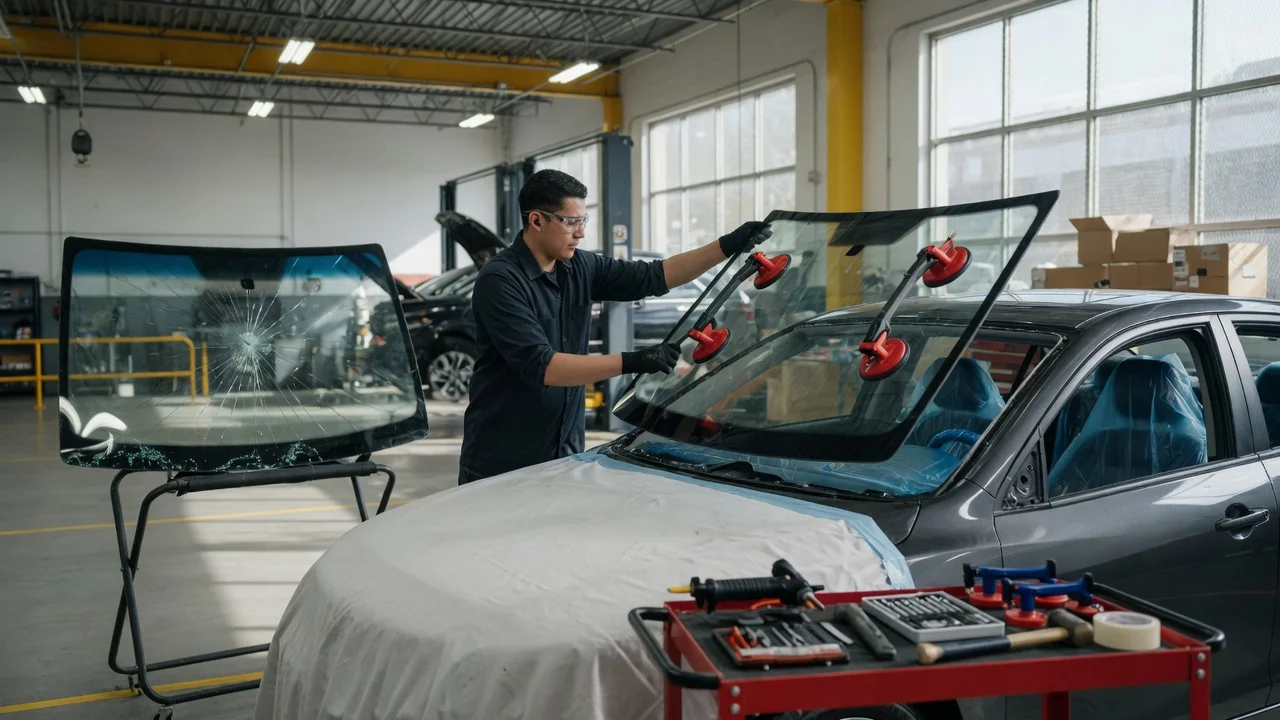
What windshield work usually costs
Windshield replacement cost is not a single figure. The bill depends on the vehicle, the glass specification, whether cameras or sensors must be calibrated after the glass is fitted, labor rates in your area, and whether insurance or a glass deductible applies. A small chip or crack that can be filled is usually far less expensive than a full windshield. Any quoted price that leaves out calibration, moldings, or mobile versus shop labor is incomplete.
There is no universal retail price that fits every car, truck, or SUV. Two vehicles of the same make can need different glass if the model year, trim, market, rain sensor, heads-up display, acoustic interlayer, or camera bracket differs. Ask for a written quote that names the glass part, any moldings or clips, labor, and calibration as separate lines before you approve the work.
Repair versus replacement
Repair is the filling of a chip or short crack with resin so the damage is sealed and the glass can stay in the car. Replacement is removing the bonded windshield and installing a new one. Repair is the cheaper path when the damage is small, shallow, and outside the driver’s primary view. Replacement is the usual path when the crack is long, the impact is in the driver’s sight line, the damage reaches the edge of the glass, there are multiple impact points, or the inner layer of laminated glass is compromised.
Repair is often appropriate when a single chip is smaller than a coin and the crack has not run to the edge. Replacement is usually required when a crack is long, branched, or in the driver’s view. Replacement is also required when the windshield is leaking, delaminated, or the frit or sensor pad is damaged. A repaired chip can still need replacement later if the crack continues to spread. Do not treat a successful resin fill as a structural recertification of badly damaged glass.
What changes the replacement price
The glass itself is the largest variable. Original-equipment glass, acoustic or solar-control laminates, embedded antennas, rain or light sensors, heating elements, and heads-up-display coatings all raise the part cost relative to a plain laminated windshield. Aftermarket glass can be less expensive, but it must match the vehicle’s mounting, sensor, and optical requirements. Compatibility is specific to model year, market, trim, and the options actually fitted; a catalog listing for the same nameplate is not proof that the pane will work on your car.
Glass type: acoustic, solar, heated, HUD, or sensor-equipped panes cost more than a basic laminate. Vehicle design: curved, large, or tightly packaged windshields take more labor to remove and set. Moldings, clips, cowl pieces, and urethane: these are often extra if they tear during removal. Shop versus mobile: a mobile visit can add a trip charge or limit which calibrations can be done on site. Region and shop labor rate: independent glass shops, dealer body shops, and mobile technicians price labor differently. ADAS calibration: cameras and some sensors aimed through the glass often need a static or dynamic calibration after replacement.
ADAS calibration and why it shows up on the invoice
Many late-model vehicles mount a forward camera, and sometimes other sensors, behind the windshield. After the glass is replaced, that camera’s aim can change even when the new pane looks identical. Advanced driver-assistance systems (ADAS) such as automatic emergency braking, lane-keeping, and adaptive cruise control may then need a calibration so the camera’s view of the road matches the control unit’s expected geometry.
Calibration can be static (targets in a shop bay), dynamic (a road drive under set conditions), or both, depending on the vehicle’s service procedure. It needs the correct glass, a correctly seated camera bracket, and a level, well-lit workspace or a suitable road. If the quote omits calibration on a vehicle that uses a windshield-mounted camera, the advertised replacement price is not the full job. Confirm whether your model year and trim require it; the need is tied to the fitted hardware, not to the nameplate alone.
Insurance, deductibles, and who pays
Comprehensive coverage often applies to windshield damage from stone chips, cracks, and similar non-collision events, subject to the policy and any glass-specific deductible. Some policies treat glass with a lower deductible or with no deductible; others apply the standard comprehensive deductible, which can make a modest repair or a low-cost replacement cheaper to pay out of pocket. Collision coverage is the usual path when the windshield was broken in a crash that is already a collision claim.
A claim can still affect the process even when the insurer pays. The insurer may steer you to a network shop, require prior authorization, or specify original-equipment versus aftermarket glass. You can usually choose the shop, but you may owe the difference if you insist on a part or process the policy does not cover. Ask the insurer, in writing, what glass specification, calibration, and rental or mobile service the claim will pay before the work starts. Do not assume a dashboard warning or a diagnostic code, if one appears after a poor install, is by itself proof that a particular part must be replaced again; the first checks are glass fit, urethane cure, camera mounting, and whether the required calibration was completed.
How to get a quote you can compare
Give the shop the exact vehicle: year, make, model, market if you know it, trim, and the options that affect the glass (rain sensor, HUD, heated windshield, acoustic glass, camera). A VIN is the most reliable way to identify the pane. Ask whether the quote is for original-equipment glass, a branded aftermarket equivalent, or an unspecified aftermarket part, and whether moldings and urethane are included.
Written line items for glass, moldings, labor, mobile fee, and ADAS calibration. Confirmation that the part matches your VIN-level specification. Cure time before the vehicle can be driven, and any weather or temperature limits for urethane. Whether a loaner or wait-on-site service is included. Warranty on leaks, stress cracks, and calibration, and what voids it. Photos of the damage if you are comparing a repair quote with a replacement quote.
When to stop driving on a damaged windshield
A small chip that is not in the driver’s view can often wait for a scheduled repair, with the usual caution that temperature swings and road vibration can make a crack run. Stop using the vehicle for normal driving and arrange replacement if the crack crosses the driver’s sight line, reaches the edge of the glass, stars or spiders after an impact, or if the windshield is leaking. A shattered or severely cracked windshield reduces structural support in a crash and can prevent airbags and cameras from working as designed. Do not delay replacement to shop indefinitely for a lower glass price once the windshield is structurally or optically unsafe.
Choosing a next step
If the damage is a small chip away from the driver’s view, get a repair quote first; resin repair is the lower-cost option when it is still viable. If the glass must be replaced, collect VIN-specific quotes that include calibration when a camera or sensor is mounted to the windshield, then compare those totals with your comprehensive deductible. If a recent replacement is leaking, noisy, or has left driver-assistance warnings on, have the install, urethane bond, and calibration checked before authorizing another windshield. Unresolved differences in part numbers, sensor options, or whether calibration is required should be settled against the vehicle’s build data, not a generic catalog listing.