Why Should Car Fluids Be Kept in Original Containers?
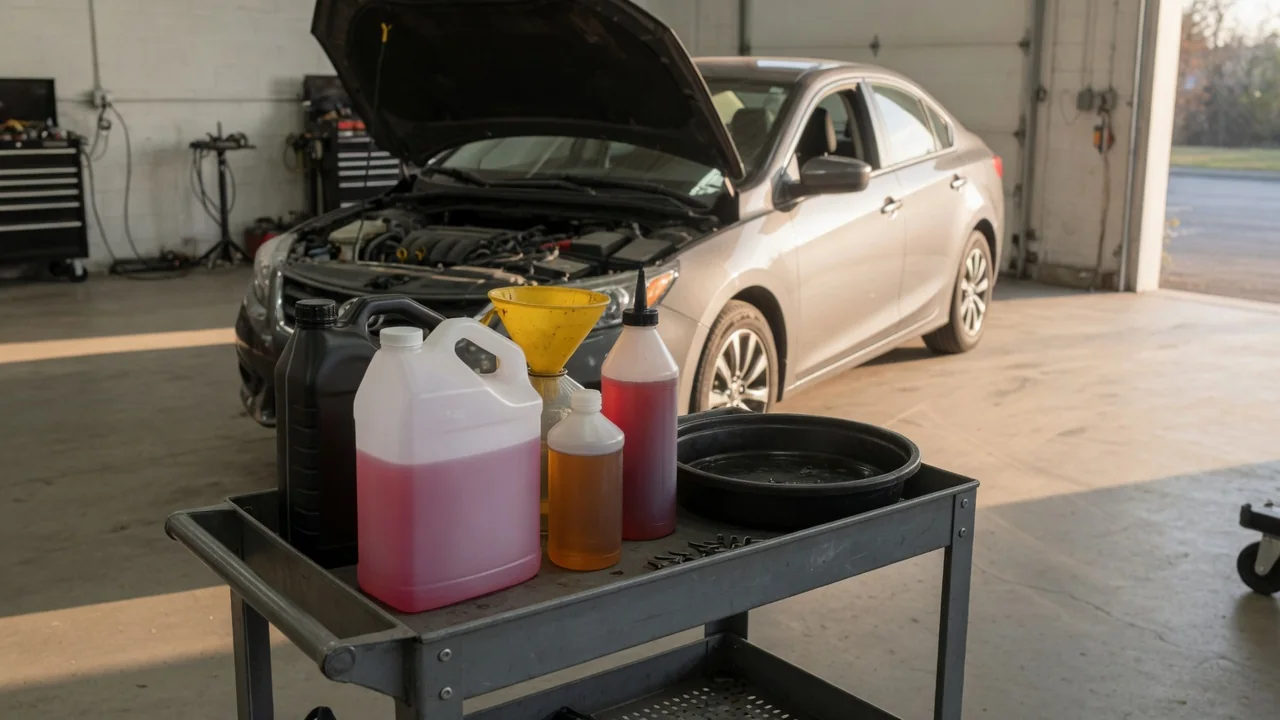
Once they leave their bottles, many automotive fluids look surprisingly alike. Engine oil, transmission fluid, brake fluid, coolant, and washer fluid can share similar colors and textures, yet each does a different job and carries its own hazards. Keeping car fluids in their original containers is one of the simplest habits in a home workshop. It preserves the information you need, protects the fluid itself, and makes spills and accidental exposure far less likely.
Identification: Why the Original Label Matters
The label on a manufacturer's container is more than branding. It states what the product is, which specifications or standards it meets, and often how much the container holds. For engine oil, that typically means a viscosity grade and one or more performance ratings. For brake fluid, it means a DOT classification. Coolant labels usually indicate the chemistry type and whether the product is concentrated or premixed. Transmission and power steering fluids list the specifications they are intended to meet. When you need to top up a system, you compare those details against the owner's manual or service information for your vehicle. A fluid in an unlabeled jug gives you nothing to compare.
Color and smell are unreliable substitutes. Dyes vary between brands and product lines, fluids darken with age and contamination, and two very different products can look nearly identical in a clear bottle. Guessing by appearance is how brake fluid ends up in a power steering reservoir or coolant gets added where oil belongs. Original containers also carry safety information that a reused bottle loses, including hazard warnings, first aid instructions, and handling precautions. If someone swallows or splashes a fluid, knowing the exact product helps medical staff or a poison control center give the right advice quickly. A handwritten note on a reused jug rarely captures that level of detail, and it tends to fade or rub off.
Compatibility: Matching the Fluid to the Container
Fluid manufacturers choose container materials, closures, and seals that work with the specific product. Many automotive fluids contain solvents, glycols, or additives that can soften, swell, or slowly permeate some plastics. A container that safely holds water or a beverage is not necessarily suited to long-term storage of a petroleum-based or glycol-based fluid. Over time, an incompatible container may become brittle, leak at the seams, or let the cap loosen. Contamination can also run the other way. Residue from whatever the container previously held can end up in the fluid, and even small amounts of dirt, water, or another chemical can affect how a fluid performs in a sensitive system.
Brake fluid shows why the closure matters. Common glycol-based brake fluids are hygroscopic, meaning they absorb moisture from the air. The original bottle is designed to seal tightly, and keeping the cap closed between uses limits moisture uptake. Moisture lowers brake fluid's boiling point, which can reduce braking performance under heavy use. Pouring brake fluid into a loosely capped or previously used container undermines that protection. Some coolants and transmission fluids rely on additive packages that contamination can compromise, so sealed original containers help keep them close to the condition in which they were made.
Compatibility also applies to what goes into your car. Fluids that look interchangeable often are not. Different coolant chemistries may not be intended to mix, and transmission fluids are formulated for particular types of transmissions. Whether a given product is suitable depends on the vehicle, so the specification printed on the original container is the link between the product and the manufacturer's requirements. Without it, you cannot confirm a match before you pour.
Spill Control: Containers Built for Pouring and Storage
Original containers are usually designed with handling in mind. Many have handles positioned for controlled pouring, built-in spouts or narrow necks, and translucent strips or graduated marks that show how much fluid remains. Some products come with child-resistant caps. These features reduce the chance of overfilling a reservoir, splashing fluid onto hot engine parts, or knocking over a container mid-pour. A reused bottle with a wide mouth or flimsy walls makes accurate pouring harder and increases the likelihood of drips on paint, rubber components, and the garage floor. Controlled pouring matters most with brake fluid, which can damage painted surfaces.
Accidental ingestion is a serious concern. Ethylene glycol coolant has a sweet taste that can attract children and pets, and it is highly toxic even in small amounts. Windshield washer fluid often contains methanol, which is also poisonous. Storing these fluids in drink bottles, food containers, or anything that resembles them creates a real risk that someone will mistake them for something safe. Keep fluids in their original, clearly marked containers, tighten the caps, and store them out of reach. These are among the most effective ways to prevent this kind of accident. Wipe up spills promptly rather than letting puddles sit where animals can reach them.
Practical Implications and Limits
An original container is a good starting point, not a guarantee. Fluids can still degrade after opening, especially those sensitive to moisture or air, and some manufacturers give shelf-life guidance on the label. A bottle of brake fluid that has been open for a long time may not be the best choice for a brake system, even if it never left its original bottle. Containers can also deteriorate. A cracked cap, a split seam, or a label that has peeled off in a damp garage removes much of the benefit. Inspect stored fluids occasionally, and replace damaged containers or questionable product.
Sometimes transferring a fluid is unavoidable, for example when the original container is damaged or when you collect used oil and coolant for recycling. In those cases, use a clean container made for that kind of fluid and never use food or drink containers. Label it clearly: either the product name and specification, or the contents and the word used. Used oil and coolant are commonly accepted at collection points, but disposal rules vary by location, so check local requirements. Storage habits only support correct fluid choice. The specification your vehicle needs comes from its owner's manual or service information, and the original label is what lets you check the product against it.