Why Should Car Cleaning Products Be Tested on a Hidden Spot?
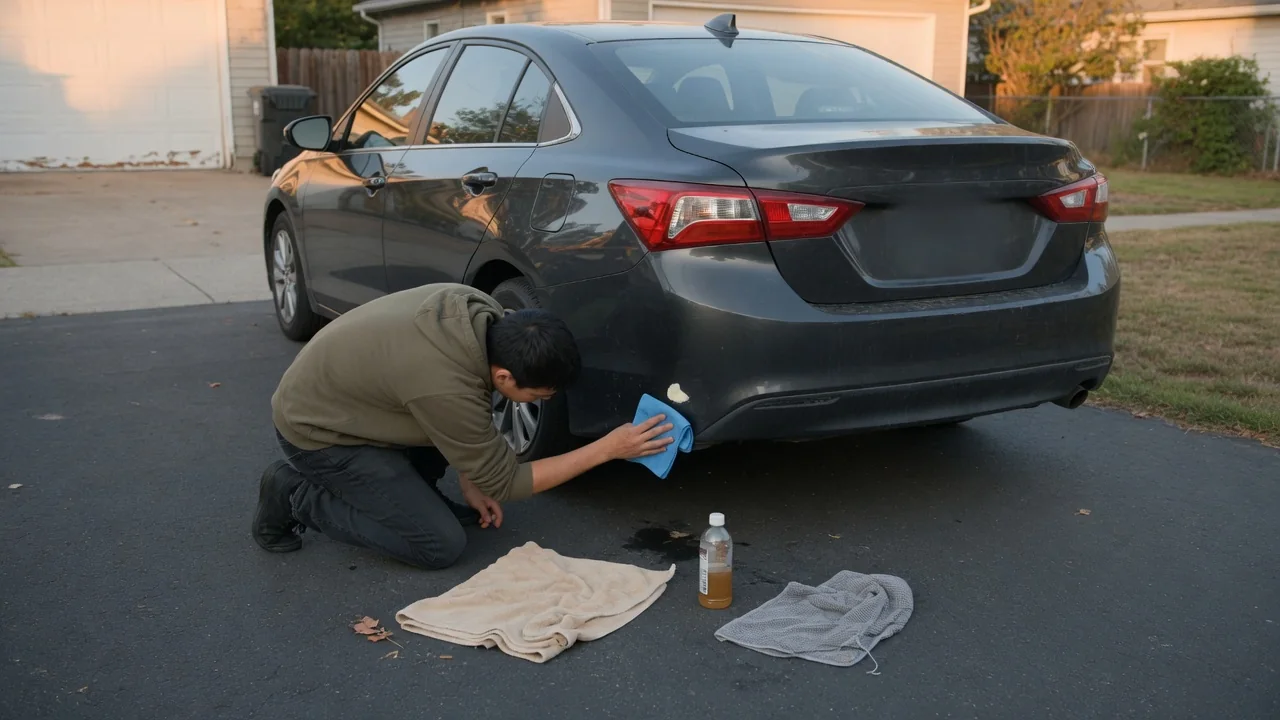
A cleaner that works well on one surface can dull, stain, or soften another, even inside the same car. Testing on a hidden spot shows how a specific product interacts with a specific material before any damage appears where everyone can see it. This guide explains why car cleaning products should be tested on a hidden spot, what a spot test can reveal about color and finish, and how to run one sensibly.
Material variation
A typical vehicle combines many different materials, and they do not respond to chemistry in the same way. Exterior paint may be a clear coat over a base coat, an older single-stage finish, or a matte or satin finish that depends on its surface texture for its look. Some panels may carry a vinyl wrap or paint protection film. Inside, there can be hard molded plastics, soft-touch coated panels, vinyl, coated leather, less heavily finished leather, synthetic suede, woven upholstery, carpet, and headliner fabric attached with adhesive. Trim adds chrome-plated plastic, anodized aluminum, and glossy black plastic that scratches and hazes easily.
Cleaning products work through a mix of surfactants, solvents, and alkaline or acidic ingredients. Alkaline formulas are good at breaking down oils and grime, but strong alkalinity can attack some coatings and anodized metal finishes. Acidic products dissolve mineral deposits but can etch sensitive surfaces. Solvents loosen adhesives and greasy residue, yet they can soften certain plastics, draw plasticizers out of vinyl, or swell rubber. Products sold under the same general label, such as all-purpose cleaner, can differ widely in strength and composition, so the name alone says little about how a product will treat a given material.
Condition matters as much as material type. Sun exposure, heat, age, earlier dressings, waxes, sealants, coatings, repainted panels, and aftermarket parts can all make one surface behave differently from what the factory originally supplied. A repaired panel may not share the chemistry of the panel beside it. The owner's manual and the product label are the first sources of guidance, and a hidden-spot test then confirms compatibility on the actual surface in its current state.
Colorfastness
Colorfastness is the ability of a dye or pigment to stay in place when exposed to moisture, friction, or chemicals. Upholstery and carpet dyes can bleed when a cleaner loosens them, leaving lighter patches or spreading color into nearby fibers. Leather often has a pigmented or tinted surface finish, and an aggressive cleaner combined with scrubbing can lift that color onto a towel. Older single-stage paint frequently leaves pigment on an applicator because the color layer itself is exposed, which signals that the product is removing some of the finish rather than only the dirt above it.
Color loss is not the only warning sign. A spot test can also show a ring or tide mark where the liquid dried at its edge, a change in gloss such as a shiny patch on a matte surface or a dull patch on a glossy one, streaking, haze, or a sticky or soft feel. Some of these effects appear only after the surface has fully dried, and some are visible only from certain angles or in daylight. That is why a quick glance while the area is still damp is not enough to judge the result.
Procedure
Start by choosing the right location. The test area should be out of sight but made of the same material with the same finish as the area you plan to clean. Common candidates include a lower section of a door jamb, carpet under a seat, the underside or rear edge of a seat panel, a low section of trim near the floor, or the inside of the fuel filler door. A hidden spot made of a different material proves nothing about the visible surface, so matching the material is more important than how well hidden the spot is.
Remove loose dust and dirt first so they do not scratch the surface or distort the result. Then use the product exactly as you intend to use it on the full area: the same dilution, the same applicator or brush, the same amount of agitation, and the same dwell time stated on the label. Wipe with a clean white or light-colored microfiber towel so any color transfer is easy to see. If the label calls for rinsing or a follow-up wipe, do that too. Work on a cool surface out of direct sunlight, because fast drying can leave residue or marks that would not appear under normal conditions.
Let the test spot dry completely, then compare it with the untreated area next to it. Look in good light and from several angles, and check the towel for color. Touch the area to see whether it feels tacky, softer, or rougher than before. If you notice any change, stop and try a weaker dilution, a gentler applicator, or a product formulated for that material. If the spot looks and feels the same as its surroundings, proceed on a small visible section before moving to the whole surface.
Practical implications and limits
A passing spot test shows short-term compatibility under the conditions you used, not long-term safety. Some effects build up gradually with repeated use, such as drying of leather, slow loss of plasticizers from vinyl, or progressive dulling of a coating. Hidden areas also tend to receive less sunlight and wear than visible ones, so a protected spot may tolerate a product that a sun-faded dashboard or weathered trim piece will not. Treat a good result as permission to proceed carefully, not as a guarantee for every panel.
A test also cannot override explicit guidance. If the vehicle manual or the product label says not to use a product on a surface, such as a display screen, an anti-glare coating, or a clear plastic lens, a clean test result does not make that use appropriate. Repeat the test whenever you change products, dilution ratios, or tools, since any of these changes the chemistry or mechanical action on the surface. For delicate, rare, or hard-to-replace materials where the outcome is uncertain, professional cleaning is often the more cautious choice.