Why Does Heavy Rain Make Road Noise Louder?
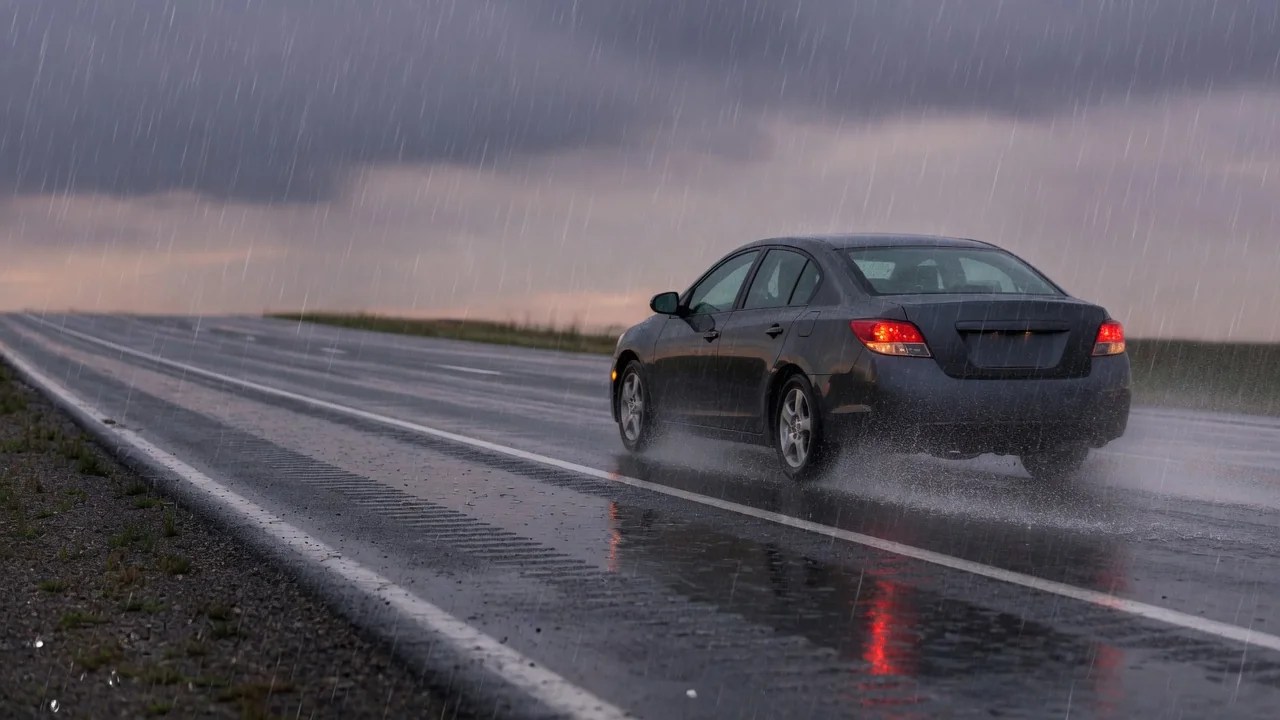
A familiar drive can sound much louder in a downpour because several separate noise sources become active at once. Rain strikes the roof and glass. The tires throw water at high speed into the wheel wells and underbody. Wet pavement also changes how the tire meets the road. Each of these sounds reaches you through its own route into the cabin. Knowing how rain road noise in a car builds up helps you tell normal sound from a possible problem.
Water impact
Every raindrop that hits the vehicle transfers a small amount of momentum to the surface it strikes. That surface flexes very slightly and radiates sound, much like a lightly tapped drum skin. In light rain the taps are sparse and you hear them as individual patters. In heavy rain there are more drops, and often larger ones, so the taps overlap into a continuous roar. The roof matters most here. It is a large, relatively thin sheet of metal or glass, which makes it an efficient sound radiator, and it sits directly above the occupants with only the headliner and any insulation in between.
Driving makes the effect stronger. When the car is stationary, drops fall onto it at their own fall speed. Once it moves forward, the windshield and the front edge of the roof run into the falling rain, so drops strike them harder than they would at a standstill. Wind-driven rain adds impacts on the side glass as well. Glass is stiff and dense, but it still vibrates under repeated impacts, and it is close to the driver's ears. The final sound also depends on how a particular vehicle is built: panel thickness, the amount and placement of damping material, and glass construction all differ between vehicles. That is why the same storm can sound quite different from one car to the next.
Tire spray
On dry pavement, tire noise comes mainly from tread blocks striking the road and from air being squeezed in and out of the tread grooves. On a wet road the tire has an extra job: it must push water out of the contact patch so the rubber can grip the surface. The grooves collect that water and expel it forward, sideways, and to the rear as sheets and droplets. This displacement produces the familiar hiss or sizzle of wet roads. The deeper the water film, the more water each tire has to move, and the louder that hiss becomes.
Where the spray goes matters as much as how it forms. Much of the water thrown off the tread hits the inside of the wheel well, the fender liner, suspension parts, and the underside of the floor and rocker panels. A steady jet of water striking a hard surface is noisy, in the same way a garden hose sounds loud against an empty bucket. At highway speed the tread surface moves as fast as the car travels, so water leaves the tire with considerable energy. Wheel-well liners vary in material and design, and their ability to absorb or reflect this spray noise varies with them.
The road surface plays a part too. Open-textured or porous asphalt can absorb some tire noise when it is dry, but once its voids fill with water, much of that benefit is lost. Puddles and standing water add splashes and occasional thumps as the tire plows through them. Spray thrown up by other vehicles, especially large trucks, also strikes your car's body and windshield and adds to the overall level.
Cabin paths
Sound from rain and spray reaches the cabin by two broad routes. The first is airborne: sound waves outside the vehicle pass through the glass, the door and window seals, small gaps around openings, and areas of the body with less insulation. Glass generally lets more sound through than an insulated door or floor panel. Much of the hiss from tires and spray falls in the higher-frequency range, and it largely travels this airborne route.
The second route is structure-borne. When water hammers the wheel wells, underbody, or roof, it vibrates the body structure directly. Those vibrations travel through the metal and reappear inside as sound radiated from the floor, pillars, and roof lining. Rooftop drumming is a clear case: the panel being struck is also the boundary of the cabin, so very little stands between the source and your ears. Spray striking the wheel wells follows a similar route through the body shell, which is why it can sound as though the noise comes from beneath your feet rather than from outside.
Conditions inside the cabin raise the total as well. In heavy rain, drivers often run the climate-control fan and defroster harder to keep the glass clear, and the wipers add their own periodic sound. With all of this happening at once, rain noise, fan noise, and wiper noise combine, so the overall level you hear is higher than any single source would produce on its own.
Practical implications and limits
An evenly louder hiss and roof drumming in heavy rain is expected and does not by itself point to a fault. A noise that is new, comes from only one corner, or appears with other symptoms is worth checking. A missing or loose wheel-well liner or underbody splash shield can let spray hit components directly and may flap or rattle. Worn or displaced door and window seals can cause whistling and may also let water in, which can show up as damp carpets or persistent fogging. For the location and condition of these parts on your vehicle, refer to the owner's manual or a qualified technician.
Speed has a direct effect. Driving slower lowers the energy of the spray and reduces both noise and the amount of water thrown around. The same water-clearing process behind the hiss is also linked to grip: if the tires cannot move water out of the contact patch quickly enough, they can begin to ride on it. If the tire sound changes suddenly and the steering feels light, ease off the accelerator smoothly and avoid hard braking or sharp steering. Tread depth and design affect how well tires clear water, so tire condition matters for wet driving beyond its effect on sound.
Acoustic treatments such as added damping material can reduce panel drumming and some transmitted noise, but they cannot remove the sources themselves, and results vary by vehicle and installation. Rain noise can also mask outside sounds such as horns and emergency sirens, so keep audio at a level that lets you hear what is happening around you. This article describes general mechanisms rather than measured values; how loud heavy rain sounds in a specific vehicle depends on its design, its tires, the road surface, and the storm itself.