Why Does an Engine Enrich Fuel During Cold Start?
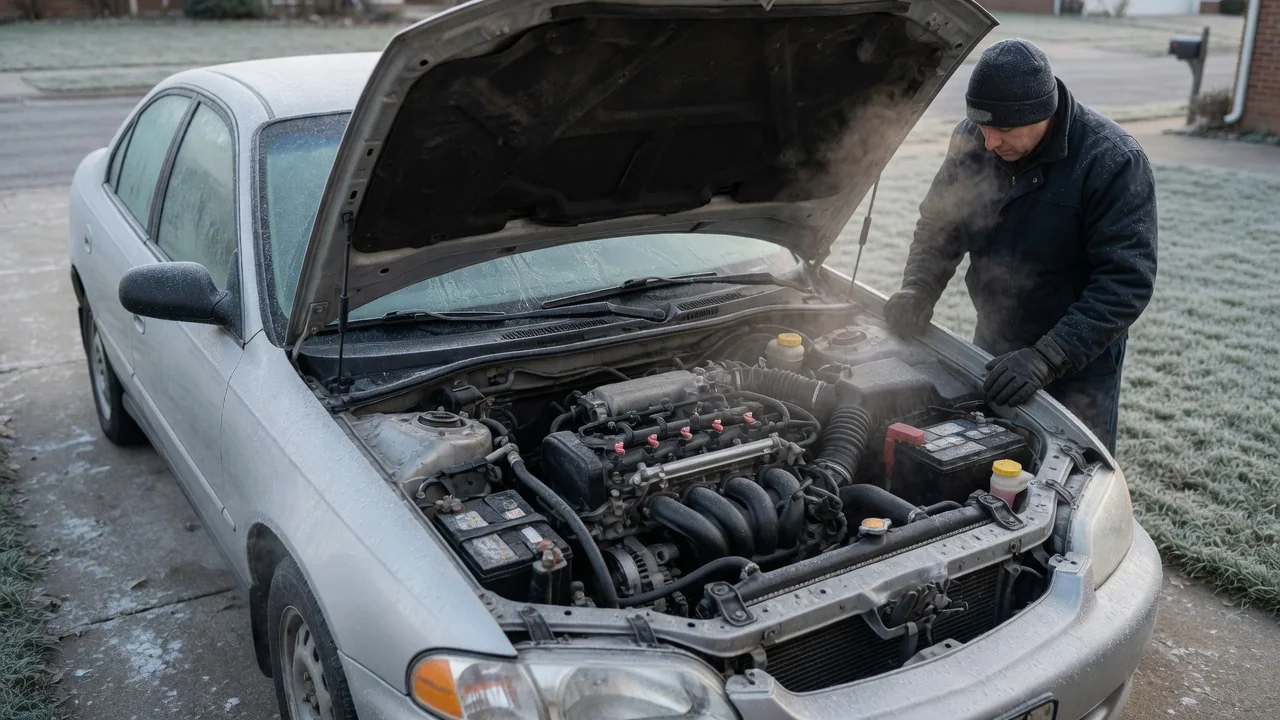
When a gasoline engine starts cold, its control system deliberately supplies more fuel than it would need once warm. This cold start fuel enrichment is not a design flaw or a waste. It compensates for the fact that cold fuel does not vaporize well, so much of it never becomes a burnable vapor. This article explains why an engine enriches fuel during cold start, how the control system manages the extra fuel, and how enrichment is withdrawn as the engine warms.
Fuel vaporization: why cold fuel burns poorly
Gasoline burns as a vapor mixed with air, not as a liquid. Droplets that stay liquid burn slowly, incompletely, or not at all. Gasoline is a blend of many hydrocarbons with different boiling points, so at any given temperature only part of it readily evaporates. In a cold engine, the air, the intake passages, and the cylinder walls are all cool, and the lighter fractions evaporate while the heavier fractions tend to stay liquid. The result is that the amount of fuel actually available as vapor is smaller than the amount the injectors deliver.
A second effect is often called wall wetting. In port-injected engines, fuel is sprayed toward the back of the intake valve and the surrounding port. On a warm engine those surfaces help flash the fuel into vapor. On a cold engine, part of the spray condenses into a liquid film on the metal. Some of that film enters the cylinder later as liquid, and some lingers in the port. Inside the cylinder, cold walls can also collect fuel, and a portion may slip past the piston rings instead of burning.
Cold metal also draws heat away from the flame, and combustion near cold surfaces tends to be quenched before it completes. Taken together, these effects mean the mixture around the spark plug is leaner than the mixture the system metered. If the engine received only the amount of fuel that would be correct when warm, the vaporized portion could be too lean to ignite reliably. That would show up as hard starting, misfires, stumbling, or hesitation. Enrichment adds enough fuel that the portion which does vaporize forms an ignitable mixture.
Control: how the engine decides how much extra fuel to add
On modern fuel-injected engines, the engine control module calculates enrichment from sensor inputs and stored calibration tables. The coolant temperature sensor is typically the primary input, because coolant temperature is a reasonable indicator of how warm the engine's metal surfaces are. Intake air temperature, engine speed, load, and whether the engine is cranking or already running also feed the calculation. The module lengthens injector pulse width to add fuel, and it usually treats cranking, the period just after the engine catches, and the longer warmup period as distinct phases with different amounts of extra fuel.
During the first part of a cold start, many engines operate in open loop. The oxygen sensor in the exhaust needs heat to produce a usable signal, so until it is ready the control module relies on its stored tables rather than feedback. Most modern oxygen sensors include an electric heater to shorten this wait. Once the sensor signal is valid and other conditions are met, the system switches to closed loop and trims the mixture based on the exhaust reading. The module also adjusts ignition timing and idle airflow during this period, which is why idle speed is often elevated right after a cold start.
Older carbureted engines achieved enrichment mechanically with a choke, a plate that restricts incoming air so the carburetor draws a richer mixture. Automatic chokes used a temperature-sensitive spring to open the plate gradually. Direct-injection gasoline engines face the same basic vaporization problem but spray fuel straight into the cylinder at high pressure, which aids atomization. Their cold start strategies, such as injection timing and the number of injection events per cycle, vary by design and manufacturer, so specific behavior should be checked in the relevant service information.
Warmup: how enrichment tapers off
Enrichment is designed to fade as the engine heats up. As coolant and metal temperatures rise, the intake ports and cylinder walls stop collecting as much liquid fuel, and a larger share of each injection becomes vapor. The control module reduces the extra fuel progressively according to its calibration, and the mixture moves toward the ratio the engine uses for normal warm operation. Engines may also add short bursts of extra fuel during acceleration while still cold, because sudden throttle opening changes manifold conditions and briefly disturbs the fuel film on intake surfaces.
Warmup is also about the catalytic converter. A catalyst only cleans exhaust effectively once it reaches its operating temperature, so the first minutes after a cold start are when a large share of a vehicle's tailpipe emissions tend to occur. Extra fuel increases unburned hydrocarbons and carbon monoxide, which creates a tension between reliable combustion and clean exhaust. Manufacturers therefore aim to keep enrichment as small and brief as possible and often use strategies such as retarded ignition timing and higher idle speed to send more heat to the catalyst. Some engines also use a secondary air system that pumps air into the exhaust to help burn off excess fuel. Which strategies a given engine uses depends on its design.
Practical implications and limits
For drivers, the most visible effect is fuel consumption. An engine that is repeatedly started cold and shut off before fully warming spends a larger share of its running time in enriched operation, so short trips and cold weather generally lower fuel economy. Repeated short trips can also allow some fuel and moisture to accumulate in the engine oil, because the engine never runs long enough at full temperature to drive them off. Occasional longer drives help, and oil change guidance for severe service in the owner's manual often accounts for this pattern.
Because enrichment depends so heavily on temperature readings, faults in that chain can cause noticeable symptoms. A coolant temperature sensor that falsely reports a cold engine can keep the mixture rich after warmup, which may cause poor fuel economy, a fuel smell, or dark exhaust. A sensor reading too warm on a cold engine can make cold starts difficult. A thermostat stuck open can keep the engine below normal temperature and prolong warmup. Such problems may set diagnostic trouble codes, but correct sensor values and test procedures are specific to each vehicle and belong in its service manual.
Some behavior after a cold start is normal: a briefly higher idle, a slightly different exhaust smell, or condensation from the tailpipe. What counts as normal duration or idle speed varies between engines, climates, and fuel blends, including seasonal gasoline formulated for easier cold starting. Recommendations about idling versus driving gently to warm up also differ, so the owner's manual is the best guide. Finally, diesel engines rely on compression heat rather than spark-ignited vapor and use different cold start aids, so the explanation here applies to gasoline engines.