Why Does a Tire Vibration Appear After a Puncture Repair?
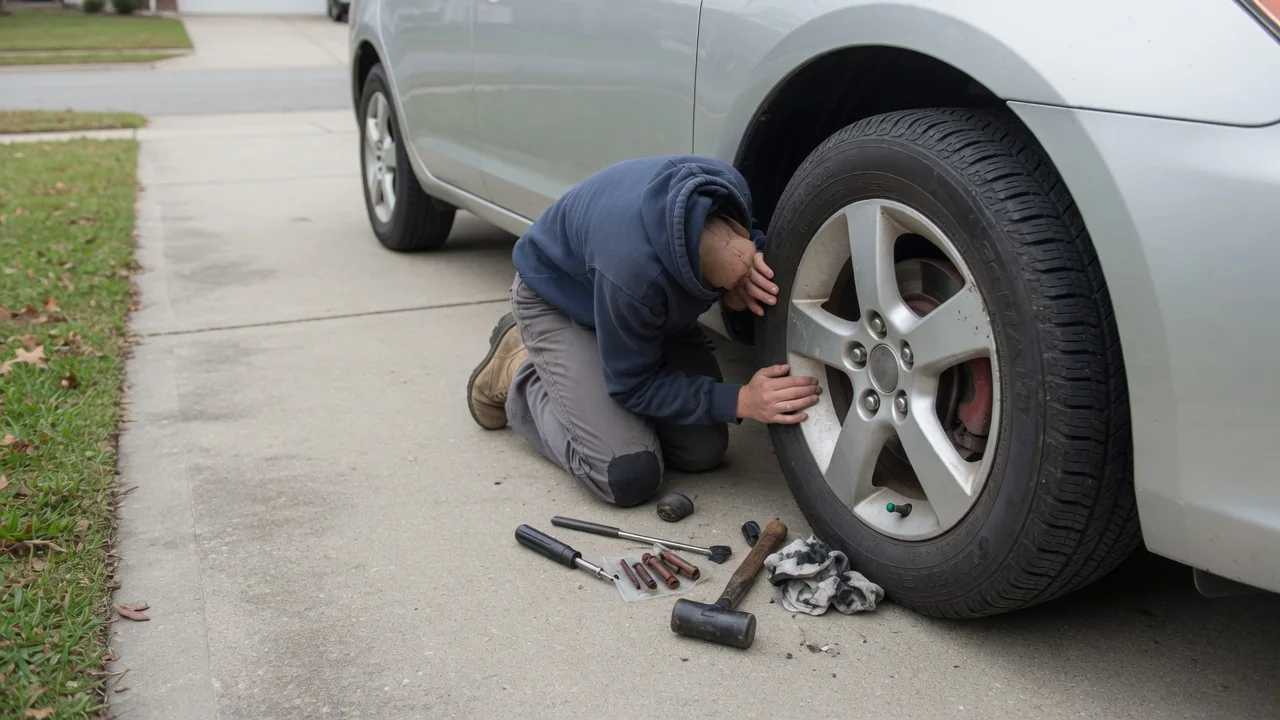
A shake that shows up right after a flat is fixed usually has a traceable cause. If you are asking why does a tire vibration appear after a puncture repair, the answer generally falls into three areas: balance disturbed when the tire came off the rim, damage from driving on low pressure, or a wheel problem that the puncture event created or simply exposed.
When it started
Timing is the most useful clue. A vibration that was absent before the flat and present on the first drive home points to something changed during the repair. The tire was probably dismounted, patched from the inside and remounted, which can shift its position on the rim or dislodge a balance weight. A shake that developed while the tire was still losing air suggests the puncture event itself caused harm rather than the repair work.
Speed and location narrow it further. A shimmy through the steering wheel that builds at highway speed commonly traces to a front wheel, while a tremor felt through the seat or floor more often comes from the rear. Notice whether it appears in a narrow speed band and then fades, which is typical of imbalance, or grows steadily worse, which leans toward a deformed tire or bent rim. Vehicles with firm suspensions or low-profile tires tend to transmit these symptoms more sharply.
Inspect repair
A proper repair generally uses a combined plug and patch installed from inside the tire, which requires removing it from the wheel. From the outside, the repaired spot should sit within the tread, not near the shoulder or sidewall, where constant flexing makes repairs unreliable. A string plug pushed in from outside without dismounting barely affects balance, but it also means nobody examined the inner liner for damage that cannot be seen with the tire mounted.
That hidden damage matters because a tire driven even a short distance with little air can chafe its inner liner and weaken the sidewall cords. Warning signs include a bulge or ripple in the sidewall, a scuffed ring around the outer sidewall, or a raised hump in the tread where a belt has begun to separate. With the vehicle parked, a slow visual check around the full circumference can reveal these. Any of them makes the tire unfit, however well the hole was sealed.
Rebalance
Whenever a tire is broken off the bead and remounted, its relationship to the wheel changes, and the old weights may no longer correct the assembly. The patch itself adds a small mass at one point as well. If rebalancing was skipped, or a clip-on or adhesive weight was knocked off during handling, the heavy spot produces a rhythmic shake once per revolution. A clean rectangle or bare mark on the rim often shows where a weight used to sit.
Having the shop spin the assembly on a balancer is quick and settles the question. If the machine calls for an unusually large amount of weight, something else may be wrong, such as a bead that did not seat evenly or a tire that has gone out of round. A road force measurement, in which a roller presses against the tread, can reveal stiffness variation that a standard spin balance misses. Not every shop has that equipment, so it is worth asking beforehand.
Everyday Use and Observations
Daily driving reveals patterns that separate a tire problem from a coincidence. Imbalance tends to feel the same at a given speed whether you are accelerating, coasting or lightly braking, and it does not change much in corners. A pulsation that appears only under braking points toward the brakes, while one that follows engine load suggests the driveline. Keeping these distinctions in mind avoids blaming the repair for an unrelated fault that happened to surface the same week.
A few simple checks also help. Compare the repaired tire's pressure with the others and with the figure on the door-jamb placard, since a slow leak may persist and monitoring systems often warn only after a meaningful loss. If the wheel was removed, rust or debris trapped between it and the hub can keep it from sitting flat, and unevenly tightened lug nuts can cause a wobble. Some shops also rotate wheels during the visit, moving a previously unnoticed problem tire to the front.
Limits and Next Steps
Rebalancing cannot correct a bent wheel or a structurally damaged tire. The same pothole or debris strike that caused the puncture may have bent the rim lip, and rolling on a flat can do the same. On a balancer, a bent wheel shows as visible wobble or runout while spinning. Whether it can be straightened or should be replaced depends on its material and the severity of the bend. A tire with belt separation or sidewall damage needs replacement, not another patch.
The practical next step is returning to the shop that did the work and describing the speed at which the shake appears and where it is felt. Ask them to check balance, bead seating, runout and lug nut tightness. Until then, keep speeds moderate. If the vibration is strong, worsening, or accompanied by a visible bulge or pulling, stop driving on that tire and fit the spare. On all-wheel-drive vehicles, replacing a single tire may raise tread-matching concerns, so consult the owner's manual.