Why Does a Car's Defroster Struggle in Humid Weather?
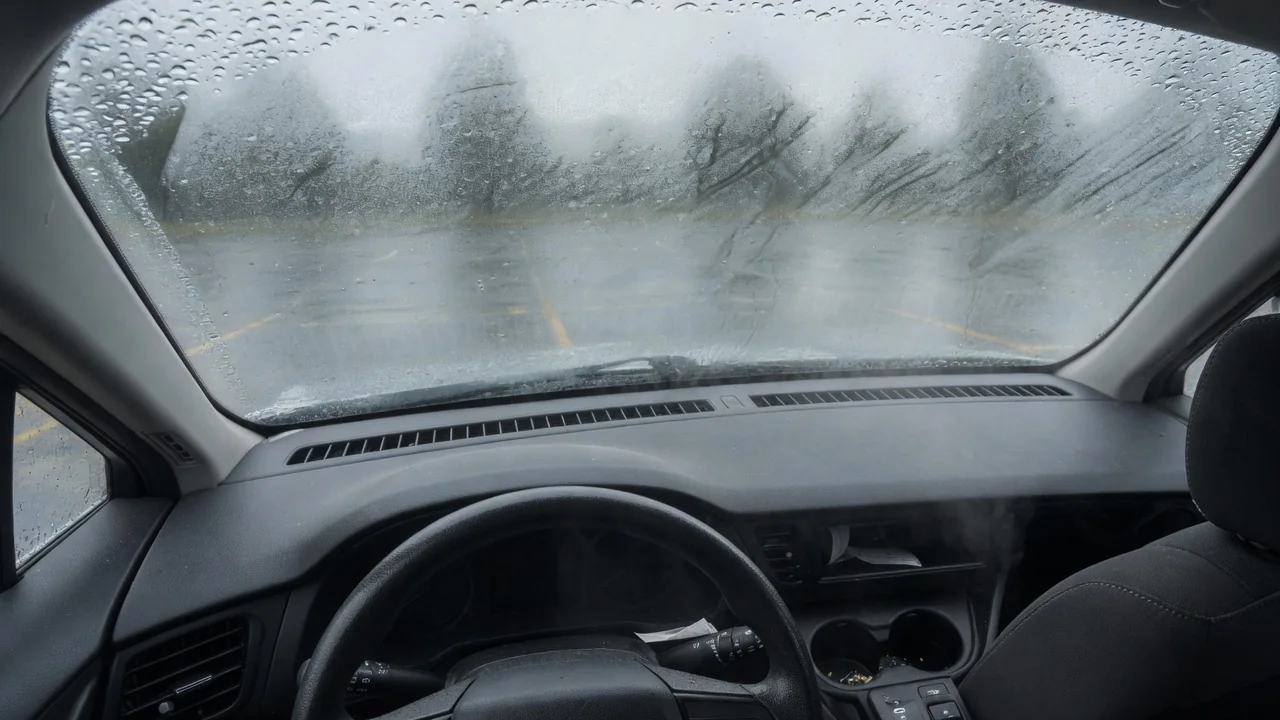
Anyone who has watched a windshield fog over on a rainy morning has wondered why a car's defroster struggles in humid weather. The answer comes down to moisture inside the cabin competing with the system's ability to dry and direct air. Understanding where that moisture comes from, and how airflow is shared, makes the problem far easier to manage.
Humidity sources
Fog forms when warm, moist cabin air touches glass that is cooler than the air's dew point. In humid weather the incoming outside air already carries a heavy load of water vapor, so the defroster starts at a disadvantage. Passengers add more with every breath, and wet jackets, umbrellas, and soaked floor mats release vapor steadily as the heater warms them. A full car on a rainy day can overwhelm a system that clears the glass easily with one occupant.
Less obvious sources matter too. Carpet padding that stays damp from a past leak, a blocked evaporator drain that leaves water sitting in the housing, or a clogged cowl drain near the base of the windshield can all feed moisture into the cabin continuously. Drivers may notice a musty smell, fog that returns minutes after clearing, or condensation on the inside of the glass overnight. How much each source contributes depends on the vehicle's design, sealing, and age.
Vent mode
The blower can only move so much air, and the mode doors decide where it goes. In a dedicated defrost setting, most of the airflow is sent to the windshield outlets, with a smaller share to the side window demisters. Blended settings that split air between the floor and the glass cut the volume reaching the windshield, which is often why fog lingers when the driver also wants warm feet. That competition for airflow is most noticeable when humidity is high.
Recirculation is the other common culprit. With the intake closed, the system keeps reheating the same damp cabin air instead of drawing in outside air and drying it. Many vehicles engage the air conditioning compressor automatically in defrost mode because the cold evaporator condenses moisture out of the air before the heater core warms it again. Some models also force fresh air in this mode, while others leave the choice to the driver, so checking the owner's manual is worthwhile.
When to inspect
Occasional fogging on a wet day is normal, but certain patterns suggest something deserves a closer look. Weak airflow at the windshield outlets even on high fan speed can point toward a restricted cabin air filter or a mode door that is not moving fully. Fog that clears slowly despite strong airflow may mean the air conditioning is not dehumidifying as it should. A sweet smell combined with a greasy film on the glass can indicate coolant vapor, which warrants prompt professional attention.
Persistent dampness is another signal. Wet carpet, water sloshing sounds behind the dash, or windows that fog heavily while the car sits parked suggest water is entering or failing to drain. On vehicles with automatic climate control, a stored fault code may help narrow the search, but a code is evidence to interpret rather than proof that a particular part has failed, and many climate codes are manufacturer specific. Confirming the cause requires vehicle-specific information and testing.
Everyday Use and Observations
Daily habits influence how hard the defroster has to work. Starting with fresh air selected, the air conditioning on, and airflow aimed at the windshield usually clears glass faster than heat alone, because dry air absorbs moisture more readily than warm damp air. Raising the temperature after the compressor is running helps further, since warmer air holds more vapor and warms the glass above the dew point. Drivers often see the fog retreat from the outlets upward as this takes effect.
The condition of the glass itself plays a part. A film of dust, vinyl residue, or smoke on the inside surface gives water droplets more places to cling, so a dirty windshield fogs sooner and clears more slowly than a clean one. Shaking off wet gear before getting in, removing soaked mats to dry, and avoiding long stretches on recirculation all reduce the moisture load. Results vary with cabin size, blower capacity, and how the outlets are arranged in a given vehicle.
Limits and Next Steps
Even a healthy system has limits. When outside air is near saturation and the cabin is full of wet passengers, the evaporator can only remove so much water per minute, and clearing takes longer regardless of settings. In cool, damp conditions some compressors cycle or reduce output to protect the evaporator from icing, which trims drying capacity at exactly the moment it is needed. Cracking a window slightly can help exchange air when the system is falling behind.
If the basics are in order and fogging remains severe, the sensible next step is a methodical check rather than replacing parts on a guess. A technician can verify airflow, mode and intake door operation, air conditioning performance, and drain function, and can trace any water intrusion to its source. Owners can prepare by noting when the fog appears, which settings were in use, and whether odors or damp areas accompany it. Those observations shorten diagnosis and keep the repair matched to the actual cause.