Why Do Windshields Have Different Tint Zones?
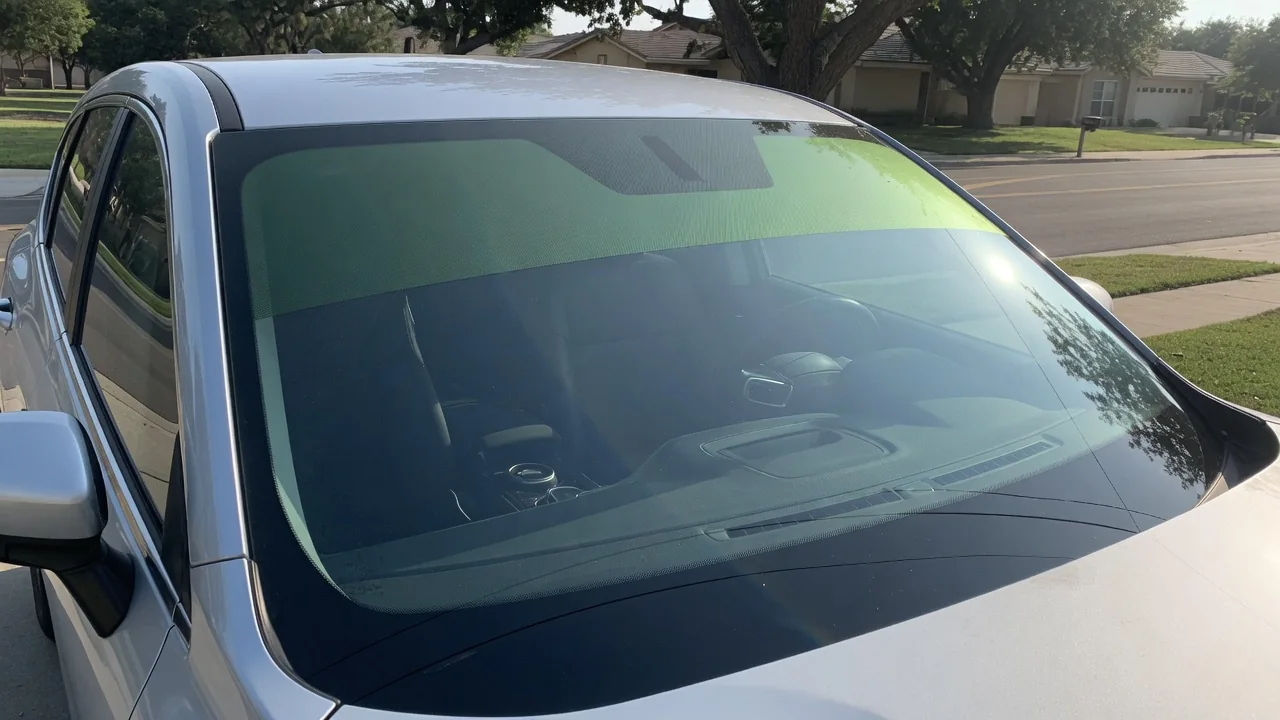
Look closely at most windshields and you will see that the glass is not uniform. A darker band may run across the top, a black dotted border frames the edges, and a patch of dots or a clear window may sit behind the mirror. These tint zones are deliberate. Each one balances glare control, the light a driver needs to see, heat and UV management, and the practical demands of mounting and replacing the glass.
Glare: What the Shade Band and Edge Dots Do
The most visible tint zone is the shade band, sometimes called a sunshade band, that runs along the top of many windshields. On a laminated windshield it is usually built into the plastic interlayer, typically polyvinyl butyral (PVB), that is bonded between the two layers of glass. Because the color sits inside the laminate rather than on the surface, it does not peel, scratch, or wash off. Its job is to cut the brightness of the sky and overhead sun in the upper part of the glass, an area the driver rarely needs for reading the road. Many shade bands are graded, darkest at the top edge and fading gradually toward clear, so no sharp line crosses the field of view and the eye adjusts smoothly as it moves between zones.
The second glare-related zone is the black border, known as the frit. It is a ceramic enamel printed onto the glass and fused to it when the glass is heated and bent. The solid part of the frit hides the urethane adhesive that holds the windshield in the body opening and shields that adhesive from ultraviolet light, which would otherwise degrade it over time. Toward the inner edge, the frit usually breaks into a field of shrinking dots. This halftone pattern softens the visual transition from black to clear and helps even out heating across the edge during manufacturing, which reduces optical distortion. On many vehicles a similar dot pattern fills the area behind the rearview mirror, covering the gap between the two sun visors where sunlight would otherwise reach the driver's eyes.
Light Transmission: Why the Main Viewing Area Stays Clear
The clearest answer to why windshields have different tint zones is that the rules for light transmission are not the same across the whole glass. In the United States, windshields are certified under Federal Motor Vehicle Safety Standard 205, which references the ANSI Z26.1 glazing standard. Glass in the areas needed for driving visibility must let through at least 70 percent of visible light. Tinted portions such as a shade band are permitted only above a boundary that the glass maker indicates on the windshield, identified by the AS-1 designation and marks near the upper edge. Below that line the glass has to meet the full transmission requirement; above it, darker tint is allowed. The tint band design on a given windshield is therefore a map of where visibility requirements apply and where glare reduction can take priority.
Even the main viewing area is not perfectly colorless. Most automotive glass carries a light green or gray body tint that absorbs part of the infrared energy responsible for solar heating, and the PVB interlayer blocks most ultraviolet light. Some windshields add a thin metallic or infrared-reflective coating for further heat control. Each of these must still leave enough visible light to meet the transmission standard, which is why stronger darkening is concentrated in the upper band instead of spread across the whole windshield. Keeping the lower area as clear as practical also preserves contrast at night, in rain, and at dusk, when every bit of available light matters.
Coatings create one more type of zone. Metallic layers that reflect heat can also weaken radio signals, so coated windshields often include a defined uncoated or dotted area intended for toll transponders, parking tags, or similar devices. Areas in front of forward-facing cameras and sensors are also controlled so the optics in that region remain consistent.
Replacement: Matching the Tint Zones on New Glass
Because tint zones are built into the glass, they cannot be added or adjusted later, so choosing the correct replacement matters. A single vehicle model may be offered with several windshield versions that differ in shade band presence and color, solar coating, acoustic interlayer, rain sensor mounting, camera bracket, head-up display compatibility, and frit pattern. Glass shops typically narrow this down using the vehicle identification number together with the features visible on the original glass. The markings printed in a corner of the windshield, including the manufacturer's identification and the AS-1 designation, are also useful when comparing parts.
Replacement glass from different suppliers can meet the same safety standards while varying slightly in band width, shade, or dot pattern. Small cosmetic differences are common and usually harmless. Differences that matter more are a missing or misplaced transponder window on coated glass, or frit coverage around a camera or sensor mount that does not match the original layout. The adhesive bead also has to sit where the ceramic border will protect it from sunlight. After a windshield is replaced on a vehicle with a forward-facing camera, the manufacturer's procedure frequently calls for recalibrating the driver assistance system; whether that is required depends on the specific vehicle.
Practical Implications and Limits
A shade band is fixed to the glass, not to the driver. Someone who sits tall or uses a high seat setting may find the lower edge of the band closer to their line of sight than a shorter driver would, and the graded fade is what keeps that edge from becoming a distracting line. Adding aftermarket tint film is a separate question from the factory band. Film below the AS-1 line is generally restricted, and state rules differ on how far film may extend down the windshield and how dark it may be, so local regulations should be checked before installing any. Film placed over a camera or sensor area can also interfere with how those systems see the road.
The tint zones have clear limits. A shade band helps when the sun is high, but at sunrise and sunset the sun sits low in the clear viewing area, where only the visor or sunglasses help. Polarized sunglasses can make some head-up displays harder to read, which is a property of the lenses rather than a defect in the glass. Whether a particular vehicle has a shade band, what color it is, and whether the windshield carries a solar coating varies by manufacturer, trim, and market, so the owner's manual and the markings on the glass itself are better guides than general assumptions.