Why Do Tires Create Different Cabin Frequencies?
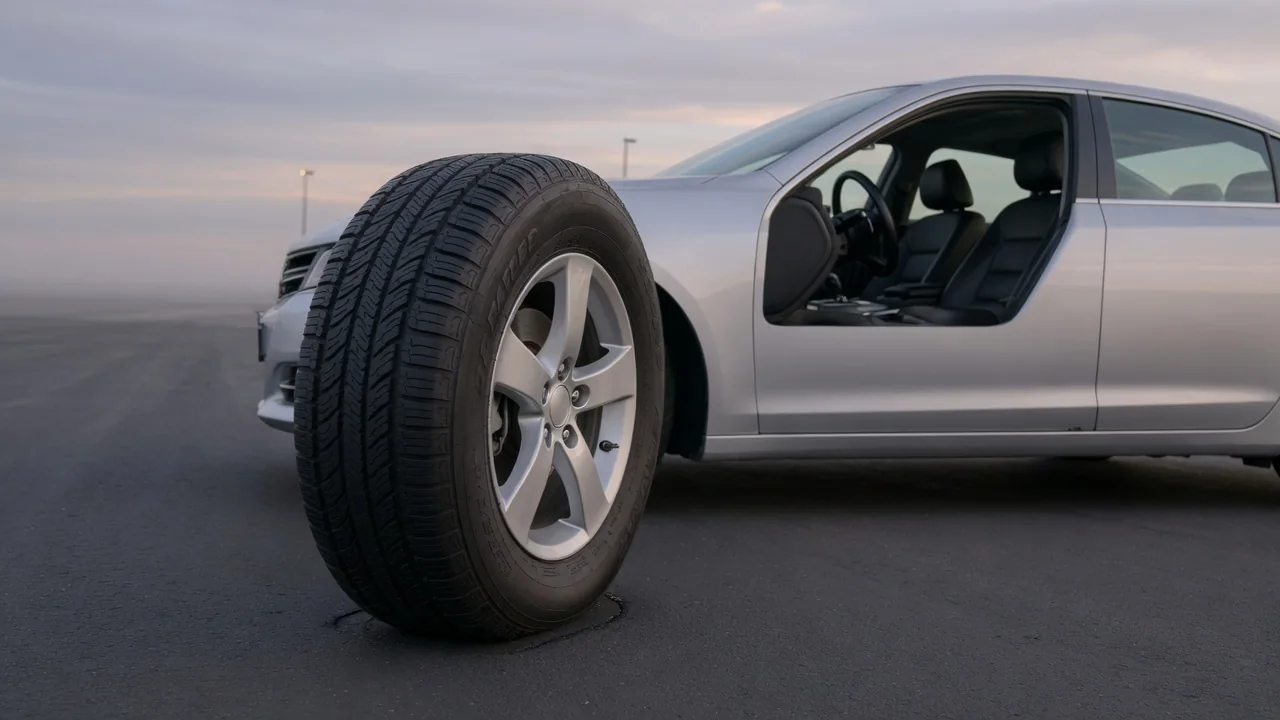
Tire noise is not a single sound. It is a mix of distinct tones and broadband roar that reach the cabin through the air and through the suspension and body. Which frequencies you hear depends on three things: how the tread strikes and leaves the pavement, what the road surface looks like at a small scale, and how fast the wheels turn. These three factors explain why the same car can hum on one drive and roar or whine on another.
Tread impacts
As a tire rolls, each tread block enters the contact patch, flattens against the road, and then snaps back as it leaves. The impact at the leading edge and the release at the trailing edge create small pressure pulses in the air and vibrations in the tire carcass. Because the blocks arrive at a regular rate, these pulses tend to form a tone. Its basic frequency equals the number of tread elements around the circumference multiplied by the number of wheel revolutions per second. This is tread pattern noise, and drivers usually describe it as a hum or whine.
Tire designers try to keep that tone from standing out. A common technique is pitch sequencing: block lengths vary in a non-repeating order, which spreads the sound energy across a band of frequencies instead of concentrating it in one sharp note. Groove design also matters. Air trapped in grooves is squeezed and then expelled as the tread passes through the contact patch, a process called air pumping. Long circumferential grooves can resonate somewhat like open pipes. The narrowing wedge between the tread and the road near the contact patch can also amplify sound, often called the horn effect. Together these mechanisms add mid- and high-frequency content to the noise.
Not all tire sound starts at the tread surface. The air sealed inside the tire has its own acoustic resonance, set mainly by the tire's size. It can produce a narrow, low-pitched drumming tone. Vibrations of the carcass and sidewalls also travel through the wheel, hub, and suspension into the body. This structure-borne path usually dominates the lower frequencies, while airborne sound radiated from the contact patch dominates the higher ones. The path a frequency takes strongly shapes how it sounds and feels inside the cabin.
Road texture
The road is a second source of excitation. Pavement texture is often described by scale. Microtexture, the fine grit on individual stones, mainly affects grip. Macrotexture is the size and spacing of the aggregate and the gaps between it. Megatexture covers larger undulations, patches, and uneven repairs. Macrotexture and megatexture matter most for noise. A coarse surface such as chip seal pushes the tread rubber in and out many times per revolution and raises broadband roar. Larger irregularities excite lower-frequency vibration of the tire and suspension, which occupants may feel as much as hear.
Texture also changes how air behaves around the tread. On porous or open-graded surfaces, voids in the pavement give trapped air a way to escape, which can reduce some air-pumping noise. Smooth, dense surfaces tend to seal the grooves more completely. Regular surface features produce repeating tones of their own. Transverse grooves cut into concrete can create a whine whose pitch depends on their spacing. Evenly spaced expansion joints produce a rhythmic thump-thump. Water on the road adds a hiss as the tread pushes it aside, so wet pavement shifts the sound toward higher frequencies.
Because of these interactions, moving from one surface to another can change the cabin sound even with the same tires at the same speed. On a smooth surface, tread pattern tones may become more noticeable because less roar masks them. On coarse aggregate, the same tones can be buried under broadband noise. The tire has not changed, but the balance of frequencies reaching your ears has.
Speed
Most tire-related frequencies are tied directly to how fast the wheel turns. The tread pitch tone rises in proportion to speed: if speed doubles, the rate at which tread blocks hit the road doubles, and so does the frequency. The same applies to texture-driven excitation, because the tire meets stones, grooves, and joints more often per second. This is why a tread whine climbs in pitch as the car accelerates and falls as it slows, independent of engine speed or gear.
Some frequencies do not move with speed. The air cavity inside the tire, suspension components, body panels, and the cabin's air space each have resonances at roughly fixed frequencies. Speed only changes how strongly they are excited. When a speed-dependent excitation sweeps through one of these fixed resonances, noise or vibration swells within a particular speed range and fades on either side. Imbalance and nonuniformity in the tire or wheel behave the same way. They create forces once per revolution, or at multiples of it, and when that rate lines up with a suspension or steering resonance, vibration appears in the steering wheel, floor, or seat at certain speeds only.
Overall tire noise generally gets louder as speed increases. At highway speeds, however, it competes with wind and powertrain noise. That masking can make some tire frequencies seem to disappear while others stand out, depending on how all the sources overlap.
Practical implications and limits
These mechanisms give owners a useful way to describe a noise. Check whether the sound follows road speed rather than engine speed, for example by noting whether it stays the same when coasting or in a different gear. Notice whether it changes when the pavement changes, and whether it appears only within a narrow speed band. Tire-related noise usually tracks road speed and surface. A sound that tracks road speed is not proof the tires are responsible, though. Wheel bearings, driveline joints, and brake components can produce speed-related noise as well, and a technician may check whether the sound changes under cornering load to help separate a bearing from a tire.
Tire condition can reshape the cabin spectrum over time. Irregular wear such as cupping or feathering changes the tread surface and can add a rhythmic, uneven pattern to the sound. Inflation pressure affects contact patch shape and carcass stiffness, so it is worth checking against the vehicle's recommended values. Rotating the tires can sometimes move a noise to a different position, which helps locate the source. New tires bring a different tread pattern, compound, and construction, so a change in cabin sound after replacement is normal.
There are limits to what anyone can conclude by ear. The same tire can sound different on different vehicles because insulation, suspension bushings, and cabin acoustics filter frequencies in different ways. Listeners and seating positions also vary. Words like hum, whine, roar, and drumming are helpful but approximate, and pinning down an exact frequency or source requires proper diagnosis. For a specific vehicle, the manufacturer's service information and a qualified inspection should guide any repair decision.