What Is Tire Roar and How Do You Recognize It?
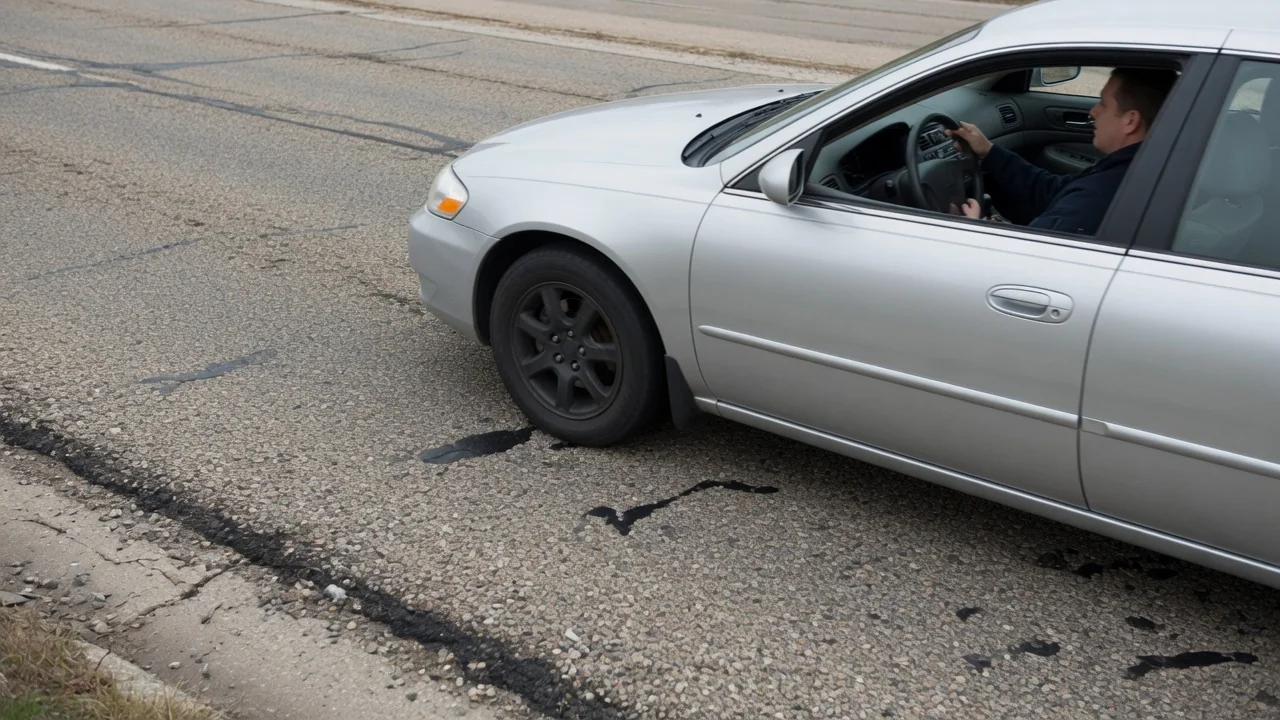
Tire roar is a steady, low-pitched drone produced where the tread meets the road, and it is easily mistaken for a failing wheel bearing or a drivetrain hum. Knowing what tire roar is and how to recognize it comes down to noticing how the sound responds to speed, pavement, steering input, and the condition of the tread itself.
Speed and surface changes
Tire roar follows road speed rather than engine speed. As the vehicle accelerates, the drone usually rises in both volume and pitch, and it stays the same if the transmission is shifted to a different gear at a constant speed. Many drivers first notice it in a particular highway range where the sound resonates through the cabin, then find it fades in town. A hum that changes when the engine revs while the vehicle holds its speed points away from the tires and toward the powertrain or exhaust.
Pavement is the most revealing test. Tread noise changes character immediately when the car moves from coarse chip seal to smooth fresh asphalt, or onto grooved concrete, because the sound is generated by the tread blocks striking and releasing that surface. A worn wheel bearing tends to growl at much the same level regardless of what the road is made of. Bearing noise also commonly grows or eases as weight shifts in a long sweeping curve, while tire roar usually stays fairly constant through gentle steering inputs.
Tread inspection
The tread often shows why a tire has become loud. Cupping or scalloping appears as a series of dips around the circumference, and feathering leaves each tread block with one sharp edge and one rounded edge. Heel-and-toe wear creates a sawtooth pattern along the shoulder blocks. These irregular shapes slap the pavement unevenly and produce a rhythmic roar or a wah-wah sound that can closely imitate a bad bearing. Aggressive all-terrain and mud-terrain patterns are simply louder by design, even when they are wearing perfectly evenly.
With the vehicle parked safely and the tire cool, running a flat hand lightly across the tread in both directions can reveal what the eye misses. A surface that feels smooth one way and catches the palm the other way suggests feathering, while a wavy feel suggests cupping. Comparing the inner and outer shoulders, and one axle against the other, helps show whether wear is uneven. Tire construction, tread compound, and vehicle weight all influence how quickly these patterns develop, so two cars on similar tires may sound quite different.
Service clues
Service history often explains when a roar started. A drone that appears right after a tire rotation suggests an irregularly worn tire has moved to a position where it is easier to hear, and noise that follows a tire from one corner to another is strong evidence the tire is the source. A sound that stays at the same corner after rotation deserves a closer look at the bearing, brakes, or suspension on that wheel. New tires of a different model or tread design can also change cabin noise noticeably.
Uneven wear is usually a symptom rather than the root problem. Cupped tread is frequently associated with weak shocks or struts, or with wheels that are out of balance, while feathering often traces to toe alignment. Chronically low or high inflation pressure wears the shoulders or the center and can raise noise as well. Replacing noisy tires without addressing the cause tends to bring the roar back. The correct pressures, rotation pattern, and alignment settings depend on the vehicle, so the owner's manual and door-jamb placard are the references to follow.
Everyday Use and Observations
Daily driving offers plenty of chances to gather evidence. It helps to note the speed at which the drone begins, whether it seems to come from the front or rear, and whether it changes on a familiar stretch of freshly paved road. Driving with the windows down next to a wall or barrier can make tread noise easier to pick out. Coasting in neutral where it is safe and legal to do so, if the vehicle allows it, removes engine load from the picture; a sound that remains unchanged is tied to the rolling parts.
Context matters as much as the sound itself. Tire roar generally builds gradually over thousands of miles as the tread wears, and it may be louder in cold weather when the rubber is stiffer. Cargo and passenger load can alter it slightly. Vehicles with little sound insulation, large wheels and low-profile tires, or open cargo areas such as hatchbacks and SUVs transmit more road noise into the cabin. Electric vehicles can make the same tire seem louder simply because there is no engine sound to mask it.
Limits and Next Steps
Listening alone has limits. Tire roar, wheel bearing growl, differential whine, and some brake or driveline noises overlap in pitch, and sound travels through the body structure in ways that make it hard to tell which corner is responsible. A noise accompanied by steering wheel vibration, a pull to one side, looseness in the steering, or heat and a burning smell at one wheel should not be dismissed as ordinary tread noise. Visible bulges, exposed cords, or very shallow tread mean the tire needs attention regardless of how it sounds.
When the source remains uncertain, a professional inspection is the sensible next step. A technician can raise the vehicle, spin each wheel, check for bearing roughness and play, and examine suspension components and tread wear together. Some shops use chassis listening equipment or swap wheels between positions to confirm the diagnosis. If the tires prove to be the cause, the remedy may range from rotation and balancing to alignment correction or replacement, depending on how advanced the wear is and what the vehicle manufacturer recommends.