Why Do Some Cars Have a Foldable Front Passenger Seatback?
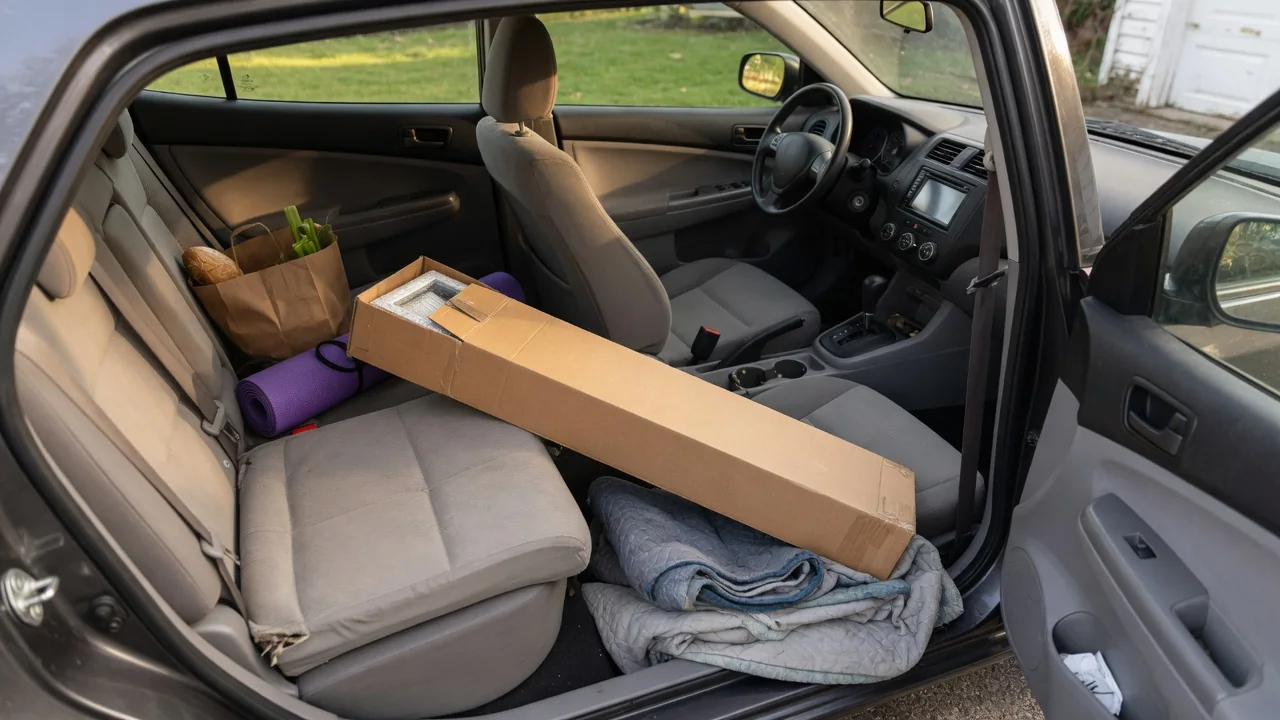
Drivers who ask why do some cars have a foldable front passenger seatback usually find the answer the first time they try to carry something longer than the cargo area. A front seat that folds flat extends the load floor from the tailgate to the dashboard, turning an ordinary hatchback, wagon, or crossover into a surprisingly capable hauler for long, narrow items, within clear limits.
Seat movement
A fold-flat front passenger seat works differently from a normal recline. Instead of stopping at a relaxed angle, the seatback continues forward until it rests on or near the seat cushion, creating a roughly level surface. Combined with a folded rear seat on the same side, this opens a continuous channel from the rear hatch to the glovebox. Lumber, a ladder, a rolled rug, skis, or a flat-packed bookshelf can then lie lengthwise inside the cabin instead of hanging out of an open tailgate.
How the seat gets there varies by vehicle. Some designs use the regular recline lever with extra travel, others add a separate release strap or handle, and a few require the head restraint to be lowered or removed first. Power seats may fold more slowly or not at all, and sometimes only certain trim levels include the feature. Watching the seatback's final angle is useful: some sit truly flat, while others stay slightly raised, which affects how rigid items rest.
Cargo securing
Long cargo riding beside the driver deserves more attention than luggage behind a rear seat. In a hard stop, an unsecured board or pipe keeps moving forward toward the dashboard and windshield, and in a swerve it can slide toward the driver's arm, the shifter, or the pedals. Some folded seatbacks have a hard plastic backing or molded ribs that resist sliding, but a smooth surface provides little grip, so the load needs restraint of its own.
Tie-down points in the cargo area are the usual anchors, and straps running from them can hold the rear end of a long item while padding protects the dashboard and trim at the front. Wrapping sharp or dirty ends prevents torn upholstery and scratched plastics. Because anchor locations, their load ratings, and the maximum weight a folded seatback should carry differ between manufacturers, the owner's manual is the right place to confirm what the vehicle is designed to hold.
Occupant space
Folding the front seatback trades a seating position for length. The front passenger place is gone for the trip, and if the rear seat behind it is also folded, a vehicle that normally carries five may carry only the driver and one or two rear passengers on the opposite side. Split-folding rear seats matter here, because a narrower folded section preserves more seating while still leaving a corridor wide enough for a kayak paddle or curtain rod.
The space around the driver matters as well. Cargo should sit clear of the center console, the gear selector, and the driver's elbow, and it should not block the view of the passenger-side mirror or the right-side window. Anyone seated behind the driver also needs a clear path to their seat belt and door. Cabin width, console height, and dashboard shape differ widely, so an item that fits neatly in one model may crowd the driver in another.
Everyday Use and Observations
In daily life, the feature earns its keep on ordinary errands rather than major moves. A trip to the home improvement store for trim boards, a surfboard run to the beach, a folded stepladder for a weekend project, or a long box containing a curtain pole can all fit with the hatch fully closed. That keeps exhaust fumes and rain out of the cabin, avoids flagging an overhanging load, and lets the vehicle be locked when parked.
Some owners notice secondary uses. A seatback with a hard, flat rear surface can serve as a table for a laptop or lunch while parked, and certain models mold in a tray or cupholder recesses for that purpose. Others simply appreciate the open access when loading bulky but light items such as a mattress topper. Visible signs of the feature include an extra lever or strap, a pictogram on the side of the seat, or a plastic-backed seatback.
Limits and Next Steps
The feature has firm limits. A folded seatback is not a structural load floor, so heavy, concentrated weight such as bags of concrete or a large engine part can bend the frame, damage the recline mechanism, or crush the cushion foam. Items resting near the dashboard may also sit in the deployment path of the passenger airbag, and weight on the seat can confuse occupant detection systems in some vehicles, occasionally triggering a warning light that deserves a vehicle-specific check.
Before relying on the feature, it helps to measure the usable length with the hatch closed, from the inside of the tailgate to the dashboard, and compare that with the item being carried. The owner's manual explains the folding sequence, any weight limits, and airbag precautions for that model. Shoppers comparing vehicles should fold the seat in person, since brochure descriptions do not show the final angle or gaps. When a load exceeds what the cabin safely holds, a roof rack, trailer, or delivery is the better choice.