Why Do Rear Seats Sometimes Vibrate More Than Front Seats?
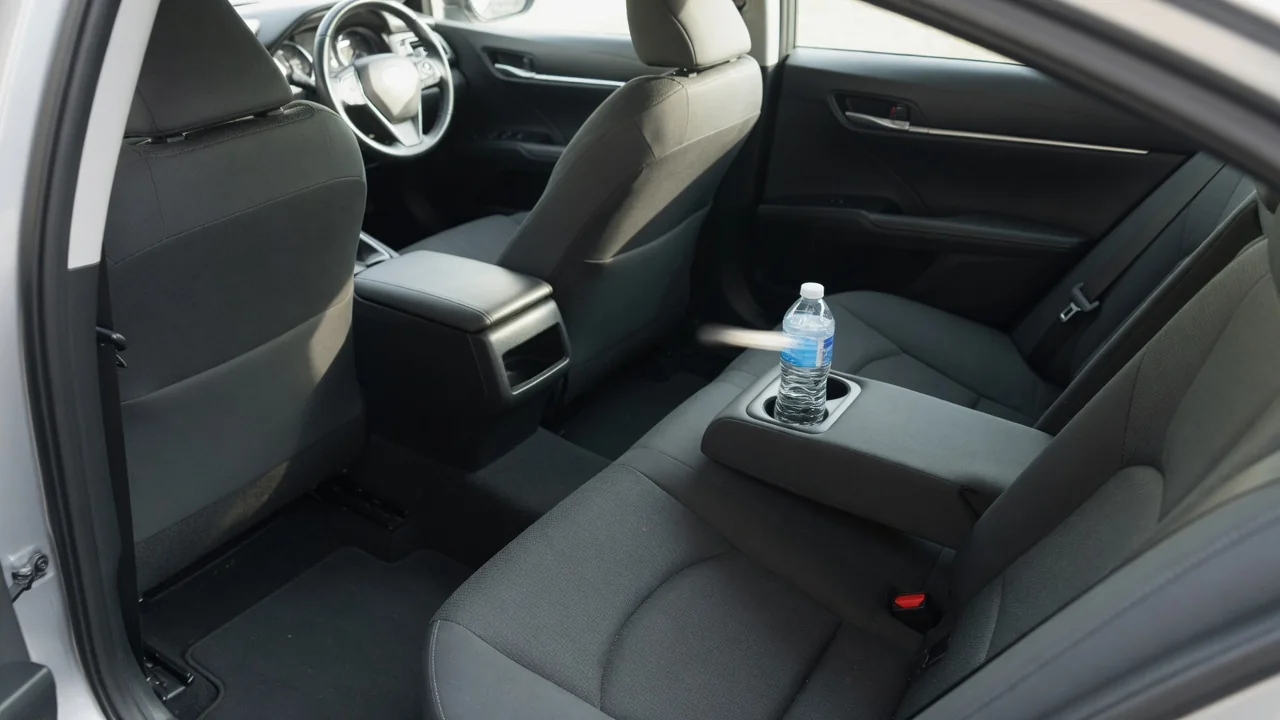
Passengers in the back often notice a buzz, shake, or drone that the driver barely feels. That difference is rarely imagined. Rear cabin vibration comes from how the body flexes, where the rear seats sit relative to the axle and suspension, and which components are mounted nearby. Some of it is normal for a given design, and some points to a fault. Understanding the mechanisms makes it easier to describe the symptom accurately and narrow down the cause.
Body modes: how the structure amplifies vibration
A vehicle body is not perfectly rigid. Like any structure, it has natural frequencies, called modes, at which it bends, twists, or flexes most readily. The most familiar are global bending, where the body bows slightly along its length, and torsion, where the front and rear twist in opposite directions. Each mode has regions of large motion and regions of almost none. When a vibration source such as a tire, driveline component, engine, or exhaust excites a frequency near one of these modes, the response is amplified, and occupants seated near the high-motion regions feel it most. Depending on the design, the rear of the cabin can sit closer to such a region than the front seats do.
Several structural features make the rear more susceptible. The rear floor is often a large panel with fewer cross-members than the front, where the firewall, dashboard support, and front structure add stiffness. Hatchbacks, wagons, and SUVs have a large rear opening for the liftgate, which typically reduces torsional stiffness compared with a closed trunk bulkhead. Rear seats are also frequently simpler in construction: a cushion resting on the floor pan and folding seatbacks held by latches rather than a full frame on adjustable rails. These panels and latches can develop their own local resonances, producing a buzz felt through the seat even when overall body motion is modest.
The rear of the cabin also tends to sit near components that generate vibration. In rear-wheel-drive and all-wheel-drive layouts, the driveshaft, any center support bearing, and the rear differential run beneath or just behind the rear seats. The rear section of the exhaust, the muffler, and their hangers often sit under the rear floor as well. Even in front-wheel-drive cars, the rear wheels and tires rotate almost directly below the rear passengers, so the path from source to seat is short and offers little opportunity for damping.
Suspension: why rear passengers feel the road more directly
Front seats are usually positioned between the axles, while rear seats often sit close to, or even above, the rear axle line. When a car pitches over bumps, points near the middle of the wheelbase move less vertically than points near either axle, so rear occupants experience more of the up-and-down motion. They also receive rear wheel inputs with less filtering, because the distance from the axle to the seat is short. This geometry alone can make the back seat feel busier on rough pavement without any fault being present.
Rear suspension tuning adds to the effect. Rear springs and dampers are typically sized to carry passengers, cargo, and sometimes a trailer tongue load. With only a driver aboard, the rear operates at the lightly loaded end of its range, where it can feel firmer and react more sharply to small, repetitive inputs. Suspension layout matters too, but the result depends heavily on bushing design and tuning, so the type of rear suspension alone does not predict how much vibration reaches the cabin.
Wear changes the picture over time. Weak rear shock absorbers let the body and wheels keep oscillating after a bump. Cracked or softened rear bushings and subframe mounts allow more vibration into the body. Rear tire problems, including imbalance, uneven wear, a shifted belt, or a bent wheel, tend to be felt in the seat and floor rather than through the steering wheel, because the rear wheels are not connected to the steering. That is why a rear-wheel issue can go unnoticed by the driver while back-seat passengers complain.
Diagnosis: narrowing down rear cabin vibration
The most useful first step is to describe when the vibration happens. Vibration that rises and falls with road speed, regardless of gear, points toward tires, wheels, wheel bearings, axles, or the driveshaft. Vibration that follows engine speed, including when the car is parked and the engine is revved, points toward the engine, its mounts, accessories, or the exhaust. Vibration that appears mainly over bumps suggests suspension components, loose trim, or seat hardware. Noting whether it changes during acceleration, steady cruising, or coasting adds clues, since driveline loads and angles differ in each condition.
Next, separate local sources from structural ones. If one seat or seatback buzzes but the nearby floor is quiet, check the seatback latches, headrest posts, seat belt hardware, and cushion mounting points. Loose items in the trunk, an unsecured spare tire, or a loose cargo cover can also transmit buzzing into the rear seats. If the whole rear floor vibrates, rotating parts or mounts are more likely. Inspecting exhaust hangers for broken rubber or contact between the exhaust and the body is a quick check that often explains a rear drone.
For speed-related vibration, a technician will typically inspect tires for wear and damage, check wheel balance, look for bent wheels, and measure runout. Rotating tires front to back can help: if the shake moves to the steering wheel, the problem likely travels with that tire or wheel. On vehicles with a driveshaft, universal joints, the center bearing, and driveline angles are inspected. Shops with vibration analysis equipment can measure the frequency of the vibration and match it to the rotational speed of specific components instead of replacing parts by guesswork.
Practical implications and limits
Some difference between front and rear seats is part of how many vehicles are designed, not a defect. Engineers balance ride quality against load capacity, cost, packaging, and cargo space, and the rear of the cabin often receives less isolation as a result. A useful baseline is how the car felt when it was known to be in good condition. A vibration that is new, has grown stronger, or comes with humming, clunking, or grinding deserves prompt inspection, because worn tires, bearings, or driveline parts can affect safety and cause further damage if ignored.
Owners can rule out several simple factors before visiting a shop: tire pressures set to the vehicle placard, cargo properly secured, seatbacks fully latched, and nothing rattling in door pockets or the trunk. Changes to the original setup, such as larger wheels, lower-profile tires, stiffer aftermarket springs, or a modified exhaust, can shift vibration characteristics, and rear passengers are often the first to notice.
General explanations also have limits. Body modes, suspension layouts, and component placement vary widely between vehicles, so the same symptom can have different causes in different designs. A general guide helps frame the right questions and avoid unnecessary repairs, but confirming the cause usually requires an inspection of the specific vehicle, ideally including a road test with someone riding in the back seat to reproduce what passengers actually feel.