Why Do Old Cars Have Different Panel Fit Expectations?
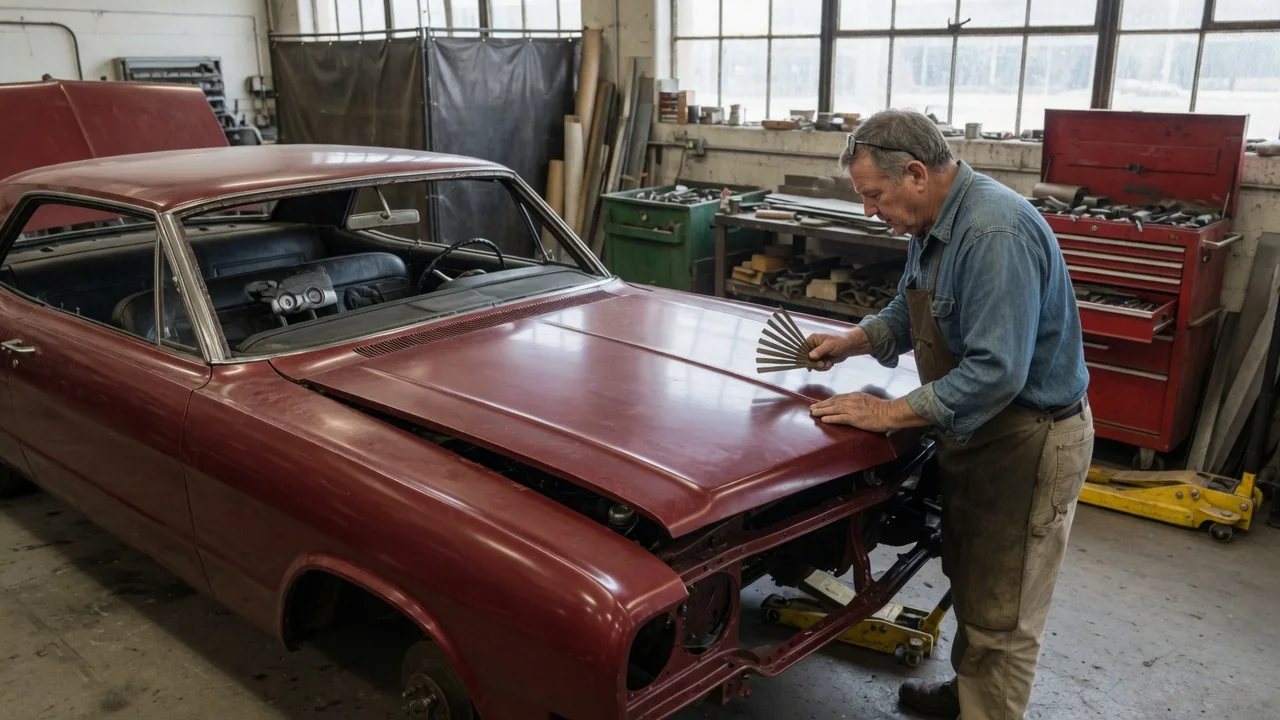
Walk around a well-kept classic car and then look at a modern sedan, and you will probably notice a difference. The gaps around doors, hoods and trunk lids on older vehicles are often wider and less even. That is not automatically a sign of neglect or poor repair. Panel fit expectations differ for three reasons: the cars were built with different tools and methods, they are restored with different goals, and in their kind of use some extra clearance actually helps.
How Production Methods Shaped Original Fit
Older bodies were typically made from steel panels stamped in large dies. The panels were then joined with spot welds, gas welding or brazing, often with considerable manual work at each stage. Dies wear over a production run, sheet steel varies from batch to batch, and every weld introduces some heat distortion. Fixtures and jigs held parts in place, but tolerances across stamping, welding and assembly were generally looser than what modern automated body shops achieve. Small deviations in each part could add up to a visibly uneven gap once a door or fender was hung.
Final fit was often achieved by adjustment rather than built in. Hinges, fenders and hoods commonly used slotted bolt holes, shims and adjustable strikers, so line workers could move panels until they looked acceptable. Imperfections at seams were sometimes filled with body solder, commonly called lead, and then dressed by hand. The result depended partly on the individual worker, the pace of the line and the inspection standards of the time. Two cars of the same model from the same plant could therefore differ noticeably in how their panels lined up.
Construction type matters as well. Many older vehicles used a separate frame, with the body mounted on rubber or composite bushings, and the front sheet metal was often bolted on as an assembly. That arrangement lets the body shift slightly relative to the frame, so it needs clearance for that movement. Modern unibody vehicles are checked with automated measuring systems during production. They are also designed around much tighter, more consistent gap targets, and that has reshaped what many people now consider normal.
Deciding on a Restoration Target
Because original fit varied, a restorer has to decide what the finished car should represent before any panel is adjusted. One common target is factory-correct: gaps that match what the car likely looked like when new, including some unevenness. Another is a better-than-factory finish, where panels are tightened and evened out well beyond the original standard. A third is a modified or restomod build, where the owner's preferences set the benchmark rather than history. None of these is wrong, but each leads to a different amount of labor and a different visual result.
Some owners care about originality or plan to show the car where authenticity is judged. They may find that perfectly uniform, modern-style gaps look out of character for the vehicle. Expectations vary by event and by vehicle, so check the relevant judging guidelines or club resources rather than relying on a general rule. For a driver-quality restoration, the usual aim is gaps that look consistent from side to side and let every panel open and close properly.
Parts sourcing also affects the realistic target. Reproduction panels can differ from original stampings in shape, flange position or hole location. They may need cutting, reshaping or adjustment before they fit well. Original panels bring their own problems if they have been repaired, stretched by old damage or thinned by rust work. Recording the existing gaps before disassembly, ideally with photos and measurements, gives a useful reference for judging what the car can reasonably achieve.
How Panel Fit Affects Usability
Panel gaps are not only cosmetic. A door that sits too low or too far inboard may need extra force to close, may drag on the striker and can wear hinge pins and bushings faster. Weatherstripping relies on a reasonably consistent distance between the door or lid and its opening. If that distance varies, the seal may be crushed in one area and barely touching in another, which can cause wind noise, water leaks and dust entry. Latches and strikers also need correct alignment so doors stay securely closed.
On older bodies, especially those mounted on a frame, some clearance is a functional allowance. The structure flexes over bumps and twists when a wheel is lifted, and doors, hoods and fenders move slightly relative to each other. If gaps are set extremely tight for appearance, edges can touch under load, chipping paint at corners or making doors bind. Thick layers of paint and primer, common in high-gloss refinishing, also use up part of the gap. Clearance that looked fine in bare metal can become tight once the car is painted.
Practical Implications and Limits
For owners, the main implication is that panel fit should be planned from the start rather than corrected at the end. Body alignment depends on the underlying structure, so frame or floor measurements, mount condition and any structural repair need attention before gaps are tuned. Shops commonly hang the doors, fenders, hood and trunk lid during a mock-up stage and fit them in bare metal. Only then does the body go to paint, because reworking edges after finishing risks damaging the new paint. Agreeing on the restoration target in writing with the shop helps avoid disputes about what counts as good fit.
Keep expectations in proportion to the car and the budget. Achieving very tight, uniform gaps on a classic body may involve welding material onto panel edges, reshaping panels and many rounds of fitting, all of which add labor time and cost. Some cars will never match modern consistency without changes that alter their original character. Gap measurements, adjustment ranges and procedures differ between vehicles, so work on any particular car should follow the factory service manual, body dimension charts and reputable model-specific resources. General principles explain why classic car panel gaps differ, but they do not replace the specifications for the vehicle in front of you.