Why Do Mirrors Need Different Adjustment Ranges?
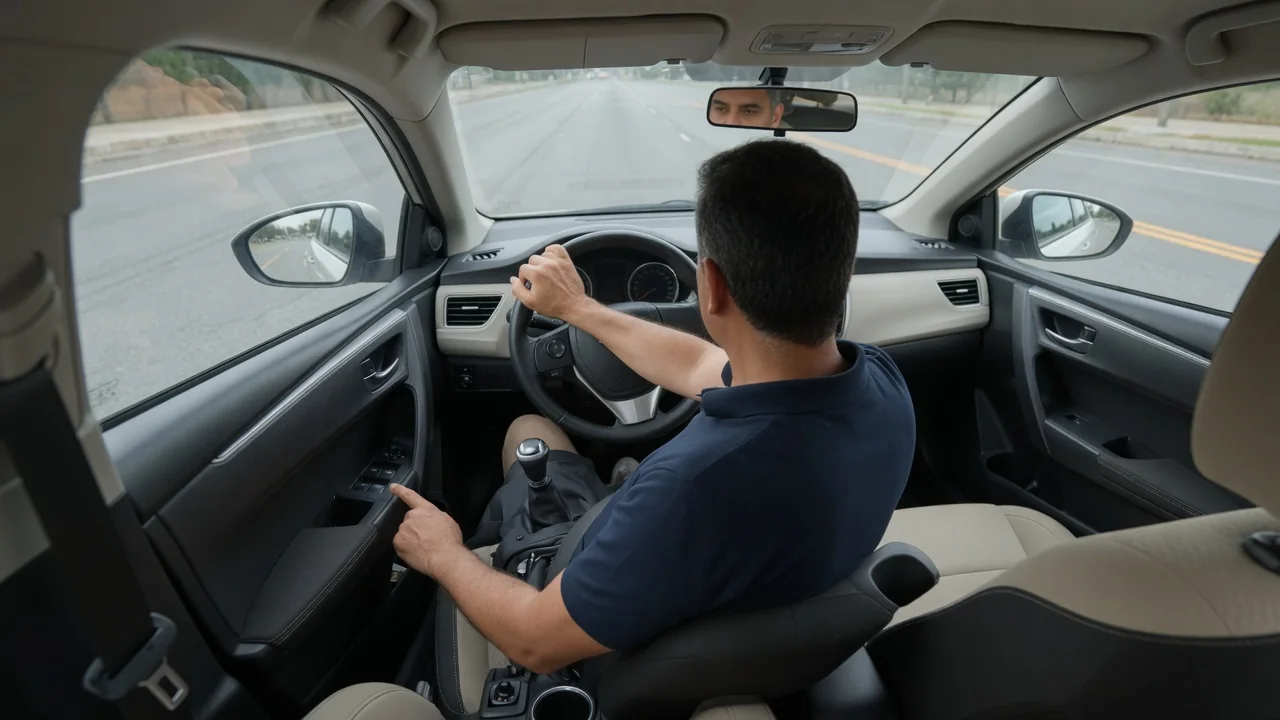
Every car mirror pivots, but not every mirror needs to move the same way or by the same amount. The interior mirror and the two exterior mirrors sit at different distances and angles from the driver's eyes, and those eyes can be in very different places from one driver to the next. Those two facts largely explain why car mirror adjustment range varies, and why some mirror positions are easy to reach while others are not.
Driver Sizes and Eye Position
What a mirror shows depends on where the driver's eyes are relative to the glass. Drivers differ in height, torso length, and leg length, and they set seat height, fore-aft position, and backrest angle to suit themselves. Each combination places the eyes somewhere different in the cabin: higher or lower, farther forward or back, closer to the door or to the center. For one mirror to show a useful rear view from all of those eye points, its glass must tilt and swivel far enough to compensate.
The geometry is simple but unforgiving. Light leaves a mirror at the same angle it arrives, so turning the glass by a given amount swings the reflected view by twice that amount. A driver sitting higher sees a different slice of road than one sitting lower, and the mirror must tilt to bring the same area back into view. The closer a mirror is to the eyes, the more a small head movement changes the viewing angle, so mirrors near the driver are especially sensitive to seating changes.
Distance also creates an asymmetry between the exterior mirrors. In a left-hand-drive vehicle the driver sits close to the left mirror and far from the right one, which is viewed at a sharper angle across the cabin. The far mirror therefore needs to be aimed differently to deliver comparable rearward coverage, and the reverse applies in right-hand-drive vehicles.
Vehicle Shape and Mirror Placement
The body around the driver shapes what a mirror can usefully show. Exterior mirrors are mounted on the doors or near the base of the front pillars, and their position relative to the widest part of the body determines how much of the vehicle's own side appears in the glass. When mirrors sit close to a wide body, the glass must swing farther outward before the flank stops filling the view. Mirrors set farther out from the body reach a clear view of the next lane with less outward travel.
Height matters as well. In a pickup, van, or large SUV, the mirrors sit high above the pavement and the driver looks at them from an elevated seat. In a low car they sit closer to the road and nearer eye level. Each arrangement changes the vertical angle needed to place the horizon and road surface usefully. Vehicles meant for towing often use larger or extendable mirrors, because a trailer can be wider than the vehicle pulling it.
The interior mirror depends on the rear of the vehicle. Its view passes through the rear window, so the window's size, slope, and height, along with rear head restraints, pillars, and cargo, decide how much it can show. A sedan with sloping rear glass, a hatchback, and a van with tall rear doors frame the view differently, and the mirror needs enough tilt to center whatever opening is available.
Visibility Goals Behind Each Mirror
Mirror adjustment is ultimately about seeing traffic, and each mirror has a different job. The interior mirror covers the area directly behind; the exterior mirrors cover adjacent lanes and fill in what the interior mirror cannot reach. Many drivers aim the side mirrors to show a large strip of their own vehicle, which duplicates the interior view and leaves wider blind spots. A commonly recommended alternative is to aim each side mirror outward until the vehicle's side just disappears when the driver leans toward that window. Supporting that wider setting is one reason exterior mirrors need meaningful outward travel.
The type of glass changes the picture. A flat mirror shows objects at true size and distance but covers a narrower area. A convex mirror covers more area but makes objects look smaller and farther away, which is why convex passenger-side mirrors in the United States commonly carry a warning that objects are closer than they appear. Because the two cover different fields, the angle needed to reach a given view is not the same for each.
Vertical movement serves its own purposes. Drivers usually want the horizon near the middle of the glass, but reversing toward a curb or parking lines calls for a downward view, and some vehicles tilt the passenger-side mirror down automatically in reverse. The interior mirror must also handle headlight glare, either through a manual day/night tab or automatic dimming, which adds to how that mirror is designed to move.
Practical Implications and Limits
In daily use, the adjustment range is a window rather than unlimited movement. If a mirror hits the end of its travel before showing the needed view, the cause usually lies elsewhere: an unusual seating position, a rear view blocked by cargo or head restraints, or replacement glass or housing that does not match the original fit. Setting the seat first and the mirrors second is the logical order, and forcing glass against its stops can strain power actuators or loosen manual mounts.
Shared vehicles show the range most clearly. When drivers of different builds use the same car, each new seating position calls for a fresh mirror setting, and a setting that works for one person can leave large gaps for another. Some vehicles store mirror positions with seat memory settings; others rely on manual or power adjustment each time. The owner's manual is the place to confirm which mirror features a specific vehicle has.
Even a well-set mirror has limits. No combination of angles removes every blind area, particularly near the rear corners and for smaller road users such as motorcyclists, cyclists, and pedestrians. Dirt, rain, ice, and fogged rear glass reduce what any adjustment can achieve. Blind-spot warning systems, where fitted, are aids rather than replacements, and a shoulder check before changing lanes remains part of using mirrors correctly.