Why a Car Door Will Not Open: Causes and Safe Checks
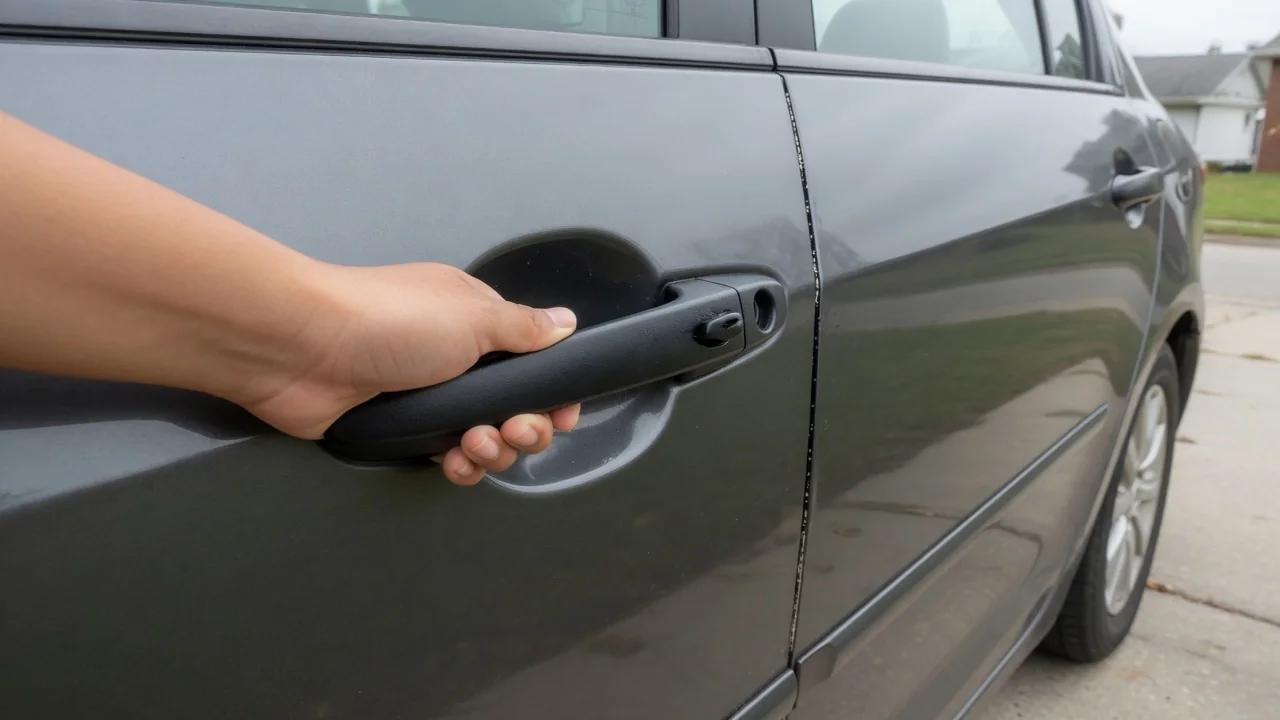
A car door that refuses to open is frustrating, and the cause is not always obvious. Whether the car door handle is loose and won't open the door, or the handle feels normal but nothing happens, the symptoms offer useful clues. This guide explains why a car door won't open, which checks are safe to do yourself, and when a technician should take over.
Why a Car Door Won't Open: The Main Causes
Every door relies on a simple chain. Pulling the inside door handle or outside door handle moves a rod or door release cable, which trips the door latch and frees it from the striker on the body. If any link in that chain breaks, disconnects or seizes, the door stays shut. Causes generally fall into four groups: lock-related faults, handle or door handle linkage problems, trouble inside the latch mechanism itself, and outside factors such as ice or body damage.
Noting which handle fails narrows things down. If only the outside handle does nothing, the fault often sits in that handle or its connection, while a dead inside handle on a rear door may point to the child safety lock. When neither handle works, the latch or lock is more likely involved, since both paths meet there. Designs differ by make, model and year, so these are general patterns rather than a description of any one vehicle's exact parts.
Door Handle Feels Loose and the Door Won't Open
A handle that flops, swings freely or no longer springs back usually means it has stopped pulling on anything. Typically a rod, retaining clip or cable behind the handle has come loose or broken, or part of the handle itself has cracked. Comparing it with a working door on the same car helps: a healthy handle shows steady resistance through its travel and snaps back firmly, whereas a disconnected one feels light and empty from the first movement.
A few observations cost nothing. Watch whether the lock button moves when you lock and unlock, listen for any click from the latch as the handle is pulled, and check whether the other handle on that door still opens it. These details help, but a loose feel only tells you the connection is lost somewhere. Several different faults feel identical from outside, so naming the exact broken part without seeing behind the door trim is guesswork.
Handle Moves Normally but the Door Stays Latched
When the car door handle won't open the door despite normal travel and tension, the handle is probably still connected but not moving the latch far enough. A stretched cable, a linkage that has slipped out of adjustment or a latch that has seized internally can all produce this. A lock that has not fully released does the same thing, because many designs let the handle move freely while the locked latch simply ignores it.
A sensible check is to cycle the lock several times using the key fob, the interior switch and the key in the door lock cylinder, then try both handles again. If the door won't unlock by one method, another may still work. Applying light, steady pressure on the door, pushing inward or easing outward while pulling the handle, can reveal whether the latch is binding against the striker. Never yank or force the handle, which can break parts that were still intact.
Child Safety Locks, Power Locks and Key Fob Problems
A rear door that opens from outside but not from inside is frequently just a child safety lock doing its job. This feature disables the inside handle while leaving the outside one working, and the switch or small lever is usually found on the edge of the rear door, visible only when the door is open. Some vehicles control it electronically from the driver's seat instead, so it is easy to engage by accident.
A failing power door lock actuator often announces itself with a buzz, a grinding noise or complete silence at one door while the others respond normally. Unreliable locking across the whole car can instead stem from a weak fob battery or a low vehicle battery, and using the mechanical key is a helpful check that bypasses the remote. The owner's manual explains the lock settings, including any auto-lock or selective unlock feature that opens only the driver's door on the first press.
Frozen, Dirty or Damaged Door Latches
Cold weather adds its own causes. Moisture can freeze inside the latch, around the handle pivot or along the weather seal, either holding the mechanism still or gluing the door to the body. Gentle methods work best for a frozen door latch: warm the cabin through another door and give it time, or use a de-icer made for locks. Hot water can crack glass, harm paint and refreeze quickly, and striking the door risks dents and broken trim.
Latches also deteriorate gradually. Road dirt, corrosion and dried-out lubricant can make the mechanism stiff until it eventually sticks, often after early warning signs such as a door that needs a second pull. Collision damage or a sagging, misaligned door is different, because the latch may be wedged hard against the striker under load. A stuck car door in that condition needs professional assessment, since forcing it can worsen the damage to the body and the latch.
Safe Steps Before Seeking Repair and Safety Cautions
Before booking a repair, a short non-invasive routine covers the common simple causes. Try every handle, inside and out, then each lock method in turn, confirm the child lock setting on rear doors, and look for ice or obvious damage around the door edges. Stop there unless you are qualified. Door panels can conceal side airbag components, sensors and wiring, so trim should not be taken apart without knowing the vehicle's specific procedure.
A door that cannot be opened from inside is a real safety concern, because an occupant may need that exit in an emergency. Until it is fixed, avoid carrying passengers in the affected seat. Resist the temptation to pry at the door edge or lever against the latch as well. That approach rarely frees anything and commonly chips paint, tears seals and bends the door or body, turning a modest repair into a larger one.
When to Have a Technician Inspect a Door That Won't Open
Professional help is the right call when a door is stuck shut from both sides, when a power lock will not release by any method, or when the problem appeared after a collision. In general terms, a shop first works out how to gain access to the latch with the door closed, which can be awkward, then inspects the linkage, cable, actuator and wiring to find where the chain has actually failed.
Your own notes speed that process. Record how the handle felt, what sounds the door made, how the locks behaved and whether the fault was sudden or gradual, intermittent or constant. Repair approach and part availability depend on the specific vehicle, and similar symptoms can have different causes on different designs. Asking for a vehicle-specific diagnosis, rather than assuming one fix, is the surest way to avoid paying for parts that were never faulty.