Where to Sign a Car Title When Selling: Finding the Seller Line and Completing the Transfer
The short answer
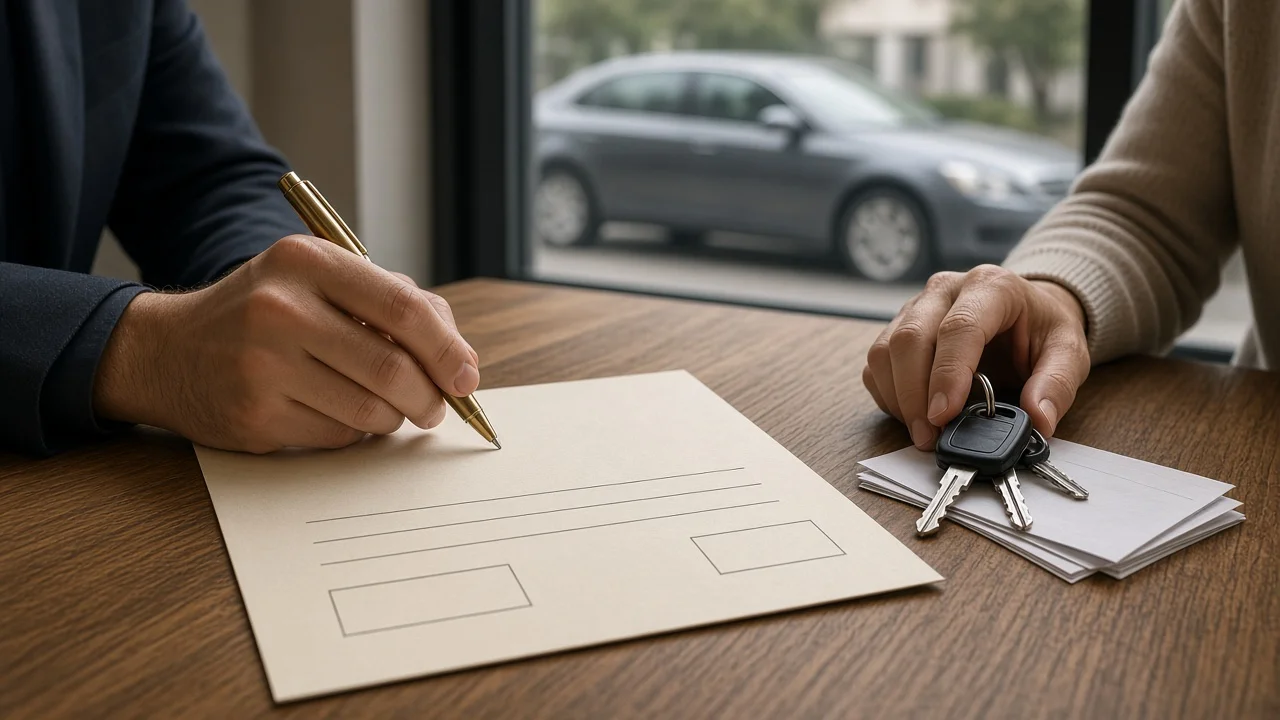
When you sell a car in the US, you sign the certificate of title in the section reserved for transferring ownership. That section is usually labeled something like "Assignment of Title," "Transfer of Ownership" or "Seller's Signature," and on many state titles it is printed on the back of the document. The certificate of title is the state-issued document that records who legally owns the vehicle. Your signature there, together with the buyer's details and the other information the form requests, is what assigns ownership to the new owner.
Several conditions change this answer. Each state designs its own title, so the location and wording of the seller section vary. Some states require the seller's signature to be notarized. If more than one owner is listed, more than one signature may be needed. If a lender still holds a lien on the car, the lien must be released before the title can be cleanly transferred. Check your own state's title and motor vehicle agency guidance before you sign, because a mistake on the title can delay or complicate the sale.
How to find the correct signature line on your title
No images or sample titles were supplied for this guide, and title layouts differ by state and sometimes by the version of the form a state has issued over the years. The cues below are general. Confirm them against the actual document in your hand and your state's instructions.
Look for a heading that refers to assignment, transfer or sale of the vehicle. The seller's signature line sits within that section. Check the back of the title first. Many states place the transfer section there, but some put it on the front. Read the label beneath or beside each line. The seller line is usually marked for the seller, owner or transferor; a separate line is marked for the buyer, purchaser or transferee. Find the odometer disclosure area. It is often next to or inside the transfer section and asks for the mileage reading and a signature or certification. Look for a notary block. If your state's title includes a space for a notary seal and signature, that is a strong sign the seller's signature must be notarized. Distinguish the seller section from the lienholder section. A separate area labeled for lien release or the lienholder is for the lender, not for you.
Some sections look similar to the seller line but serve a different purpose. A section for dealer reassignment is used when a licensed dealer resells the car, not for a private sale. An application area for a new owner's registration may appear on some titles or on a separate form. If you cannot tell which line applies to you, do not guess. Contact your state's motor vehicle agency or read the instructions it publishes for that title before writing anything.
How to sign the title as the seller
Make sure your name matches how it appears on the front of the title, and sign as the title shows it. If two owners are listed, check whether the names are joined by "and" or "or." Many states require both owners to sign when the names are joined by "and," while "or" may allow either owner to sign. Rules vary, so confirm with your state. Fill in the buyer's name and address, sale date and sale price if the form asks for them. Record the odometer reading accurately where requested. Federal law requires odometer disclosure on many vehicle transfers, though some older vehicles are exempt depending on model year. Your state's form will show what applies. Use ink and write carefully. Do not use correction fluid, tape or cross-outs, because alterations can void the title or require a corrected or duplicate title from the state. If a notary is required, wait to sign until you are in front of the notary. Do not sign a blank title and hand it over without the buyer's information. Leaving the buyer section empty can create problems with liability and with the transfer record.
If there is still a loan on the car
When a lender holds a lien, the lender is listed on the title and the loan must be paid off before ownership can transfer free and clear. Depending on the state and the lender, the lender may sign a lien release on the title, provide a separate lien release letter or document, or arrange for the state to issue a new title without the lien. In some states the lender keeps the title, physically or electronically, until the loan is paid. Ask your lender how payoff and title release work before you agree to a sale timeline.
What is needed to transfer a car title
Once the title is signed, the buyer typically completes the transfer with the state. Exact requirements, fees, taxes and deadlines were not part of the information supplied here and differ by state, so treat the list below as a general checklist and confirm the details locally.
Item | Who usually provides it | Notes; Signed certificate of title | Seller | Seller section completed, notarized if the state requires it; Bill of sale | Seller and buyer | Required in some states, recommended in others as a record of price and date; Odometer disclosure | Seller | On the title or a separate form, depending on the state and vehicle; Lien release | Seller's lender | Needed if the title shows a lienholder; Government-issued photo ID | Buyer | Usually required at the agency; Proof of insurance | Buyer | Commonly required to register the vehicle; Title application form | Buyer | Some states use a separate application for a new title and registration; Inspection or emissions certificate | Varies | Only in states or areas that require it; Payment for fees and taxes | Buyer | Title, registration and sales or use tax amounts vary by state
Where to transfer a car title
Title transfers are handled by the state agency responsible for motor vehicles. Its name varies: it may be called the DMV, the Bureau of Motor Vehicles, the Motor Vehicle Administration, the Secretary of State's office or a county tax office, among other names. Many states also allow some steps online or by mail, and some use licensed private tag agencies. To find a location near you, search your state government's official motor vehicle site for title transfer offices rather than relying on third-party listings.
What the seller should do after signing
Keep a copy or photo of the completed title and the bill of sale for your records. Check whether your state requires you to file a notice of sale, notice of transfer or release of liability. This helps show you no longer own the car if it is later ticketed, towed or involved in a crash. Follow your state's rule on license plates. In some states plates stay with the seller; in others they stay with the vehicle. Cancel or adjust your insurance only after ownership has transferred.
Limits of this guide
This guide covers general US practice for private-party sales. It does not include state-specific forms, fees, tax rates, notary rules or transfer deadlines, because no confirmed figures were supplied. Situations such as a lost or damaged title, a deceased owner, an out-of-state transfer, a gifted vehicle or a branded title such as salvage can follow different procedures. For any of these, or if your title's layout does not match the cues above, check your state's motor vehicle agency before signing.