What to Check Before Driving a Rental Car Away
Knowing what to check before driving a rental car away saves confusion on the road and disputes at return. An unfamiliar vehicle hides its controls in unexpected places, and existing damage that goes unrecorded can end up attributed to you. A few unhurried minutes in the lot, spent on the cabin, the bodywork, and the fuel or charging arrangement, cover most of the risk.
Find controls
Start in the driver's seat with the car parked. Adjust the seat, steering wheel, and all three mirrors, then locate the controls you would otherwise hunt for in traffic: headlights, wipers and washers, hazard flashers, and the defroster. Light switches may sit on a stalk or on a dash panel left of the wheel, and wiper stalks differ between brands, so operate each one once. A sudden rain shower is a poor moment to discover which lever does what.
Next, work out how the car starts, shifts, and holds itself still. Many rentals use a push-button start that requires a foot on the brake, and gear selectors range from conventional levers to rotary dials, buttons, or column stalks. The parking brake might be a hand lever, a foot pedal, or a small electric switch that releases automatically or needs a pull. Also find the door lock, window, and trunk releases, plus the fuel door or charge port release if one is fitted inside.
Walkaround
Walk slowly around the vehicle in good light before loading luggage. Look along each panel for scratches, dents, and scuffed bumper corners, and check wheels for curb rash, since these low areas are easy to overlook and commonly disputed. Examine the windshield for chips or cracks, and the mirrors and lamp lenses for breaks. Compare what you see with the damage record the rental company provides, and ask staff to add anything missing before you leave the lot.
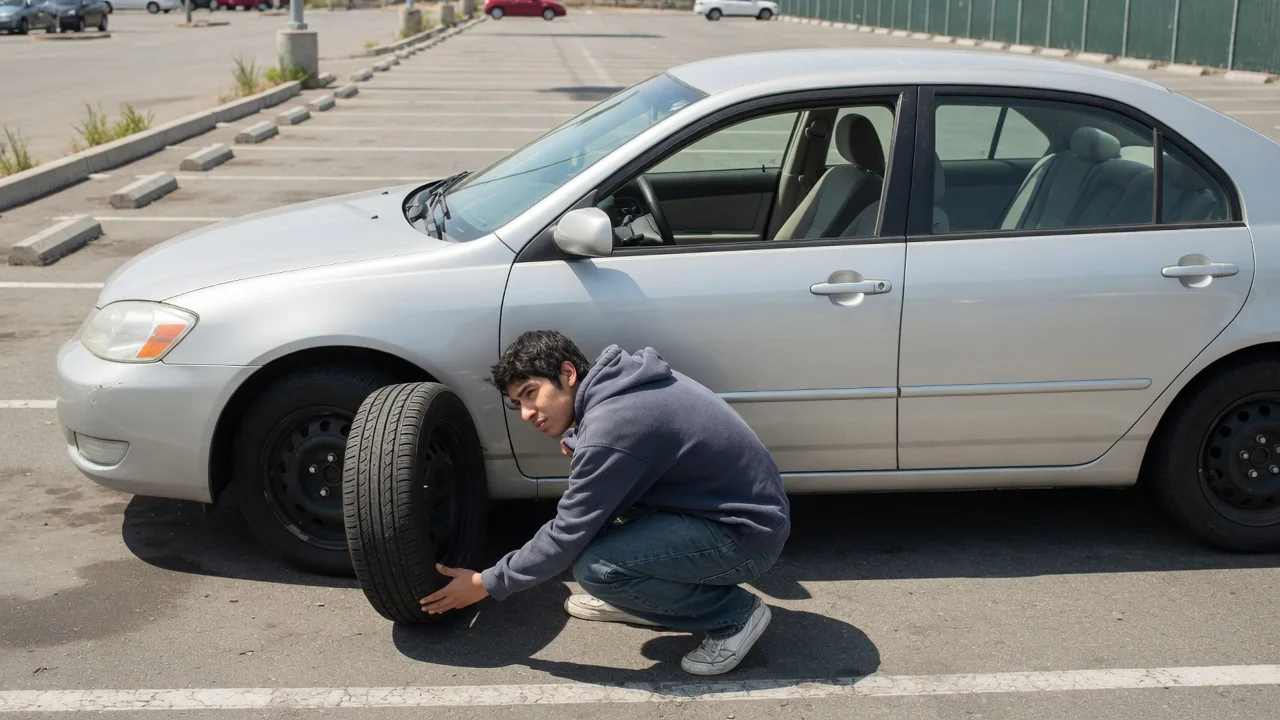
Photographs or a continuous video taken with your phone give a time-stamped record of the car's condition, including the roof, the interior, and the odometer and fuel gauge readings. While circling, glance at the tires: each should look evenly inflated, with visible tread and no bulges or cuts in the sidewall. Inside, note stains, burns, or torn upholstery. Whether a spare tire, an inflator kit, or neither is carried varies by vehicle, so lift the trunk floor and see.
Confirm fuel or charging setup
Confirm what the car runs on before the first stop. The required fuel is usually printed inside the filler door or on the cap, and the rental agreement or key tag may state it as well; gasoline and diesel are not interchangeable, and misfueling can cause expensive damage. A small arrow beside the pump icon on most fuel gauges points to the side the filler is on. Check that the gauge reading matches the level written on your paperwork.
Electric and plug-in hybrid rentals need a different check. Read the displayed state of charge and estimated range, find the charge port, and see which cable, if any, is in the trunk or under the floor. Connector types and charging speeds differ by vehicle, so ask the counter which public stations suit the car and how the port door opens. Return terms also vary, with some companies expecting a certain charge or fuel level back, so read that line of the agreement before leaving.
Everyday Use and Observations
Turn the car on and watch the instrument cluster. Warning lamps normally illuminate briefly as a bulb check and then go out; a light that stays on, such as a tire pressure, check engine, or brake warning, deserves a question at the counter before departure. A lit warning is a prompt for inspection rather than proof of a specific fault, but it is the rental company's issue to resolve, not something to inherit halfway through a trip.
Then test the things you will use every day. Run the air conditioning and heater, try the wipers, confirm that headlights, brake lights, and turn signals work using a reflection or a helper, and pair your phone if you plan to navigate through the screen. Driver assistance features such as lane keeping or automatic stop-start can behave differently from your own car, so learn where their switches are. In the first few yards, notice how the brakes and steering respond.
Limits and Next Steps
A lot inspection has limits. It reveals visible condition and obvious function, not the state of the brakes, the suspension, or the service history, and you should not attempt adjustments or repairs on a vehicle you do not own. If something feels wrong, such as a pull to one side, a vibration, an unusual noise, or a persistent warning, the sensible response is to return to the desk and request another car instead of pressing on.
Before pulling out, make sure you know who to call. Locate the roadside assistance number, usually on the agreement, the key tag, or a sticker in the glovebox, and keep the paperwork and your photos accessible. The owner's manual, often in the glovebox or within the infotainment menus, answers model-specific questions about controls and warning symbols. At return, repeat the walkaround and photograph the car, fuel or charge level, and mileage again so both ends of the rental are documented.