What to Check Before Driving a Long Mountain Route
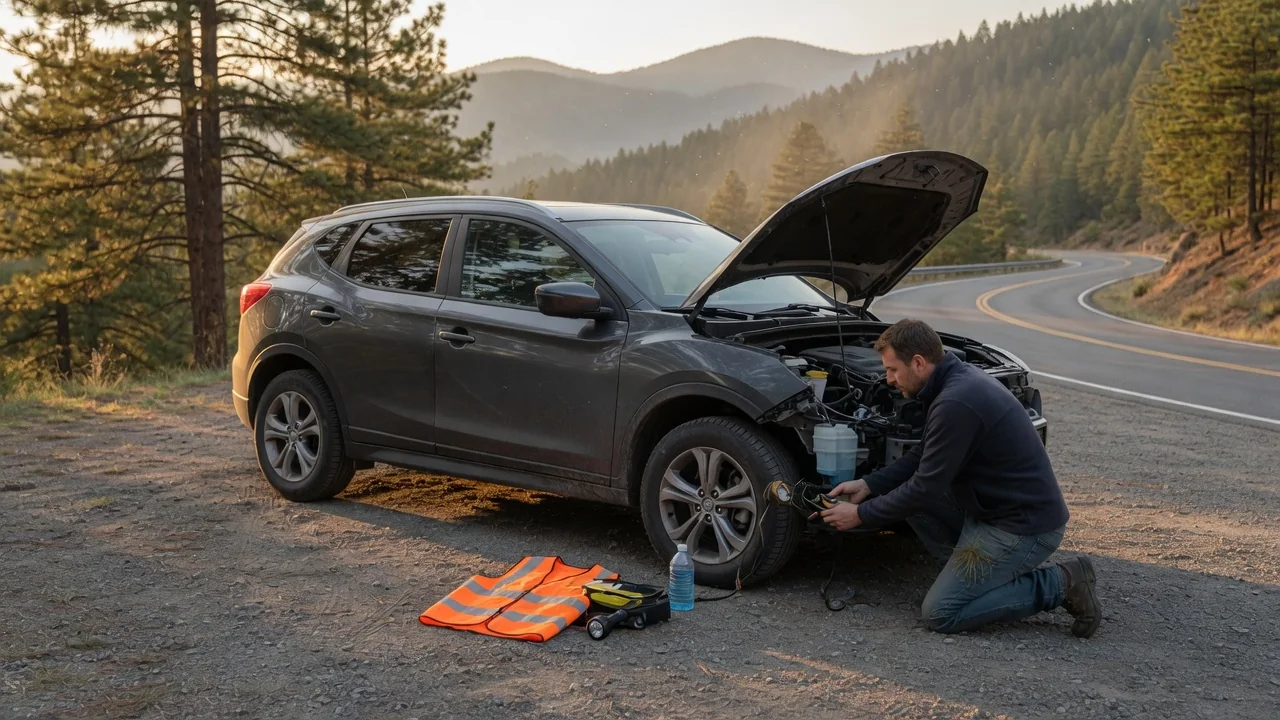
Knowing what to check before driving a long mountain route starts with four areas: tires, brakes, cooling and weather. Steep grades, thin air and fast-changing conditions put loads on a vehicle that flat highway driving rarely does. A careful look at the car in the driveway, plus a realistic plan for the road, makes long climbs and descents far less stressful.
Vehicle condition
Tires deserve the first look because they carry every cornering and braking load on a winding grade. Check pressures cold against the placard on the driver's door jamb rather than the number molded into the sidewall, which is a maximum rather than a recommendation. Inspect tread across the full width, since worn shoulders or a bald center strip point to alignment or inflation problems. Look for sidewall bulges, cuts and cracking, and confirm the spare or inflator kit is actually usable before leaving.
Brakes and cooling come next. A pedal that feels soft, sinks slowly or pulses under light pressure deserves attention before a long descent, as does any grinding or pulling to one side. Brake fluid that looks dark in the reservoir may have absorbed moisture, which lowers its boiling point under sustained heat. With the engine cold, confirm coolant sits between the reservoir marks, and look over hoses for swelling, soft spots or crusty residue at the clamps. Fluid specifications and inspection points vary by vehicle, so the owner's manual is the reference.
Elevation effects
Air gets thinner as the road climbs, and that changes how a vehicle behaves. A naturally aspirated engine loses power steadily with altitude because each intake stroke draws in less oxygen, so passing and merging take longer than at sea level. Turbocharged engines compensate for much of that loss, though the turbo works harder to do it. Thin air also carries heat away from the radiator less effectively, which is why temperature gauges often creep upward on a long grade even in cool weather.
Tire pressure readings shift as well. Gauge pressure rises somewhat as surrounding atmospheric pressure falls, while a sharp drop in temperature near a summit pushes it the other way, so a monitoring-system warning on a cold pass is not unusual. Recheck with a gauge once the tires are cold instead of bleeding air from warm ones. Weather changes with height too: rain at the trailhead can be sleet or snow at the top, and some passes require chains or winter-rated tires during certain seasons.
Stop strategy
Planned stops are part of the mechanical checklist, not just a comfort break. Fuel stations and chargers thin out in mountain country, and climbing burns through a tank or battery faster than the trip computer's flat-road estimate suggests, so topping up before the grade begins is wise. Pullouts and brake-check areas give you a chance to walk around the vehicle, look at the tires, and notice any hot or acrid smell coming from the wheels before the next descent.
How you stop matters when components are hot. If the temperature gauge has climbed, easing off and letting the engine idle briefly usually helps more than shutting down immediately, because the water pump and fan keep moving heat away; never open a radiator or pressurized reservoir cap on a hot engine. After heavy braking, park on level ground and release the pedal instead of holding pads clamped against very hot rotors. Let the brakes cool in moving air, and resist the temptation to spray them with water.
Everyday Use and Observations
The best preparation happens in the weeks before the trip, during ordinary driving. Pay attention to whether the steering wheel shakes under braking, whether the vehicle drifts on a straight road, and whether the temperature needle sits where it always has. A sweet smell after parking, or drips on the driveway, hints at a coolant leak worth tracing. If a warning light is on, a stored fault code is a clue that needs proper diagnosis, not proof that a specific part has failed, and code meanings can differ between manufacturers.
On the mountain itself, the same habits of observation apply. Downshifting or selecting a lower gear range lets engine braking hold speed on descents, so the friction brakes are used in firm, short applications rather than dragged continuously. A pedal that grows longer or softer, or a burning odor, signals fade and calls for a stop. Running the air conditioning adds heat load on a hard climb, so switching it off can help a struggling cooling system. Automatic transmissions, hybrids and vehicles with tow or grade modes each handle this differently.
Limits and Next Steps
A driveway inspection has limits. You can see outer pad thickness on some wheels through the spokes, but not inner pads, seized caliper slides, or moisture content in brake fluid. Coolant level says nothing about the condition of a thermostat, water pump or radiator cap. Tire age matters alongside tread depth, since rubber hardens over time; the date code on the sidewall shows when a tire was made. If the vehicle will be heavily loaded or towing, the margins shrink further and the load limits on the placard apply.
When anything is uncertain, a pre-trip inspection by a qualified technician is the sensible next step, ideally a week or two ahead so there is time for repairs. Bring specific observations, such as when a noise occurs or how the pedal feels. Close to departure, check the forecast and road-condition reports for the passes themselves, not just the towns at either end, and pack warm clothing, water, a flashlight and traction equipment where rules or weather call for it. If conditions turn poor, delaying or rerouting is a legitimate choice.