What Octane Is Ethanol-Free Gas?
The Short Answer
Ethanol-free gas does not have one fixed octane rating. "Ethanol-free" describes what is left out of the fuel, which is ethanol. Octane is a separate property: the fuel's resistance to knock. In the US, ethanol-free gasoline is most often sold as a 90-octane product, frequently labeled as recreational fuel or marked for marine and small-engine use. Some stations sell it at other grades, such as 87, 91 or higher, depending on the supplier and region.
The rating printed on the pump you are using is the only reliable answer. This article does not include station-level data, regional availability figures or prices, so check the octane label on the dispenser before you fill up.
What "Octane" and "Ethanol-Free" Each Mean
An octane rating measures how well a fuel resists knock. Knock happens when part of the air-fuel mixture ignites on its own before the spark-initiated flame reaches it, which causes a pinging or rattling sound under load. A higher number means more resistance to knock. It does not mean the fuel contains more energy.
US pumps show the Anti-Knock Index (AKI), the average of two laboratory measurements called the Research Octane Number and the Motor Octane Number. On the pump this often appears as "(R+M)/2." Octane figures from other countries are usually Research Octane Numbers. Those look higher for the same fuel, so a foreign figure cannot be compared directly with a US pump label.
Most US gasoline is blended with ethanol, typically up to 10 percent (E10). Ethanol-free gasoline, sometimes called E0, pure gas or non-oxygenated gas, contains no added ethanol.
Why Ethanol-Free Gas Often Sits at a Different Octane Than Regular
Ethanol has a high octane value. Refiners and blenders take this into account: much of the gasoline base shipped to terminals is formulated so that adding ethanol brings the finished blend up to the advertised grade. When no ethanol is added, the octane has to come from the gasoline components alone. That is one reason ethanol-free products are commonly sold at a fixed grade, often 90, rather than in the usual 87, 89 and premium tiers.
In practice, ethanol-free fuel is not automatically "premium" and not automatically "regular." Its grade depends on how that particular product was blended.
How It Differs From Regular E10 Gas
Energy content: ethanol contains less energy per gallon than gasoline, so E0 can deliver slightly better fuel economy than E10 in the same vehicle. The size of the gain depends on the vehicle and driving conditions, and no measured figures are provided here. Storage behavior: ethanol attracts water. In fuel that sits for long periods, especially in vented tanks or humid environments, this can lead to phase separation, where a water-ethanol layer settles out of the gasoline. Ethanol-free fuel avoids that particular problem, although all gasoline still degrades over time. Material compatibility: some older fuel-system components, and some older engines and fuel tanks, were not designed for ethanol blends. E0 removes that concern. Cost and availability: ethanol-free gas is generally less widely available than E10 and is commonly priced higher. Local price data was not available for this article.
Strengths, Limitations and Who It Suits
The points below are general editorial guidance based on how fuels and engines work. They are not results from fuel testing.
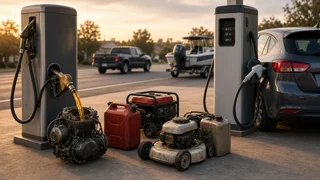
Ethanol-free gas is most useful for engines that sit unused for long periods or that were not built with ethanol in mind. Typical examples include:
Boats and outboard motors, where fuel may sit for weeks and moisture exposure is higher; Lawn mowers, chainsaws, generators and other small engines; Motorcycles, ATVs and other recreational vehicles that are stored seasonally; Classic or older carbureted vehicles whose fuel systems predate widespread ethanol blending
Most modern cars and light trucks sold in the US are designed to run on E10, so ethanol-free fuel offers little practical benefit for them beyond a possible small mileage difference. For these vehicles, the octane requirement in the owner's manual matters more than ethanol content. A car that calls for 87 will not gain power or efficiency from a higher-octane E0 fuel. A car that requires premium may not be adequately served by a 90-octane E0 product if its stated minimum is higher. These requirements vary by model year, engine and market, so check the manual or the label inside the fuel door for your specific vehicle.
The main limitations are higher typical cost, limited station availability, and the risk of assuming a grade without reading the pump label.
How to Confirm the Octane at the Pump
US fuel dispensers are required to display the octane rating, usually on a label on the pump face. Ethanol content is normally disclosed separately, for example with a notice that the fuel may contain up to 10 percent ethanol, or with an ethanol-free designation. If the label does not clearly show both the octane number and the absence of ethanol, ask the station or choose a different pump. Some ethanol-free pumps are marked for off-road, recreational or marine use, so check that the product is appropriate for how you plan to use it.
Bottom Line
In the US, ethanol-free gas is most commonly sold as 90 octane, but the rating is set by the specific product and can differ. Use the number on the pump, match it to your engine's stated requirement, and choose ethanol-free fuel mainly for small, marine, seasonal or older engines, where avoiding ethanol has a practical benefit.