What Is Towing Capacity?
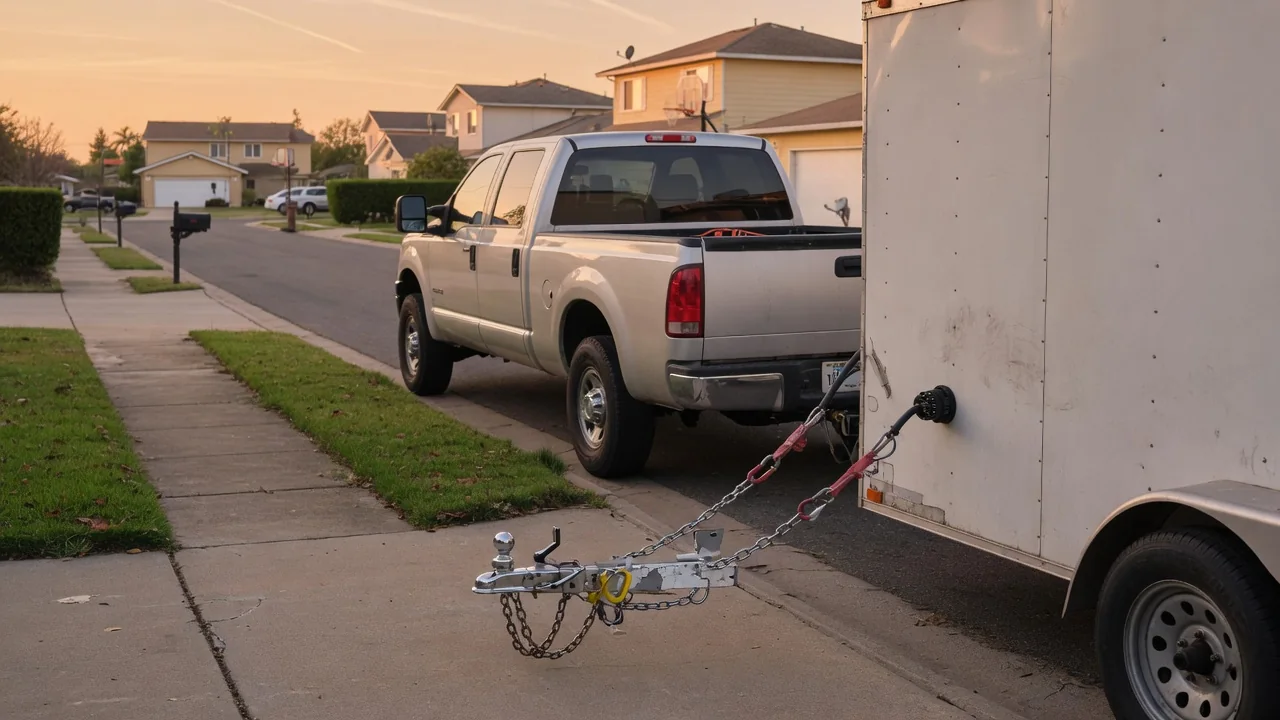
Anyone asking what is towing capacity is really asking how much trailer weight a vehicle can pull without exceeding what its manufacturer engineered it to handle. The answer is a rated limit, not a single universal number, and it shifts with engine, drivetrain, axle ratio, and installed equipment. Understanding how that rating is built helps owners match a trailer to the vehicle they actually have.
Trailer mass
Towing capacity describes the maximum loaded trailer mass a vehicle is rated to pull. The key word is loaded. A trailer's empty weight, sometimes called dry weight, leaves out water, propane, gear, fuel in a boat's tank, and everything else added before a trip. A camper that looks comfortably under the limit on a brochure can move much closer to it once it is packed for a week away. The figure that matters is what the trailer weighs when it rolls onto the road.
Trailers usually carry their own identification plate showing a gross trailer weight rating, which is the most the trailer itself is built to weigh when full. Comparing that plate to the tow vehicle's rating gives a conservative first check. For an actual number, a public scale at a truck stop or landscape supply yard weighs the hitched combination and the trailer separately. Readers often find that cargo adds more than expected, particularly with enclosed utility trailers, where the load is hidden and easy to underestimate.
Equipment
The published rating assumes specific hardware, and a vehicle without that hardware may be rated lower. Factory tow packages commonly bundle items such as a hitch receiver, wiring connector, additional transmission or engine cooling, a different axle ratio, and sometimes upgraded suspension or a trailer brake controller. Two trucks that look identical in a parking lot can carry noticeably different ratings because one left the factory with this equipment and the other did not. The package contents vary by manufacturer and model year.
The hitch itself carries its own limits. Receivers are grouped into classes, and each receiver, ball mount, and hitch ball is stamped or labeled with a maximum trailer weight and tongue weight. The lowest-rated component in that chain sets the practical ceiling, regardless of what the vehicle can pull. Many manufacturers also specify separate limits for weight-carrying and weight-distributing hitches, and require trailer brakes above a certain trailer weight. Those thresholds differ between vehicles, so the owner's manual is the place to confirm them.
Other limiting ratings
Towing capacity is only one of several ratings that apply at the same time. Gross vehicle weight rating covers the tow vehicle and everything in it, including passengers, cargo, and the downward force the trailer places on the hitch. Gross combined weight rating covers the loaded vehicle and loaded trailer together. Gross axle weight ratings cap what each axle may carry. A combination can sit under the tow rating and still exceed one of these, which is why the headline number alone does not settle the question.
Payload is the limit owners reach first more often than they expect. Tongue weight, the portion of trailer weight resting on the hitch, counts against payload along with every person and item in the cabin and bed. A family of four with luggage and a cooler may leave little room for the tongue weight of a large travel trailer. The payload figure appears on the tire and loading placard inside the driver's door jamb, and it is specific to that individual vehicle as built.
Everyday Use and Observations
A vehicle working near its rated limit behaves differently, and the changes are easy to notice. Acceleration is slower, braking distances grow, and the transmission holds lower gears longer on grades. The rear of the vehicle may sit lower and the front higher, which lightens the steering and can aim the headlights upward. Crosswinds and passing trucks push a tall trailer around more than a low one of the same weight. These are normal effects of added mass, but they become more pronounced as the load approaches the rating.
Some observations deserve closer attention. A trailer that sways from side to side at highway speed often has too little weight on the tongue or cargo loaded too far rearward. Rising coolant or transmission temperature on a long climb suggests the powertrain is working at the edge of its cooling capacity. A sagging rear end can point to excessive tongue weight or an overloaded bed. Altitude, heat, and steep terrain all reduce the margin, so a combination that feels relaxed on flat ground may feel strained in the mountains.
Limits and Next Steps
The rating is a ceiling set by the manufacturer after testing the frame, brakes, cooling system, driveline, and suspension as a whole. Aftermarket parts such as helper springs, air bags, or a heavier hitch can improve ride height or stability, but they do not raise the rated capacity. Exceeding it adds wear to the transmission and brakes and lengthens stopping distances, and it may also affect warranty coverage or insurance, depending on the policy and local rules. Many experienced owners choose to stay comfortably below the maximum.
The reliable way to find the correct figure is to check the sources tied to the specific vehicle. The owner's manual and the manufacturer's towing guide list ratings by engine, cab, bed, drivetrain, and axle ratio, and the door jamb labels show the weight ratings for that exact build. A dealer can decode the vehicle identification number to confirm which towing equipment was installed at the factory. With those numbers and a scale ticket for the loaded trailer, the comparison becomes straightforward arithmetic instead of guesswork.