What Is Paint Oxidation on a Car?
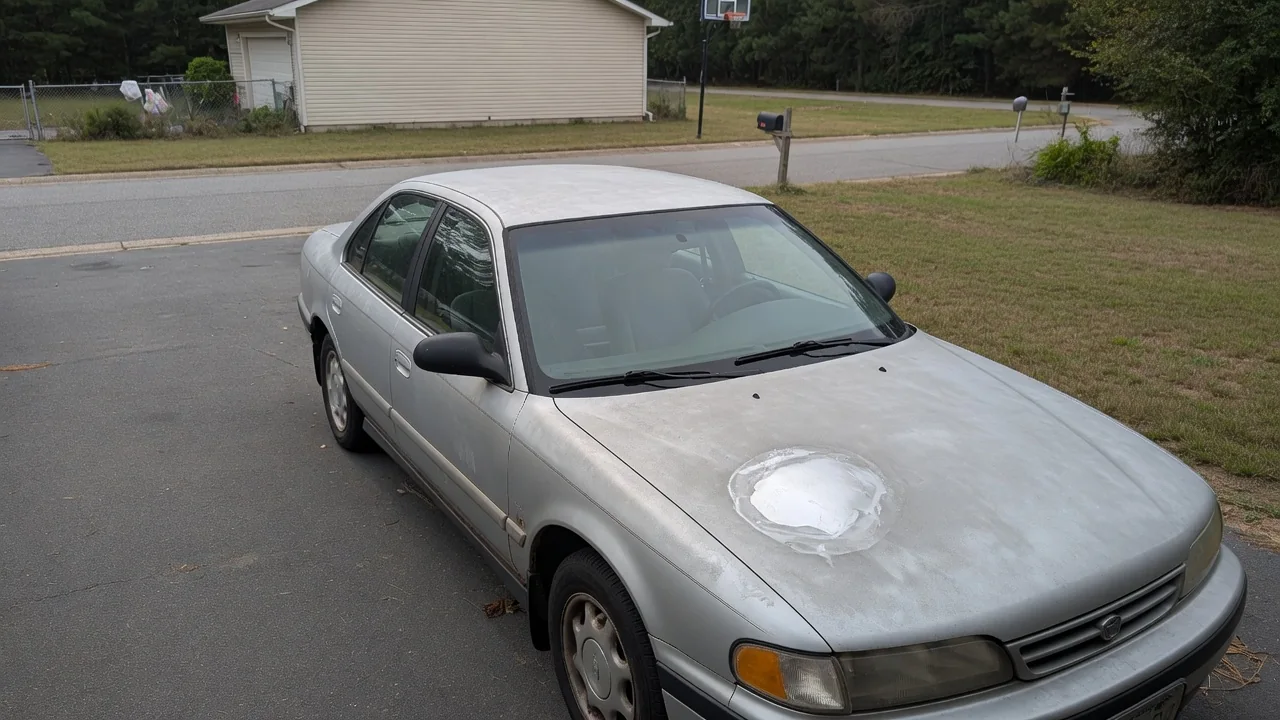
If you have ever asked what is paint oxidation on a car, the short answer is that it is a slow chemical breakdown of the finish caused by oxygen, sunlight, and heat. The surface loses its oils and resins, gloss fades, and color looks flat or chalky. Understanding how it develops helps you tell cosmetic dulling from damage that needs professional attention.
Appearance
Oxidized paint usually shows up first as a loss of depth. A panel that once reflected clouds and tree branches sharply begins to return a hazy, muted image, and the color appears lighter or washed out. Red finishes often drift toward pink, black turns a tired gray, and dark blues look cloudy. On horizontal panels such as the hood, roof, and trunk lid, the change tends to appear earlier because those surfaces take the most direct sunlight and hold the most heat.
As the condition advances, the surface can feel dry or slightly rough, and wiping it with a cloth may leave a chalky residue the color of the paint on older single-stage finishes. Vehicles with a clear coat behave differently: the transparent top layer turns milky or develops whitish patches while the color beneath stays intact for a time. How a particular vehicle ages depends on its paint system, color, age, and where it has been parked, so two cars of the same model can look quite different.
Cleaning versus correction
Washing removes dirt, road film, and loose contamination, but it does not reverse oxidation, because the dullness is in the paint itself rather than sitting on top of it. A useful observation is what the panel looks like right after a thorough wash and dry. If gloss returns fully, the car was simply dirty. If the finish still looks flat, hazy, or blotchy once clean, the top layer of paint or clear coat has likely degraded and needs more than soap.
Correction means removing a very thin layer of damaged material to expose sound paint beneath, typically with a polish or compound and an appropriate pad. Light haze often responds to a mild polish, while heavier chalking may call for a more abrasive product followed by refinement. Because every pass thins the finish, the gentlest approach that works is the sensible one, and a small test spot shows what a panel will tolerate. Paint thickness varies between vehicles and even between panels, especially after previous repairs or repainting.
Prevention
Prevention centers on limiting the exposure that drives the reaction. Ultraviolet light and heat break down the binders in paint, so parking in a garage, under a carport, or in shade reduces the daily load on the finish. A quality cover can help where covered parking is unavailable, provided the car is clean before it goes on. Regular washing matters too, since bird droppings, tree sap, road salt, and industrial fallout can etch or weaken the surface and give oxidation an easier start.
A protective layer adds a sacrificial barrier between the paint and the environment. Wax, synthetic sealant, and ceramic coatings all serve this purpose in different ways, differing mainly in how long they last and how they are applied. Whichever is chosen, it wears away with weather and washing and needs renewal; water that stops beading and begins to lie flat on the panel is a common sign that protection has faded. Product instructions and the vehicle maker's care guidance are the right references for timing.
Everyday Use and Observations
Daily habits shape how quickly a finish dulls. A commuter car left in an open lot for the entire workday absorbs far more sun than one parked in a structure, and vehicles in hot, sunny, or coastal regions generally face harsher conditions than those in mild, overcast climates. Automatic washes with stiff brushes and harsh detergents can strip protection and add fine scratches, which scatter light and make early dullness more noticeable. Gentle washing with a pH-balanced automotive shampoo and clean mitts keeps the surface in better condition.
Routine observation catches the problem while it is still easy to manage. Looking along the hood or roof in angled daylight reveals haze that is hard to see head-on, and comparing a sun-facing panel with a door jamb or the lower portion of a door shows how much color has shifted. Plastic trim, painted mirror caps, and bumper covers may age at a different rate than metal panels, because they are often finished separately. Uneven fading across the car is common and does not by itself indicate a poor repaint.
Limits and Next Steps
Polishing has limits. Once a clear coat begins to peel, flake, or crack, or shows white patches with defined edges, the layer has failed rather than merely dulled, and no amount of compound will bring it back. Polishing such areas can remove what remains and expose the color coat or primer. Similarly, single-stage paint that has been corrected many times may be too thin to work safely. In these cases refinishing the affected panels is the realistic remedy, and a body shop can assess the extent.
For a finish that is only dull, a sensible next step is a thorough wash and decontamination, followed by a test spot with a mild polish on an inconspicuous area. If gloss returns, the remaining panels can be treated the same way and then protected promptly, since freshly corrected paint has no barrier of its own. If the result is uncertain, a professional detailer can measure paint thickness and advise on how much correction the vehicle can take. Bare metal or rust bubbles call for repair, not polish.