What Is a Vehicle's Turning Radius?
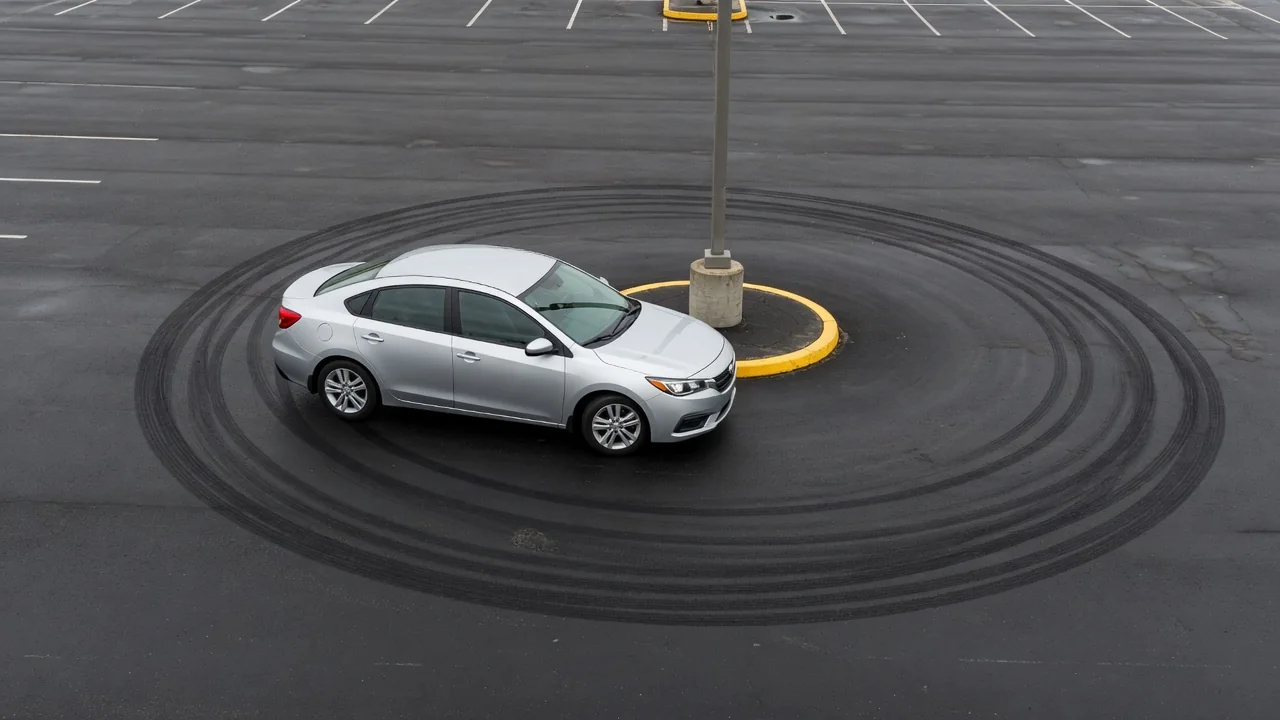
What is a vehicle's turning radius? In simple terms, it describes the tightest arc a car or truck can trace with the steering wheel held at full lock. The figure sounds straightforward, yet automakers measure and label it in different ways, so two published numbers may not describe the same thing. Understanding the geometry behind the specification makes comparisons far more reliable.
Radius versus circle
A radius is the distance from the center of a circle to its edge, while the turning circle, sometimes called turning diameter, is the full width of that circle, roughly twice the radius. When a vehicle turns at full lock, each wheel follows its own arc around a shared center point located somewhere along a line extending from the rear axle. The outer front wheel sweeps the widest path of the four, so its arc usually defines the published figure for the vehicle.
The ambiguity begins with terminology. Many brochures and specification sheets say turning radius when the number printed is actually a diameter, and others list a turning circle without saying how it was measured. A figure that looks twice as large as a rival's may simply be a diameter set beside a radius. Before comparing two vehicles, check the label, the units, and whether both numbers describe the same measurement, because that detail varies by manufacturer and market.
Parking
Parking is where turning geometry becomes most noticeable. A vehicle with a tight turning circle can swing into a perpendicular space from a narrow aisle in a single motion, while one with a wider circle may need to stop, reverse, and realign. Wheelbase plays a large role here, since a longer distance between the front and rear axles generally widens the arc. That is one reason long pickups and large SUVs often feel more demanding in parking garages than short city cars.
The rear wheels also matter when parking, because they follow a tighter path than the fronts and cut toward the inside of the turn. Drivers see this when a rear tire brushes a curb the front tire cleared comfortably. Front overhang adds another consideration, as the bumper corner swings wider than the tire itself. Some vehicles offer rear-wheel steering that turns the rear wheels slightly at low speed to shrink the circle, though availability and effect depend on the specific model and trim.
Test conditions
Published figures are generally taken curb to curb or wall to wall. A curb-to-curb measurement tracks the path of the outer front tire, representing the narrowest street in which the vehicle could complete a U-turn without touching either curb. A wall-to-wall measurement follows the outermost body point, typically a front bumper corner, and represents the space needed between two walls. Because the body extends beyond the tires, the wall-to-wall number is always the larger of the two.
Other conditions shape the result as well. The measurement assumes full steering lock at very low speed on a flat, dry surface, with the tires and wheels the vehicle was specified with. Wider tires or different wheel sizes can reduce the available steering angle on some models, because the tire must clear suspension and wheel-well components, so different trims of the same vehicle may carry different figures. When a specification does not state its method, treat it as approximate and confirm with the manufacturer's documentation.
Everyday Use and Observations
In daily driving, the turning radius shows up in U-turns, tight driveways, cul-de-sacs, and multistory parking ramps. A driver moving from a compact hatchback to a full-size truck usually notices that a U-turn once completed in one sweep now requires a three-point turn. Drivetrain layout can contribute too. Front-wheel-drive vehicles with a transversely mounted engine sometimes have less room for the front wheels to pivot, while some rear-wheel-drive designs allow a greater steering angle, although packaging differs widely between models.
A simple observation helps put the specification in context. In an empty, level parking lot, turning slowly at full lock and noting how many parking-space widths the vehicle needs to reverse direction gives a practical sense of its footprint. It is normal for the result to differ slightly between left and right turns on some vehicles. Faint tire scrub or a slight shudder at full lock can also occur, particularly with four-wheel-drive systems engaged, and the owner's manual usually explains what is expected.
Limits and Next Steps
The published number has limits. It describes a slow maneuver at full lock, not how a vehicle handles at road speed, and it says nothing about steering effort, visibility, or how easily a driver can judge the corners of the body. Trailers change the picture entirely, since the combination follows a much wider and more complex path. Aftermarket wheels, spacers, lift kits, and larger tires can also alter the steering angle available, so a modified vehicle may no longer match its original specification.
A change in how tightly a familiar vehicle turns deserves attention. If the circle seems wider than before, differs noticeably from side to side, or comes with new noises, binding, or tire rubbing, the cause could involve alignment, steering components, or wheel and tire fitment, and a qualified technician should inspect it rather than guessing. For shoppers, the most useful next step is confirming the measurement method for each candidate and then test-driving through a real parking maneuver before deciding.