What Is a Car's Turning Circle?
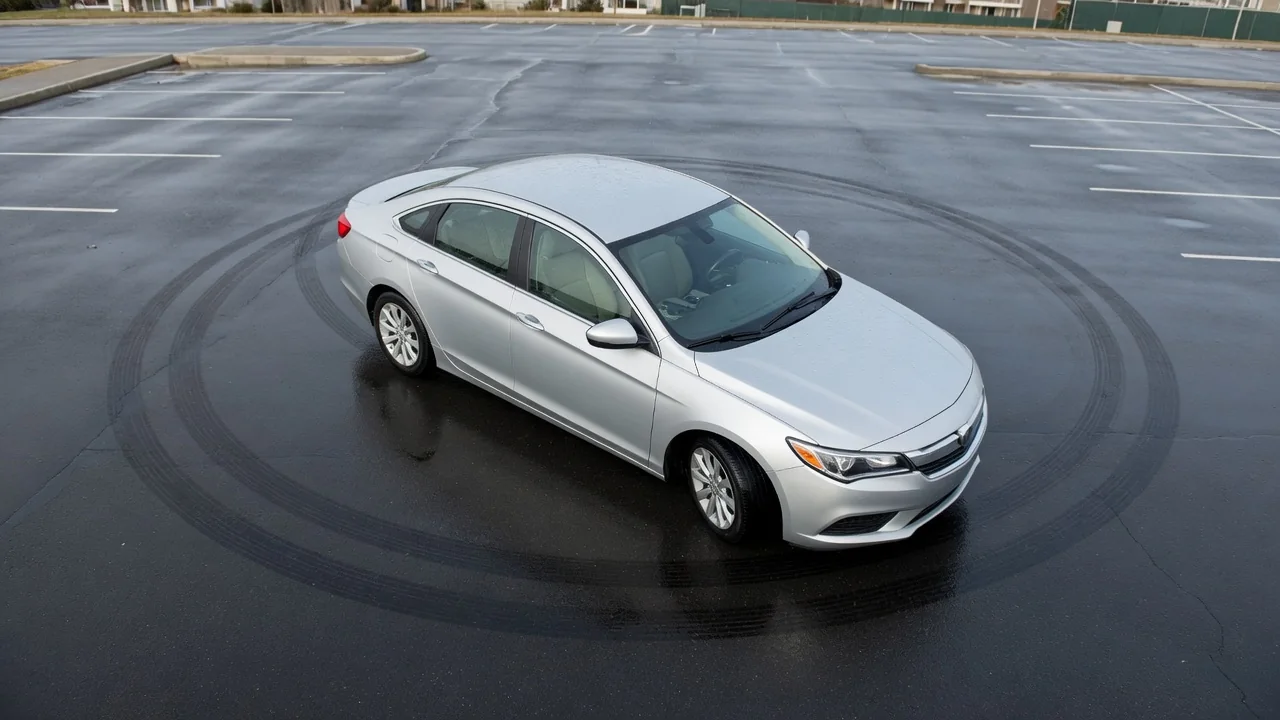
A car's turning circle is the diameter of the smallest full circle the vehicle can trace with the steering wheel held at full lock. So what is a car's turning circle in practical terms? It is a measure of how much pavement you need to reverse direction in one sweep, and it shapes everything from U-turns to parking garage ramps and tight driveways.
Measurement convention
Manufacturers usually quote the figure in one of two ways, and the difference matters when comparing vehicles. A curb-to-curb measurement follows the path of the outer front tire, describing the width of road needed if nothing overhangs the curb. A wall-to-wall measurement follows the outermost point of the body, typically the front bumper corner, so it is always the larger number. Two cars may appear to differ on paper simply because one brochure uses the tire path and the other uses the body sweep.
A second source of confusion is radius versus diameter. Some specification sheets list turning radius, which is half the circle, while others list the full diameter, and US publications commonly express either in feet. Before judging a number, check which convention applies and whether it refers to a specific trim. Wheel and tire packages, drivetrain layout, and optional rear-wheel steering can all change the result within the same model line, so the figure for one version may not describe another sitting beside it on the lot.
Parking example
Picture a parking lot aisle with perpendicular spaces on both sides. To swing nose-first into a space, the car must rotate roughly a quarter turn within the aisle width. A vehicle with a compact turning circle can complete that arc in one motion, arriving centered between the lines. One with a wider circle runs out of room partway through, leaving the front corner pointed at the neighboring car and forcing the driver to stop, back up, straighten, and try again from a better angle.
Watch the inside rear wheel in the same maneuver, because rear tires track a tighter path than the fronts. On a long-wheelbase pickup or three-row SUV, that rear wheel cuts noticeably closer to the adjacent vehicle or a concrete pillar, which is why drivers of longer vehicles swing wide before turning in. Parallel parking shows a related effect: more steering angle lets the nose tuck toward the curb sooner, reducing the back-and-forth shuffling needed to finish in a short space on a busy street.
Driver expectations
Drivers often assume that a short car automatically turns tightly, but overall length is only part of the story. Wheelbase and the maximum angle the front wheels can reach are the main influences. Front-wheel-drive layouts sometimes limit steering angle because the drive axles and a transversely mounted engine crowd the wheel wells, while some rear-wheel-drive cars turn their front wheels further. Wide tires can reduce clearance inside the wheel arch as well, so a sporty trim may feel less nimble than the base version.
Another common expectation is that light steering means a small turning circle. Steering effort and the number of turns of the wheel from lock to lock describe how the system feels, not how much pavement the car sweeps. A vehicle can feel effortless and quick at the wheel yet still need a wide path. Rear-wheel steering, offered on some trucks and luxury models, changes the picture by turning the rear wheels opposite the fronts at low speed, effectively shortening the wheelbase for tight maneuvers.
Everyday Use and Observations
The clearest everyday test is a U-turn on a two-lane street. A car with a small turning circle comes around in one pass and stays off the far curb, while a larger one needs a three-point turn or a wider intersection. Similar differences appear in cul-de-sacs, drive-through lanes, and the spiral ramps of parking garages, where a wide-turning vehicle forces the driver to hug the outer wall and watch the inside mirror carefully to keep the rear wheels off the curbing.
Home layouts reveal it too. A narrow driveway that bends toward a garage, or an alley with a tight entry, can turn a daily arrival into a multi-step routine if the vehicle needs more room than the pavement provides. Trailer towing adds another layer, since the trailer follows an even tighter inside path than the tow vehicle's rear wheels. Observations made during a test drive on familiar routes are often more useful than any published figure, because they reflect the spaces you actually use.
Limits and Next Steps
A published turning circle is measured under controlled conditions on flat, dry pavement at very low speed. It does not account for slopes, loose gravel, snow, or the driver's ability to judge the corners of the body. It also says little about visibility, mirror size, or camera coverage, all of which affect how confidently the available space can be used. Changes after purchase matter too: different wheels, wider tires, or suspension modifications may alter steering clearance and move the real-world result away from the factory figure.
If a vehicle suddenly seems to need more room than before, or turns tighter in one direction than the other, treat that as something worth having inspected rather than a quirk. Unequal lock, rubbing sounds at full steering, or binding can point toward alignment, steering, or suspension concerns that a qualified technician should evaluate. For shopping, compare figures quoted under the same convention, confirm them for the exact trim in the manufacturer's documentation, and then verify with a slow U-turn in a safe, open area.