What Is a Restoration Build Sheet?
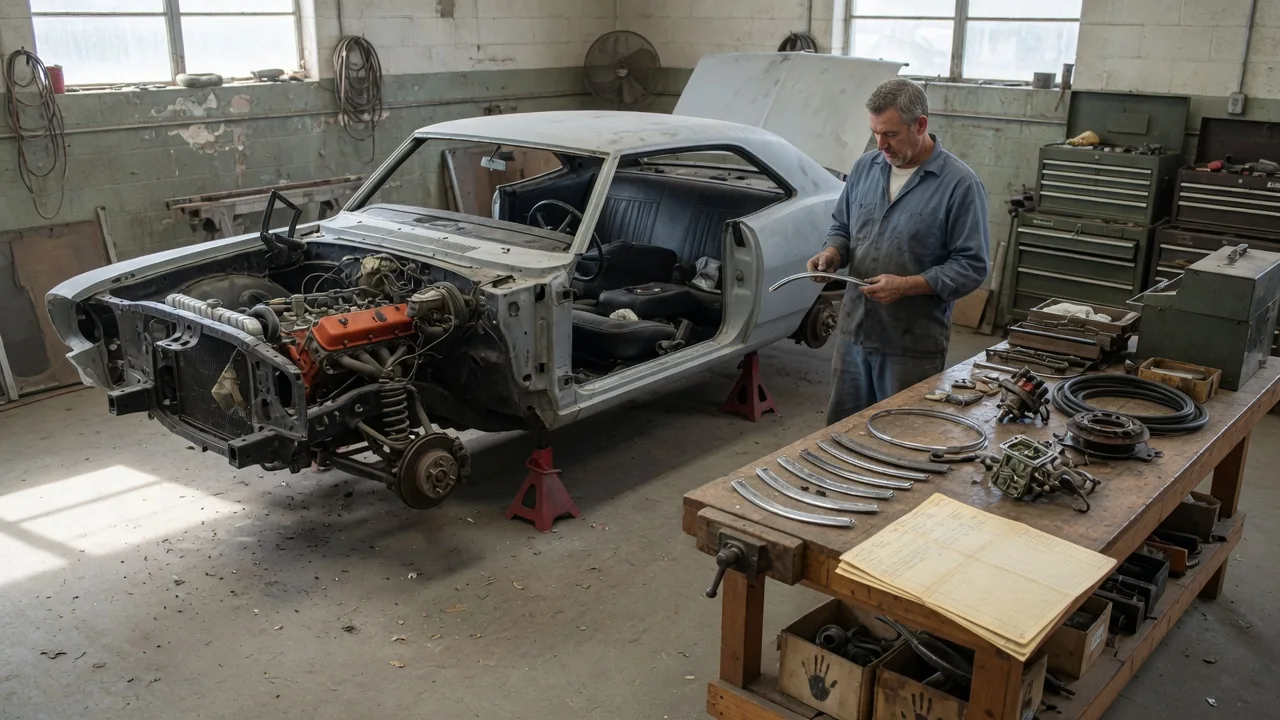
A restoration build sheet is a working document that records what a vehicle was when it left the factory, what the owner intends to change, and how each decision is tracked through the project. In short, it is the project's master reference: one place where original specifications, planned modifications, parts sources and progress notes live together, so the car, the budget and the paperwork stay aligned from teardown to final assembly.
Original equipment
The first part of a car restoration build sheet describes the vehicle as originally equipped. That typically means identifying data such as the VIN and any body or trim codes, the engine and transmission type, axle or differential details, paint and interior colors, trim level and factory options. The goal is a baseline that describes the car before decades of repairs, swaps and owner changes blurred the picture. Without that baseline, it is hard to say whether a part on the car belongs there or was added later. The phrase build sheet is also used for the assembly document some manufacturers produced for individual cars, and occasionally such paperwork survives inside the vehicle, but a restoration build sheet is the owner's own broader record.
Information for this section can come from several places, and how much is available depends heavily on the manufacturer, the era and the market. Some vehicles carry coded data plates or tags, some have surviving paperwork such as window stickers or dealer invoices, and in some cases production records can be obtained from the manufacturer or an enthusiast organization. Casting numbers and date codes on major components can help indicate whether an engine or gearbox is likely to be the original unit or a correct-type replacement. None of these sources is universal, and decoding them correctly usually requires references specific to that make and model.
A useful habit is to separate what is confirmed from what is assumed. Recording each item with its evidence, such as confirmed by data tag or believed original but not verified, prevents guesses from hardening into facts as the project moves along. This matters most when originality affects value, judging eligibility or the choice of replacement parts.
Planned changes
The second part records where the restoration will depart from factory specification. Few projects are pure reproductions. Owners often choose upgraded brakes, modern ignition or fuel delivery, improved cooling, different tires, a new wiring harness, or added comfort and safety equipment. A build sheet lists each intended change next to the original item it replaces, so every departure is deliberate and visible rather than accidental.
Each planned change tends to affect other systems. A different engine may need new mounts, a revised crossmember, a different exhaust, altered cooling capacity and changes to the fuel system. Larger brakes may require different wheels. Listing these dependencies helps the owner see the full scope of a modification before parts are ordered, and it exposes conflicts early, when they are easiest to resolve. It is also worth noting whether each change is reversible, because a bolt-on upgrade that leaves original parts intact keeps more options open later than one that requires cutting or drilling.
This section is also where the restoration standard is defined. Whether the target is factory-correct, a dependable driver or a restomod, stating that goal at the top gives every later decision a reference point. It also helps when working with shops, since a written plan reduces misunderstandings about finishes, part grades and how much original material should be retained.
Documentation
The third part turns the build sheet into a running record of the work. Typical entries include part numbers and suppliers, quantities, installation dates, torque or adjustment values taken from the applicable service manual, paint codes and mixing records, and notes on which fasteners, finishes or hardware were reused and which were replaced. Grouping entries by system, such as brakes, suspension, electrical or body, keeps the document easy to navigate as it grows.
Photographs are among the most valuable supporting records. Images taken during disassembly show how wiring was routed, how brackets were oriented and where clips and shims sat, details that are easy to forget after months in storage. Labeling photos and bagged parts with references that match the build sheet makes reassembly far more predictable. Receipts, machine-shop reports and correspondence about the car can be filed under the same structure.
The format matters less than consistency. A spreadsheet, a database, a binder or a combination can all work, provided entries are made as the work happens rather than reconstructed afterward. Keeping a backup copy and dating each revision protects the record against loss and makes it clear which version reflects the car as it currently stands.
Practical implications and limits
In practice, a well-kept build sheet supports budgeting and scheduling, because every planned item can be priced and sequenced before work starts. It also simplifies future maintenance: when a component wears out years later, the owner can identify exactly what was installed instead of assuming the factory part is still there. If the car is sold, a clear record of original equipment and deliberate changes gives a buyer something concrete to evaluate, although how much weight it carries depends on the buyer and the market.
A build sheet also has limits. It is only as accurate as the information entered, and it cannot prove originality on its own; claims about matching numbers or factory options still rest on physical evidence and recognized records for that specific vehicle. It does not replace the service manual, inspection by a qualified professional, or local registration and equipment rules, which can affect modifications such as lighting, emissions-related components or engine swaps. It is best treated as an organized, honest account of the car and the plan, not as a certification.
Finally, it is a living document. Plans shift when hidden rust, unavailable parts or cost surprises appear, and the sheet should record those revisions with their reasons rather than silently overwriting the original intent. That history is often what keeps the document useful long after the restoration is finished.