What Is a Diesel Particulate Filter?
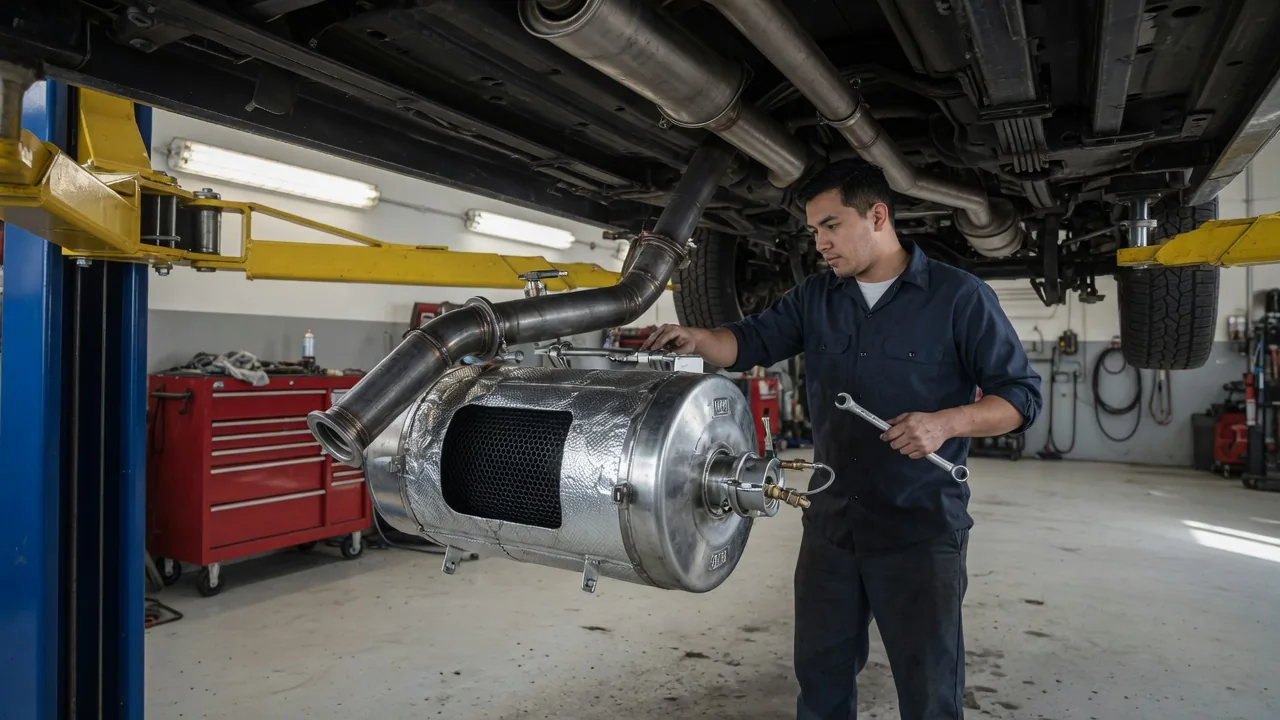
If you have ever wondered what is a diesel particulate filter, the short answer is that it is a component in the exhaust system of modern diesel cars, SUVs, and light pickups that traps soot before it leaves the tailpipe. This overview explains how the filter works, how it cleans itself, and what drivers of everyday diesel vehicles are likely to notice.
Filter role
A diesel engine ignites its fuel by compression, and that combustion process naturally leaves behind tiny carbon particles known as soot or particulate matter. The diesel particulate filter, often shortened to DPF, sits in the exhaust stream and captures those particles. Inside is typically a ceramic honeycomb with channels that are blocked at alternating ends, so exhaust gas must pass through porous walls. The gas moves on, while the soot stays behind on the wall surfaces.
The most visible result is something drivers do not see: the puff of black smoke once associated with diesel cars under hard acceleration is largely absent on a filter-equipped vehicle, and the tailpipe tip tends to stay surprisingly clean. Where the filter sits varies by design. Some passenger vehicles mount it close to the engine so it heats quickly, while others place it farther back under the floor, sometimes combined in one housing with an oxidation catalyst.
Regeneration concept
A filter that only collected soot would eventually clog, so the system is designed to burn the accumulated carbon away, a process called regeneration. When exhaust temperatures are high enough, such as during steady highway driving, soot can oxidize gradually without any intervention; this is commonly described as passive regeneration. Because many daily trips never get the exhaust that hot, the engine computer also monitors soot loading, usually by estimating it from driving data and pressure readings across the filter.
When the estimated load reaches a threshold, the computer starts an active regeneration, raising exhaust temperature through changes to fuel injection timing or, on some designs, a separate injector in the exhaust. Drivers may notice a slightly higher idle speed, a cooling fan that runs after shutdown, a hot smell, or a temporary dip in fuel economy. Some vehicles display a message during the event, while others give no indication at all, so the owner's manual is the best guide to what is normal.
Warning messages
Most diesel vehicles with this filter have a dedicated warning light or a text message in the instrument cluster. An early-stage warning generally means soot has built up beyond what the system has been able to burn off, often because regenerations were interrupted by short trips. Manufacturers typically describe a driving pattern that allows the cleaning cycle to finish, but the wording, symbols, and recommended response differ between brands and model years, so the vehicle's own documentation should be followed.
If the warning is joined by a check engine light, reduced power, or a message urging service, the situation has moved beyond a routine reminder. Stored fault codes related to filter efficiency or differential pressure point toward the system, yet a code is evidence to interpret rather than proof that the filter itself has failed. A faulty pressure sensor, a cracked sensor hose, an exhaust leak, or an engine problem producing excess soot can trigger similar codes, and some are manufacturer-specific and need vehicle-specific confirmation.
Everyday Use and Observations
How a vehicle is driven strongly influences how the filter behaves. A diesel crossover used mainly for long commutes may complete regenerations so seamlessly that the owner never thinks about them. The same vehicle used for school runs and brief errands spends much of its life with a cool exhaust, so soot accumulates faster and cleaning cycles are more likely to be cut short when the engine is switched off partway through.
Attentive owners can pick up useful patterns. Regenerations that seem to occur much more often than before, a noticeable drop in fuel economy, or an engine oil level that appears to rise can all suggest the system is working harder than it should; a rising oil level may reflect fuel diluting the oil on some designs. Using engine oil that meets the manufacturer's low-ash specification also matters, because ash from burned oil cannot be removed by regeneration and slowly collects inside the filter.
Limits and Next Steps
Regeneration removes soot, but it has limits. Ash, a noncombustible residue from oil additives, remains in the channels and gradually reduces capacity over a long period, so a filter is not a guaranteed lifetime part on every vehicle. A filter that has become heavily loaded may also be beyond what normal driving can clear, and continuing to drive with persistent warnings risks rising exhaust backpressure, reduced performance, and potential damage to the filter or related components.
When warnings persist, the sensible next step is a diagnosis by a technician with scan equipment suited to the vehicle. They can read live data such as soot load estimates and pressure values, check for underlying causes like injector, EGR, or sensor faults, and determine whether a service-initiated regeneration, cleaning, or replacement is appropriate. Removing or bypassing the filter is not a legitimate fix; it is illegal for road vehicles in the United States and defeats the emissions control the vehicle was certified with.