What a 12V AGM battery is
The short answer
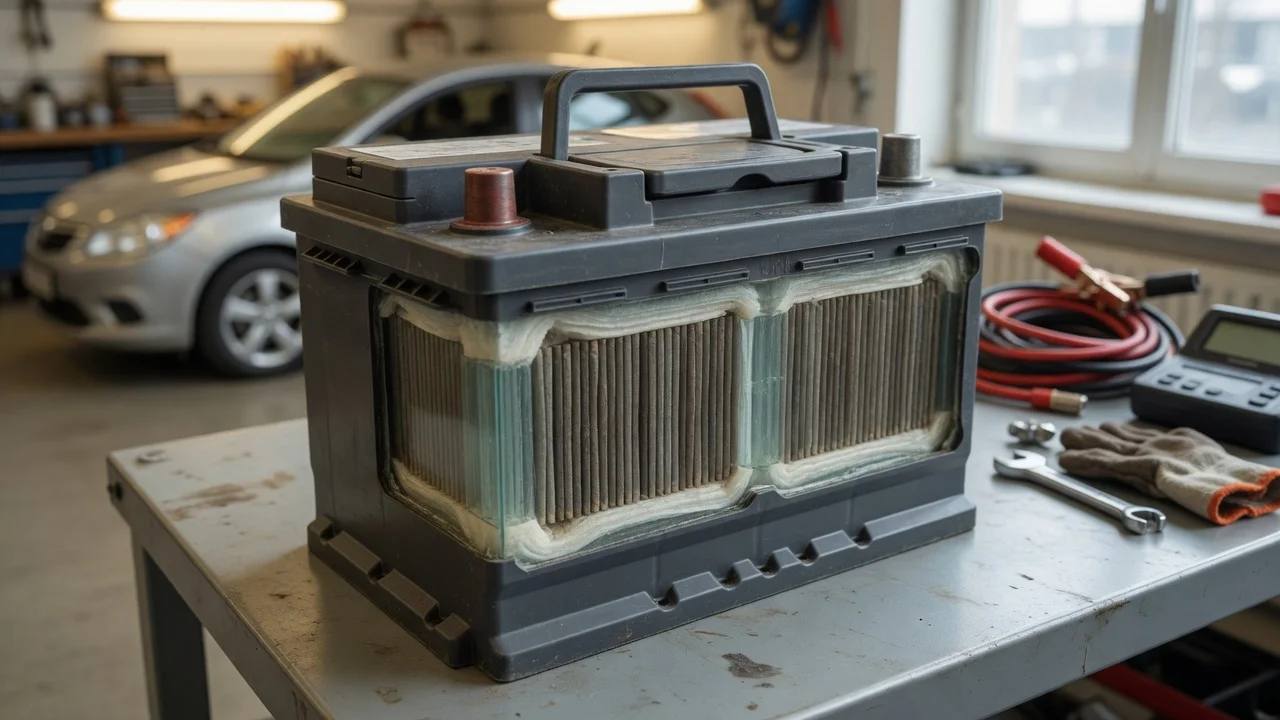
A 12V AGM battery is a lead-acid battery with a nominal output of 12 volts. Its electrolyte is soaked into thin glass-fibre mats packed between the plates, rather than sloshing around as free liquid. AGM stands for absorbent glass mat. The battery is sealed and fitted with pressure-relief valves, so it belongs to the family called valve-regulated lead-acid (VRLA) batteries. In normal use it needs no topping up with water.
In cars, AGM batteries are most often used as the main starting battery in vehicles with automatic start-stop systems or heavy electrical demands. They are also used as auxiliary batteries and in motorcycles, motorhomes and boats.
Qualifications that change the answer
AGM describes how the battery is built, not its size or capacity. Physical dimensions (group or case size), terminal layout, cold cranking amps and amp-hour capacity still decide whether a particular AGM battery suits a particular vehicle. "12V" is a nominal figure. The actual voltage changes with state of charge, temperature and whether the battery is charging, resting or under load. An AGM battery is not a lithium battery. Some 12V lithium batteries are sold for vehicle use, but they use a different chemistry with different charging requirements. AGM is also distinct from gel batteries, which are another sealed lead-acid type, and from enhanced flooded batteries (EFB), which some manufacturers fit to less demanding start-stop systems.
How a 12V AGM battery works
The basic chemistry is the same as in any lead-acid battery. The positive plates are lead dioxide, the negative plates are spongy lead, and the electrolyte is dilute sulphuric acid. During discharge, both plates gradually turn into lead sulphate and the acid becomes weaker, which releases electrical energy. Charging reverses the reaction.
Each lead-acid cell produces about 2 volts. A 12V battery has six cells connected in series, which gives the nominal 12-volt rating.
What the glass mat does
The mat holds the electrolyte by capillary action, much like a sponge, and keeps it in close contact with the plates. The plates and mats are pressed tightly together in each cell. This compressed construction helps the battery resist vibration. It also explains why there is no free liquid to spill if the case is tilted.
Why it is sealed and needs no topping up
Charging any lead-acid battery produces some gas. In a conventional flooded battery, much of that gas escapes, and the water lost with it has to be replaced. In an AGM battery, the mat has small open channels that let oxygen from the positive plate travel to the negative plate. There it recombines to form water again, so very little water is lost. The valves stay closed in normal operation and open only to release excess pressure, for example if the battery is overcharged.
What this means in practice
Maintenance: there are no caps to remove and no electrolyte level to check. Mounting: because the electrolyte is held in the mats, AGM batteries can often be installed in locations or positions that suit a flooded battery poorly. Permitted orientations vary by product, so check the battery maker's guidance. Electrical behaviour: AGM batteries generally have low internal resistance. This helps them deliver high current and accept charge relatively quickly. They also tend to tolerate repeated partial discharging better than standard flooded batteries, which is why they suit start-stop vehicles that restart the engine many times per trip. Charging sensitivity: lost water cannot be replaced, so sustained overcharging can cause venting and permanent damage. A charger with a setting intended for AGM batteries is the usual recommendation. The correct charging voltages differ between manufacturers and should be taken from the battery label or the maker's documentation. Replacement: if a vehicle was supplied with an AGM battery, it is generally replaced with another AGM battery, because the charging system and start-stop logic may be calibrated for it. Some makes and models also require the new battery to be registered or coded to the vehicle. Whether that applies depends on the specific vehicle, so check the owner's manual or ask a dealer or qualified technician.
How AGM compares with other 12V lead-acid types
Type | How the electrolyte is held | Sealed and valve-regulated | Typical automotive role; Flooded (conventional) | Free liquid | No (vented) | Standard starting battery in vehicles without demanding start-stop; Enhanced flooded (EFB) | Free liquid, with design changes for improved cycling | No (vented) | Some entry-level start-stop vehicles; AGM | Absorbed in glass-fibre mats | Yes | Start-stop and high-electrical-load vehicles; auxiliary use; Gel | Thickened into a gel | Yes | More common in deep-cycle and leisure uses than as a car starting battery
How to tell whether a battery is AGM
Check the label first. AGM batteries are normally marked "AGM", and many are also marked "VRLA". A flat top with no removable caps is not a reliable sign on its own, because many sealed maintenance-free flooded batteries look similar. If the battery has been replaced before or the label is unclear, the vehicle's documentation or a parts supplier can confirm the original specification.
Gaps in this explanation
This guide does not draw on test data or manufacturer specification sheets. It therefore gives no figures for lifespan, cranking performance, charging voltages or price relative to other battery types, as these vary by brand, model, climate and how the vehicle is used. For a specific purchase or replacement, rely on the vehicle manufacturer's battery requirements and the battery maker's published ratings.